

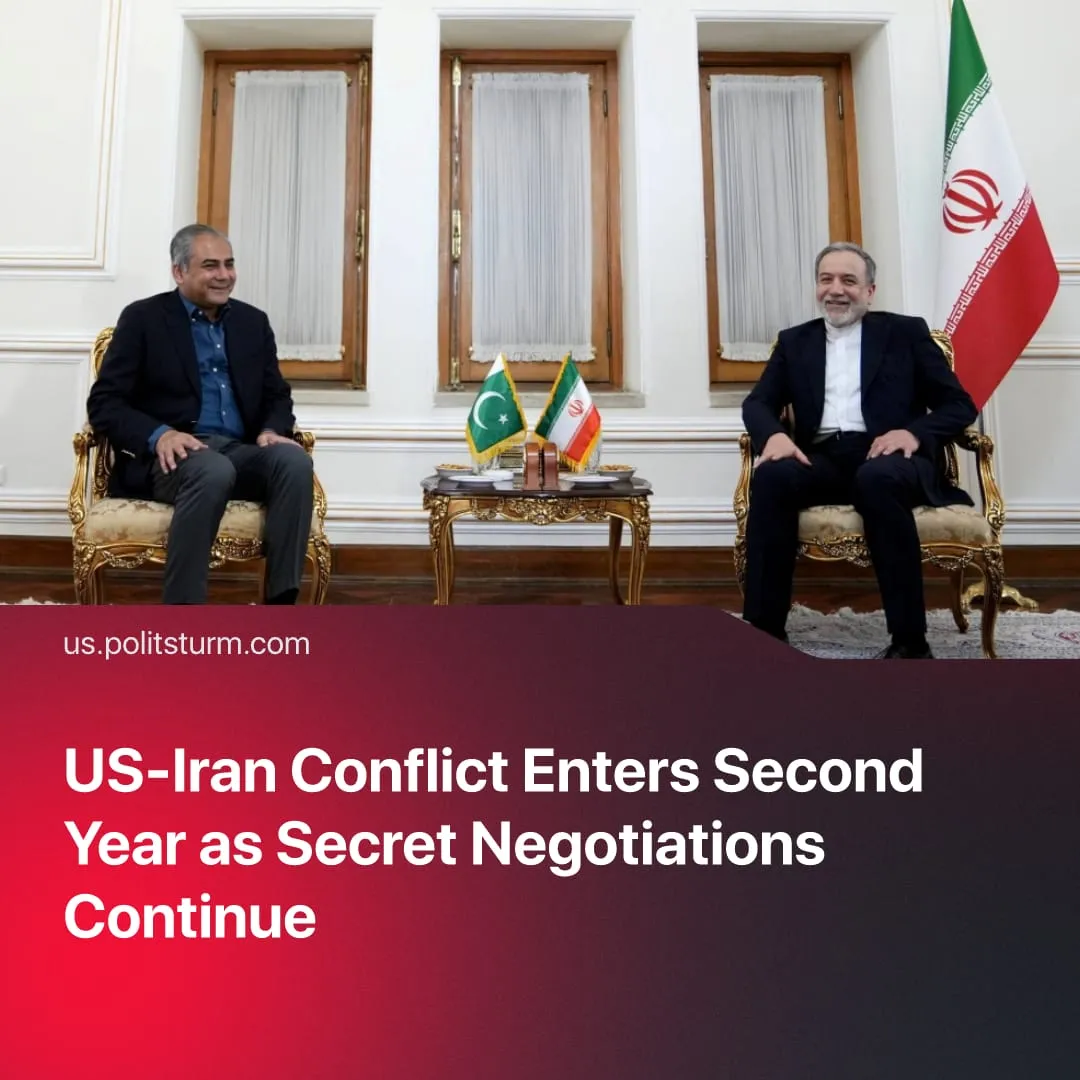
The US and Israel launched large-scale strikes against Iran in June 2025. A year later, all parties to the conflict continue to fight, regularly announcing successful negotiations and a close end to the war.
Details. A year ago, Israel, supported by the US, launched strikes on Iranian nuclear and military facilities, beginning the "12-day war" and a broader escalation conflict in the Middle East. The US aimed to weaken the Chinese bloc, control Middle Eastern oil and trade routes, eliminate Iran's nuclear programme, and force the Iranian bourgeoisie into a compliant deal or regime change.
► Throughout the following year, the US and Israel failed to achieve their goals. After the suppression of January protests, the US and Israel launched a second assault on February 28, targeting leadership, nuclear sites, missile infrastructure, and internal security. Iran retaliated against Israel, US bases, and Gulf states. A ceasefire was declared on April 8. Iran suffered a conventional military defeat, yet its nuclear programme was not eliminated, regime change did not occur, and the Strait of Hormuz remains under Iranian control.
► Behind-the-scenes negotiations have run in parallel with military action throughout. Only broad information is given: a delineation of spheres of influence, lifting of US sanctions, a moratorium on nuclear enrichment, and reopening the Strait of Hormuz – in short, a deal between capitalist blocs over the terms of Iran's reorientation toward the West. Trump declared a deal imminent at least 38 times.
► Days before the anniversary, a new escalation erupted. Israel struck Lebanon; Iran retaliated with nearly 30 ballistic missiles. By June 11, Trump threatened to hit Iran "VERY HARD” and seize Kharg Island, handling 90% of Iran's crude exports – then cancelled the strikes hours later, declaring he had ”ended the war”. As of the anniversary, US and Iranian officials claim an agreement is close, but offer conflicting accounts of its terms
Context. The Iran conflict is one front in a broader, accelerating global crisis. In 2025, researchers recorded 65 active conflicts worldwide – the highest number of state-on-state confrontations since World War II.
► Negotiations behind closed doors while conflict continues is the usual instrument of imperialist powers today. After Russian officials five-hour meeting with Trump's envoy Witkoff over the “SMO”, Kremlin spokesman Dmitry Peskov confirmed “the content of these talks will definitely not be made public."
► Secret diplomacy is the typical method of imperialist powers. In WWI, Britain and France signed the Sykes-Picot Agreement – carving up the Middle East between them behind closed doors. In WWII, Britain, France, Germany and Italy met in Munich and handed Czechoslovakia's most strategically vital region to Nazi Germany – without inviting Czechoslovakia. The Czech government was simply presented with the finished terms.