

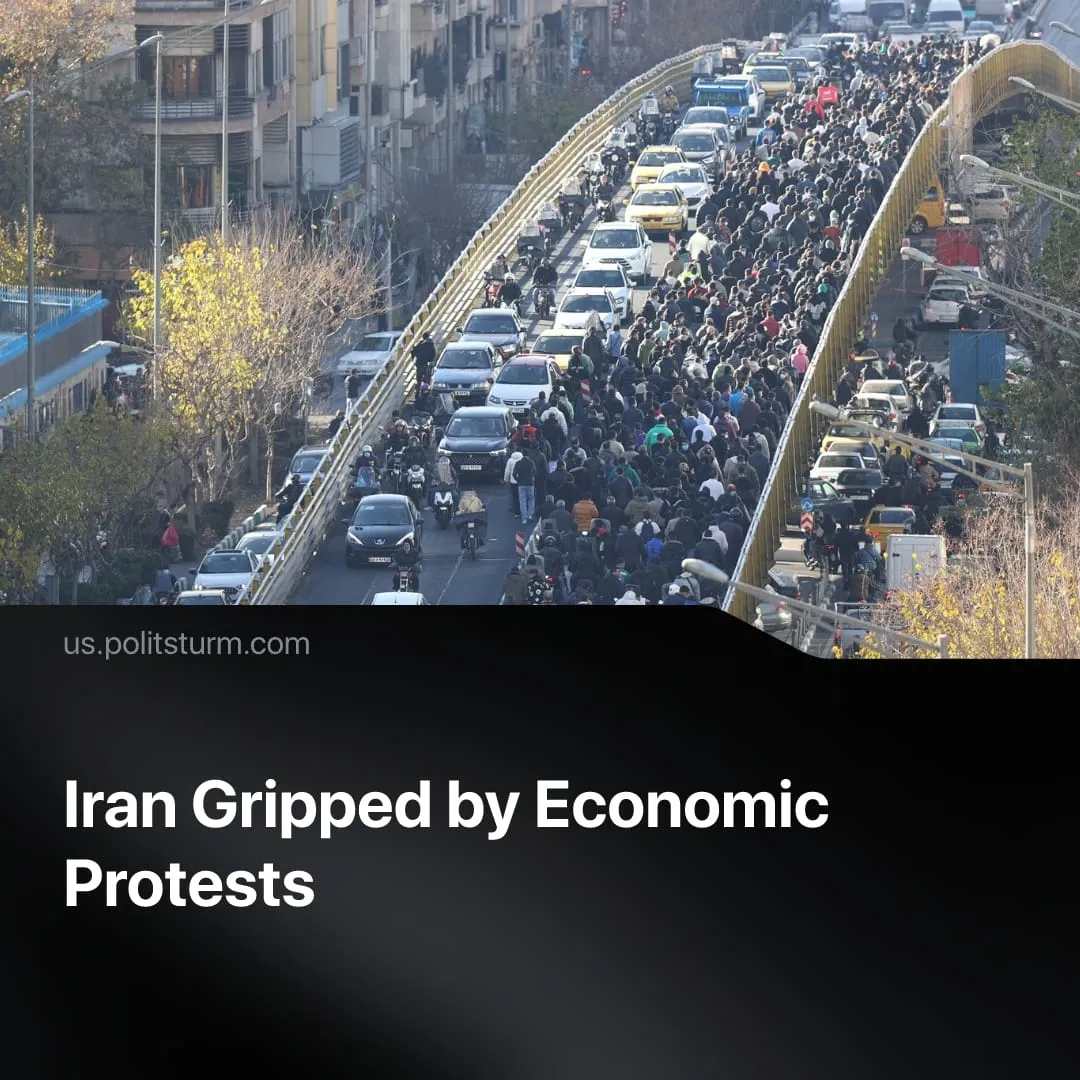
Iran has been gripped by spontaneous unrest following imperialist setbacks and capitalist economic crisis.
Details. Protests and strikes surged in late December. With unrest in 25 of Iran’s 31 provinces, this crisis is more widespread than past protest waves, though it has not yet reached the extent of the Mahsa Amini protests of 2022.
► Worsening material conditions directly sparked unrest. The cost of fuel increased, and food prices exploded by 72% year-on-year, amid massive water shortages. Workers can no longer afford dairy, fruits or meat, and have to purchase basic goods on credit. Overall consumer inflation in 2025 reached 42% and the value of Iranian currency collapsed to record lows.
► Miners and workers in the logistics, oil and industrial sectors went on strike, demanding wage increases to match inflation. This was followed by merchants in Tehran’s Grand Bazaar closing their stores to protest currency volatility.
► Economic strikes led to political protests against the government, joined by students and ethnic minorities. Protesters chanted anti-war slogans opposing Iran’s imperialist adventures and called for the overthrow of the regime. However, unrest remains spontaneous and disorganised.
► The government response was initially conciliatory, led by reformist officials. However, escalating protests prompted a harsh regime crackdown. Some rioters took up arms and attempted to storm police stations and official buildings – at least 35 people have been killed.
Context. Iranian imperialists lost last year’s regional war with Israel and entered 2026 in a weakened position. Iranian regime newspapers admitted that the October 7th, 2023, attack was a grave mistake – it resulted in the decimation of its proxies Hamas and Hezbollah, the loss of its Syrian dependency, and heavy damage to its nuclear program. After the US-Israeli bombings, some Iranian capitalists called for appeasement and concessions.
► Iran previously faced a spontaneous protest wave in 2022, which started more slowly than the current one, but eventually grew into the largest revolt since 1979. Despite its size, the 2022 uprising failed to achieve meaningful change for the working class due to the lack of revolutionary organisation – instead, hundreds of workers died aimlessly. Globally, the worsening misery of the working class provoked a surge of such popular uprisings in 2025, which all ended similarly.
Important to Know. The USA currently holds the initiative in the inter-imperialist conflict and is accelerating its offensive against Iran’s capitalist regime. Since September, the US State Dept. has issued seven sanctions packages targeting Iranian oil profits and implemented UN “snapback” sanctions against Iran’s nuclear program.
► In December, Israel proposed renewed bombings on Iran, which the US declared it may support. President Trump has now threatened military intervention in Iran if the regime continues shooting protesters. Without a revolutionary organisation, the Iranian workers’ justified uprising against their ruling class will simply be manipulated to play out in favour of other imperialists.
► This wave of protests is unique: Iran’s petit-bourgeois merchants and shopkeepers have, for the first time, joined the working-class against the regime. This conservative, religious section of small capitalists has been the popular backbone of Iran’s theocracy since its inception. Tehran’s Grand Bazaar merchants played a crucial role in enabling Islamists’ takeover during the 1979 revolution, at the expense of the former monarchy and rival communist insurgents.
► Supreme Leader Khamenei insisted that “the bazaari class is among the most loyal segments of the country to the Islamic Republic,” as Iranian leaders attempt to separate the merchants from the workers. Losing this traditional loyalist base to the protests could threaten the survival of the regime.