

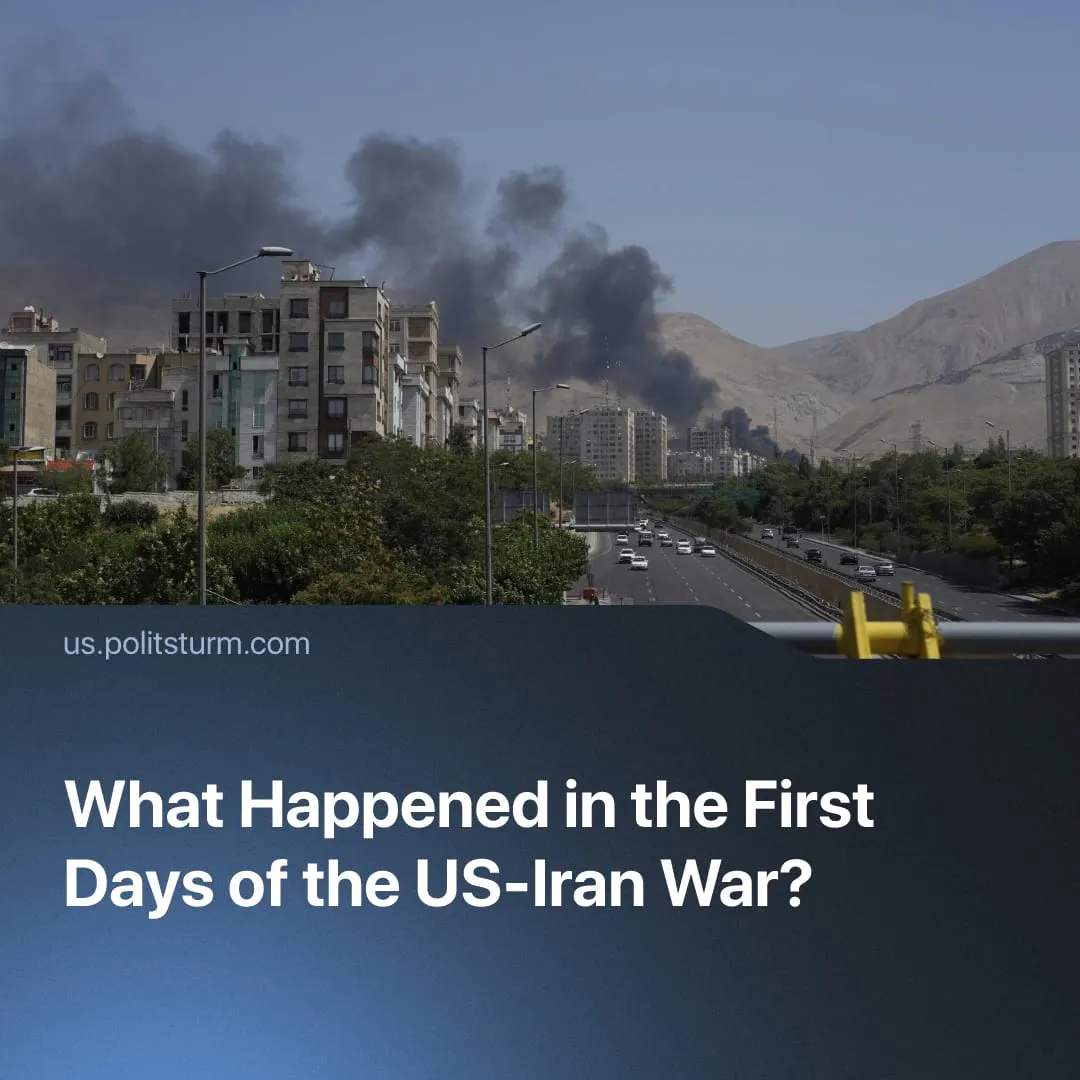
The first days of the US–Iran war saw the death of Iran’s leader, IRGC retaliation across the Middle East, and rising oil prices.
► On 28 February, the United States and Israel began “major combat operations” against Iran. Trump outlined the objectives: to destroy Iran’s missile and naval capabilities, disrupt proxy networks, and prevent a nuclear-armed Iran, framing the operation as the pre-emptive defence of the US and its allies. He called for regime change, urging Iranians to “take over” their government after the operation.
► Initial targets included military infrastructure, air defences, IRGC command centres, missile and drone sites, nuclear facilities, and leadership sites. Iran reported civilian casualties, including at an elementary girls’ school. By March 1, Israel claimed “air superiority,” enabling deeper strikes.
Strikes Against Iranian Leadership. In the opening wave, several senior Iranian officials and generals were killed, including IRGC Chief of Staff Abdol Rahim Mousavi, Defence Minister Aziz Nasirzadeh, and Major General Mohammad Pakpour. Chinese state media indicated up to 40 senior Iranian officials were killed.
► Israeli and US officials reported the death of Supreme Leader Ali Khamenei, but for several hours, Iranian leaders denied it. Iran’s Foreign Ministry insisted that Khamenei was “safe and sound” before state media later confirmed his death.
► The IRGC made unverified claims that missiles struck the office of Israeli Prime Minister Benjamin Netanyahu and other leadership targets.
IRGC Retaliation Across the Region. Iran launched missile and drone strikes on Israel and US bases in Bahrain, Saudi Arabia, Qatar, the UAE, Kuwait, Jordan, and Iraq, and targeted energy infrastructure. British RAF bases in Cyprus were also hit. Tehran said the strikes focused on military-strategic sites, though some civilian infrastructure was struck.
► The IRGC effectively halted shipping through the Strait of Hormuz with radio warnings and reported strikes on vessels, leading hundreds of tankers to suspend transit. The route carries about 20% of global oil. Brent crude jumped roughly 10% as markets opened on Monday, and European natural gas prices surged more than 50% after Qatar LNG halted production.
► Following the leadership strikes, Iran decentralised the IRGC into 31 autonomous provincial regiments, each capable of independent missile and drone launches.
US-allies’ Response. US-allied Gulf states condemned Iran’s strikes on their territory and reaffirmed their right to self-defence.
► France, Germany, and the UK jointly condemned Iran’s “indiscriminate and disproportionate” attacks and said they were prepared to take appropriate defensive measures, including actions to disable Iranian missile and drone capabilities “at their source.”
► Since the attacks on RAF bases, the British Prime Minister confirmed that the UK had agreed to a US request to use British military bases for “defensive” strikes.
Diplomatic and Operational Uncertainty. On March 1, Trump claimed surviving Iranian leaders sought talks and said he agreed, but Iran’s Supreme National Security Council secretary publicly rejected the claim.
► Trump said the conflict could last around four weeks, but also stated that combat operations would continue until all US objectives were achieved.
Context. The US has been intensifying pressure on a rising imperialist China and its weaker rivals globally. The current Iran operation follows the US military intervention in Venezuela, where US forces captured President Nicolás Maduro and installed a US-aligned interim government. In the aftermath, President Trump and senior officials openly threatened further actions toward Cuba, Colombia, Mexico, Iran, and Greenland.