

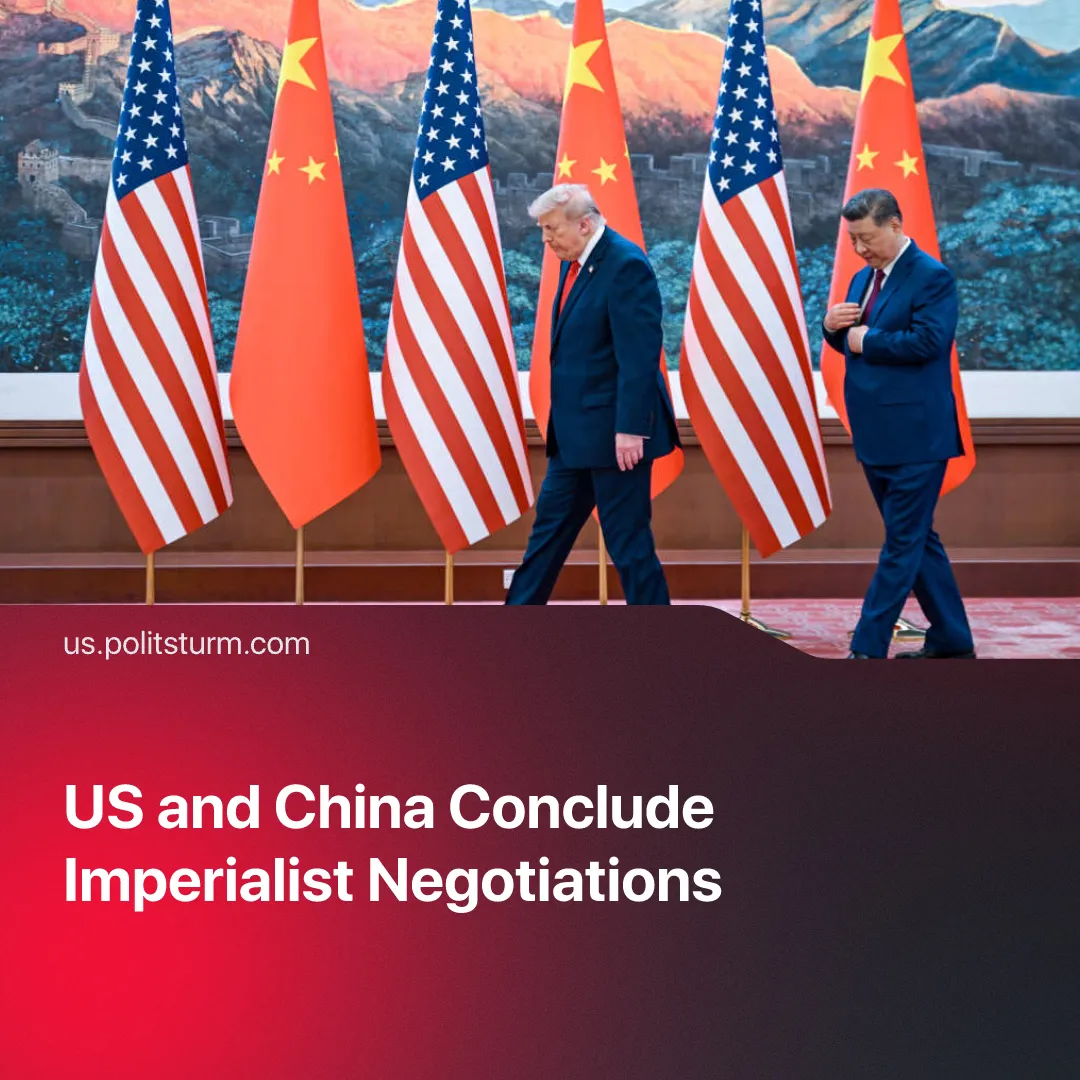
Trump met with Xi. What are the results of this meeting?
Details. On the 15th of May, President Trump and an American delegation – which included senior officials such as Pete Hegseth and Marco Rubio, and a business delegation with figures like Elon Musk and Nvidia's boss Jensen Huang – completed their state visit to China, where they met with President Xi Jinping and other Chinese government officials.
► Both parties agreed to continue implementing "all" previous agreements. Trump has also claimed China will increase purchases of agricultural goods over the next three years and buy 200 Boeing jets, though Beijing has not confirmed this. Neither side announced any major breakthroughs or moves to restore normal trade relations.
► Trump hoped to get China’s help in pressuring Iran to reopen the Strait of Hormuz. After the talks, he claimed that both agreed that the conflict needs to end and that neither wants Iran to have nuclear weapons. China’s foreign ministry stated that the war should have never happened and reinforced Xi’s four-point proposal for peace. Trump is reportedly considering lifting sanctions on Chinese companies that purchase Iranian oil.
► The meeting was a de facto recognition of China's role as the leader of the imperialist bloc, equal to the United States. Chinese media portrayed the visit as proof of China’s parity with the US as a global power.
► The meeting confirmed that the US no longer feels as free as before on the issue of Taiwan. Trump said he was still deciding whether to go ahead with a major arms package for Taiwan, though Secretary of State Marco Rubio reinforced that their position on the issue has not changed. Following the trip, Trump warned Taiwan against declaring independence. Beijing advised the US to "exercise extra caution" on the matter, signalling that it views Taiwan as firmly within its sphere of influence and that the issue risks provoking "clashes and conflicts".
► Essentially both imperialist powers have agreed to postpone their eventual confrontation, with recognition of each other's position as main global contenders. Trump said US-China relations will be “better than ever” and “create a fantastic future together”. After the summit, Trump claimed they “settled a lot of different problems” and invited Xi to the White House in September, where both will continue delineating spheres of influence.
Context. In April 2025 Trump announced sweeping tariffs on numerous countries, including China. Beijing’s retaliatory measures escalated into a trade war, with each country imposing high tit-for-tat tariffs and exploiting economic interdependence to inflict damage. Though there was an eventual cool down, this was not definitive.
► Both countries continued attempts to regain the initiative. Trump pressured Panama into leaving the Belt and Road initiative, attempted to improve relations with Russia and ran an international “peace” campaign, which aimed to pull countries towards a pro-US position. China exploited Trump’s tariffs to position itself as a more reliable trading partner and improve relations with already existing allies.
► Trump’s campaign against China’s sphere of influence intensified in 2026, with a strike against Venezuela and the capture of its president, the start of the war against Iran which ultimately aimed at weakening Beijing, and threats of similar actions being made against Cuba and other South American countries.
These talks, and the events preceding them, fully validate our analysis of US-China relations. The course of isolation, militarisation, and bloc-building, will only continue to intensify.