

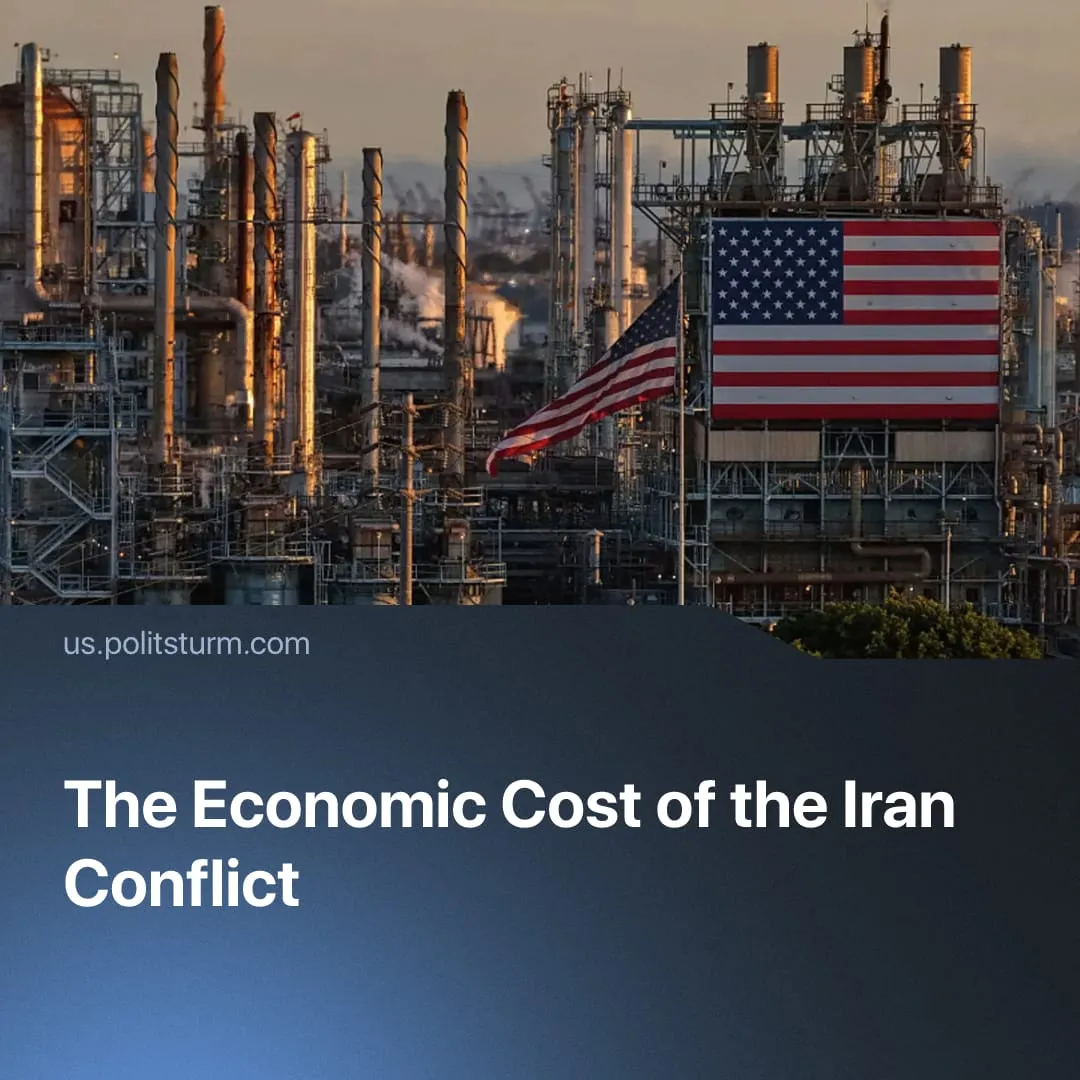
Workers worldwide will bear the cost of the conflict in Iran and its related blockade through rising energy and food prices.
Details. The closure of the Strait of Hormuz has cut off approximately 20% of the global liquefied natural gas (LNG) trade, triggering a severe price shock across essential commodities and causing a domino effect. The price of the world’s primary oil benchmark, Brent crude, surged by over 60% in March.
► The energy deficit immediately inflates industrial costs and has prompted warnings from organisations such as the International Monetary Fund, World Bank, and World Food Programme about an impending rise in food prices. Global shipping prices have surged by over 30%. Simultaneously, soaring natural gas prices now consume up to 80% of nitrogen fertiliser production budgets, increasing fertiliser prices by 37% and forcing agricultural producers to slash output.
► Gulf states, on top of heavily damaged and inoperable refineries – whose repair costs are estimated at 25$ billion – are also facing immediate industrial paralysis as the blockade severs their primary export routes. Aluminium Bahrain (Alba), which produces 25% of the region’s aluminium, has already been forced to suspend 19% of its operations.
► East, Southeast Asia, and Europe are absorbing consecutive economic shocks. Sri Lanka, Cambodia, Myanmar, Bangladesh, Indonesia, and Slovenia have already introduced fuel rationing systems, while China has enforced export bans and price controls. A scramble for alternative energy has ignited a global bidding war, driving European gas prices up by 20% and pushing the core regional benchmark up by 50% in a single month.
► Despite US government claims of energy independence, the integrated global commodity market guarantees a sharp rise in domestic US fuel prices. US elites actively exploit this situation for profit, while the American working class is forced to subsidise this inflation alongside the massive military expenditure required to operate in the Gulf.
Context. In late February, the US and Israel began joint military operations against Iran, aiming to subdue Iranian regional power and weaken the rival Chinese bloc. After a month, a fragile ceasefire was declared, but the Strait of Hormuz has remained largely closed, continuing the disruption to global trade.
Important to Know. This conflict is waged strictly to secure the economic and geopolitical interests of capitalist monopolies, operating entirely against the material interests of the international working class.
► Artificial supply chain disruptions provide monopolies with a pretext to hike prices and secure record profits, forcing the working class to absorb the crisis through declining real wages and worsening living conditions.
► Capitalists systematically utilise such geopolitical shocks to attack labour. Major capitalist economies like Germany already cite domestic labour costs as their primary obstacle.
► As Marx wrote: “[...] The very development of modern industry must progressively turn the scale in favour of the capitalist against the working man, and that consequently the general tendency of capitalistic production is not to raise, but to sink the average standard of wages, or to push the value of labour more or less to its minimum limit.”
For a deeper analysis of the US-Iran conflict, see the Marxist position on this subject: The Middle East: Architecture of War.