

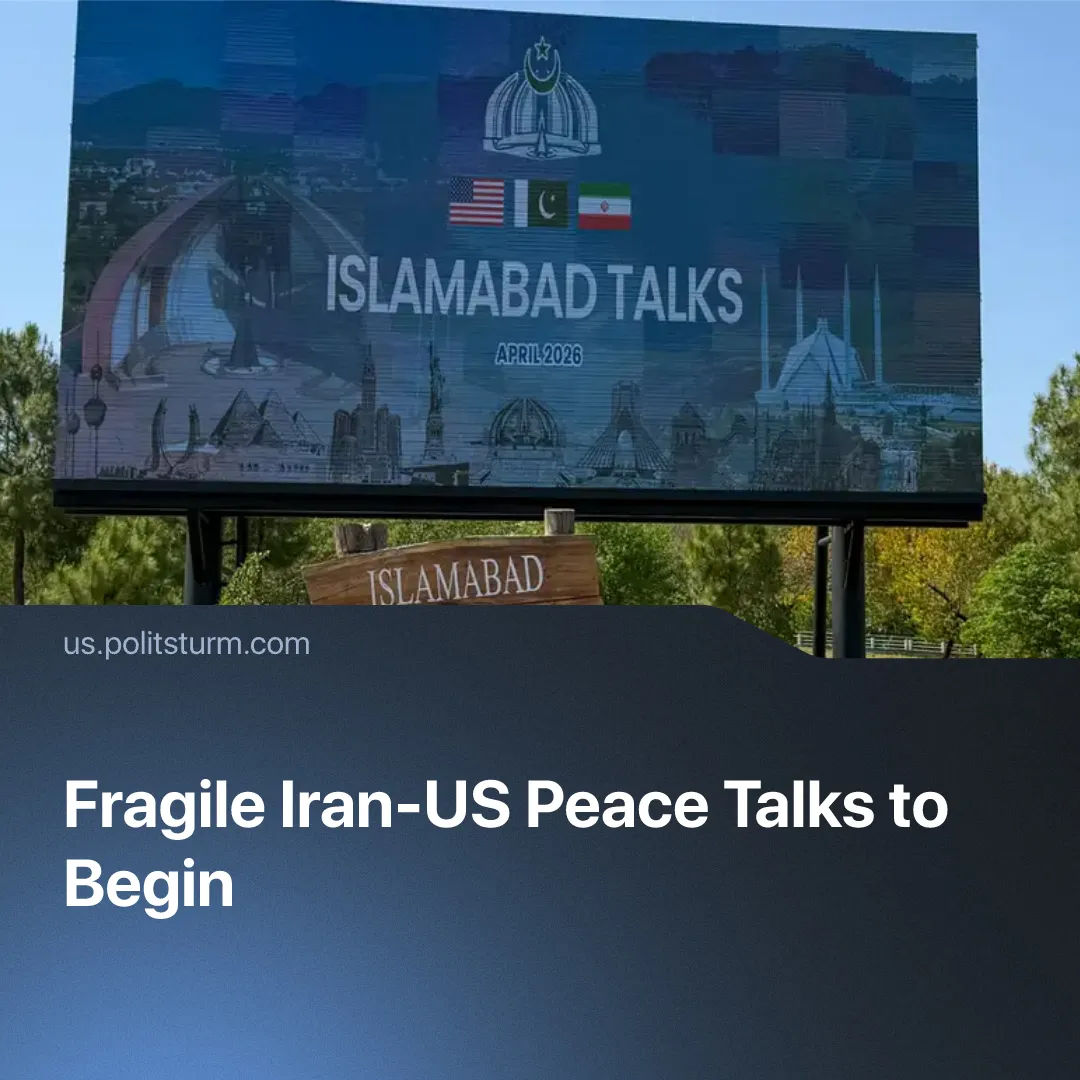
The US and Iran agree to a fragile ceasefire after over a month of conflict.
Details. On 7 April, Iran and the US agreed to a two-week ceasefire after around 40 days of intense air strikes and even a limited rescue operation in Iranian territory – with peace talks, brokered by Pakistan, due to begin on Saturday 11 April.
► Iran threatened to resume strikes after accusing Israel of breaking the ceasefire by continuing its attack on Lebanon, whilst Israel and the US claim this was not part of the deal. Netanyahu has called for talks with Lebanon to begin “as soon as possible” for the disarmament of Hezbollah.
► Gulf states were still reporting being hit by strikes even after the ceasefire. The opening of the Strait of Hormuz also remains unclear, but Trump has accused Iran of dishonouring the agreement and claimed that they “better not be” charging ships for passage. Trump has stated he is preparing militarily in case talks fail.
► Iran has proposed what Trump called a “workable” 10-point plan, claiming that nearly “all of the various points of past contention have been agreed”, which includes concessions from both sides, such as Iran forfeiting its nuclear programme but maintaining control of the Strait of Hormuz – Trump suggested this could instead be a joint venture, but this has sparked opposition from other forces such as the EU.
►Vice-president JD Vance will be leading the US delegation to Islamabad to meet with Iran for peace negotiations, along with Trump’s top envoy Steve Witkoff and son-in-law Jared Kushner. It’s expected that Parliament Speaker Mohammad Bagher Ghalibaf and Foreign Minister Abbas Araghchi will represent Tehran.
Context. Numerous countries have welcomed the opening of negotiations, fearing economic repercussions. Around 38% of crude oil and 19% of Liquified Natural Gas pass through the Strait of Hormuz, which led to a corresponding increase of price in gas and oil, as well as fertilisers and food.
► The US and Israel first struck Iran in late February, nominally due to failed negotiations over Iran’s nuclear programme. In reality, this is a natural progression of increasing inter-imperialist contradictions, as the US aims to counter China’s growing sphere of influence through increasingly hawkish tactics, such as those used in Venezuela.
For a deeper analysis of the US-Iran conflict, see the Marxist position on this subject: The Middle East: Architecture of War.