

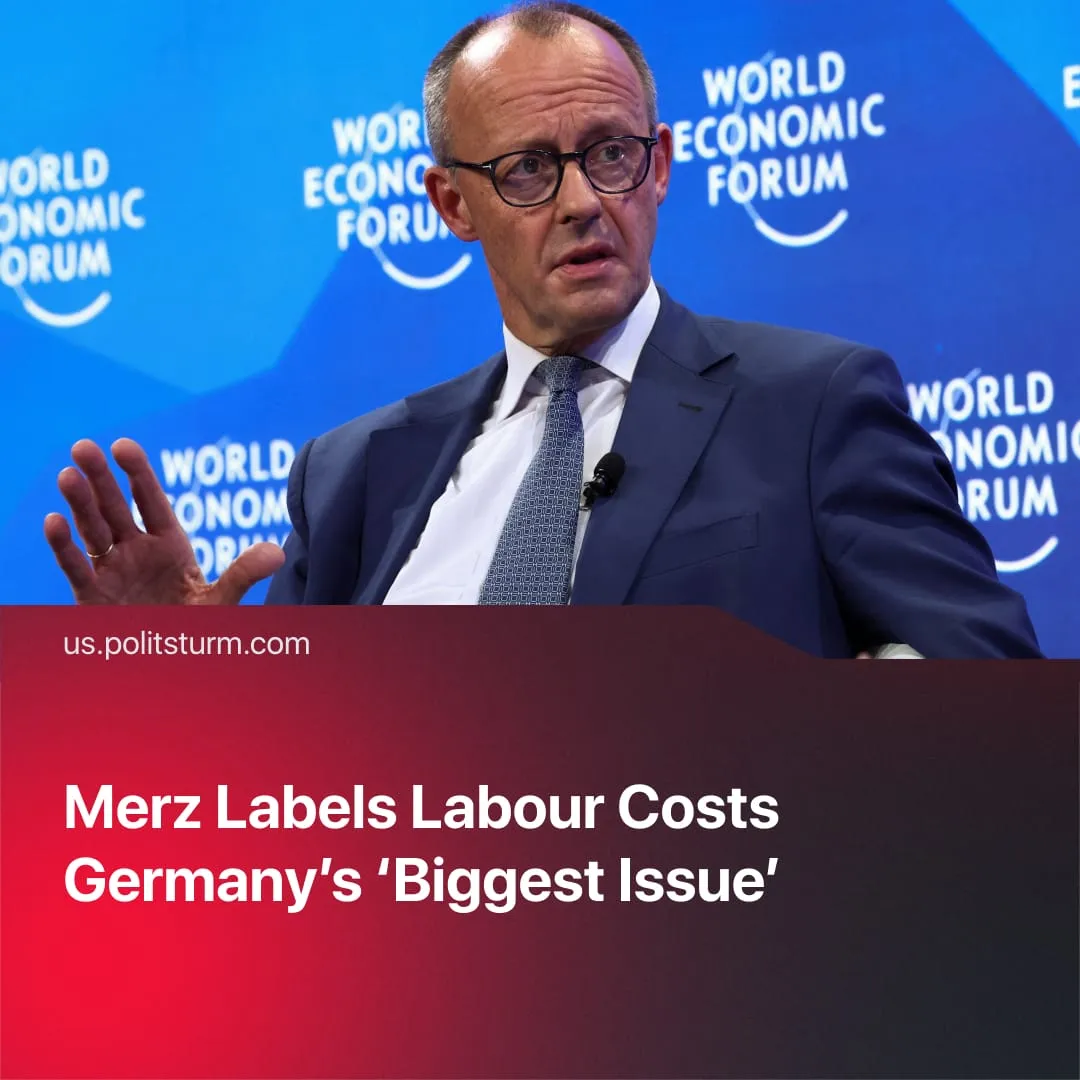
Friedrich Merz calls labour costs the “biggest issue” in the German economy, despite workers already struggling.
Details. Speaking at the World Economic Forum (WEF) in Davos, Friedrich Merz described labour costs as “the biggest issue” for Germany’s economy. He called for cuts to pension and unemployment benefits and demanded an increase in working hours.
► He argued that Germans should increase their weekly work hours, noting that “Germans [work] around 200 hours less per year than, for example, Swiss workers.”
► Merz highlighted that Germany’s energy costs were reduced by €10 billion this year, framing the savings as relief for capital rather than a means of improving workers’ living standards.
► Another key point of the talk was the push for a permanent increase in military spending. He argued that the €100 billion special fund is insufficient.
Context. The chancellor’s directness is partly explained by the WEF setting, an invitation-only gathering of corporate and political elites. The event allows policymakers like Merz to discuss austerity measures openly to an audience of international capitalists.
► Merz’s rhetoric comes as German consumer sentiment has hit a two-year low. Economic anxiety has driven Germans to save rather than spend. Prior to the 2025 elections, surveys reported that 70% of Germans were worried about the rising cost of living.
► Around 15.5% of Germans – roughly 1 in 6 – live below the poverty line. Pensioners and single parents reliant on social support, groups targeted by Merz’s proposals, are strongly represented among these 13 million people. Of them, 25% spend over half their income on rent and utilities.
► The proposed cuts to the social safety net coincide with a massive shift toward militarization. Merz’s calls for welfare reform appear aimed at funding increased defense spending and making the German market more competitive.
► Notably, the WEF proposals contradict a recent bill from Merz’s own Conservatives that sought to “improve welfare”. His rhetoric appears to be a tactical balancing act to divert public attention from the long-term decline in workers' living standards.