

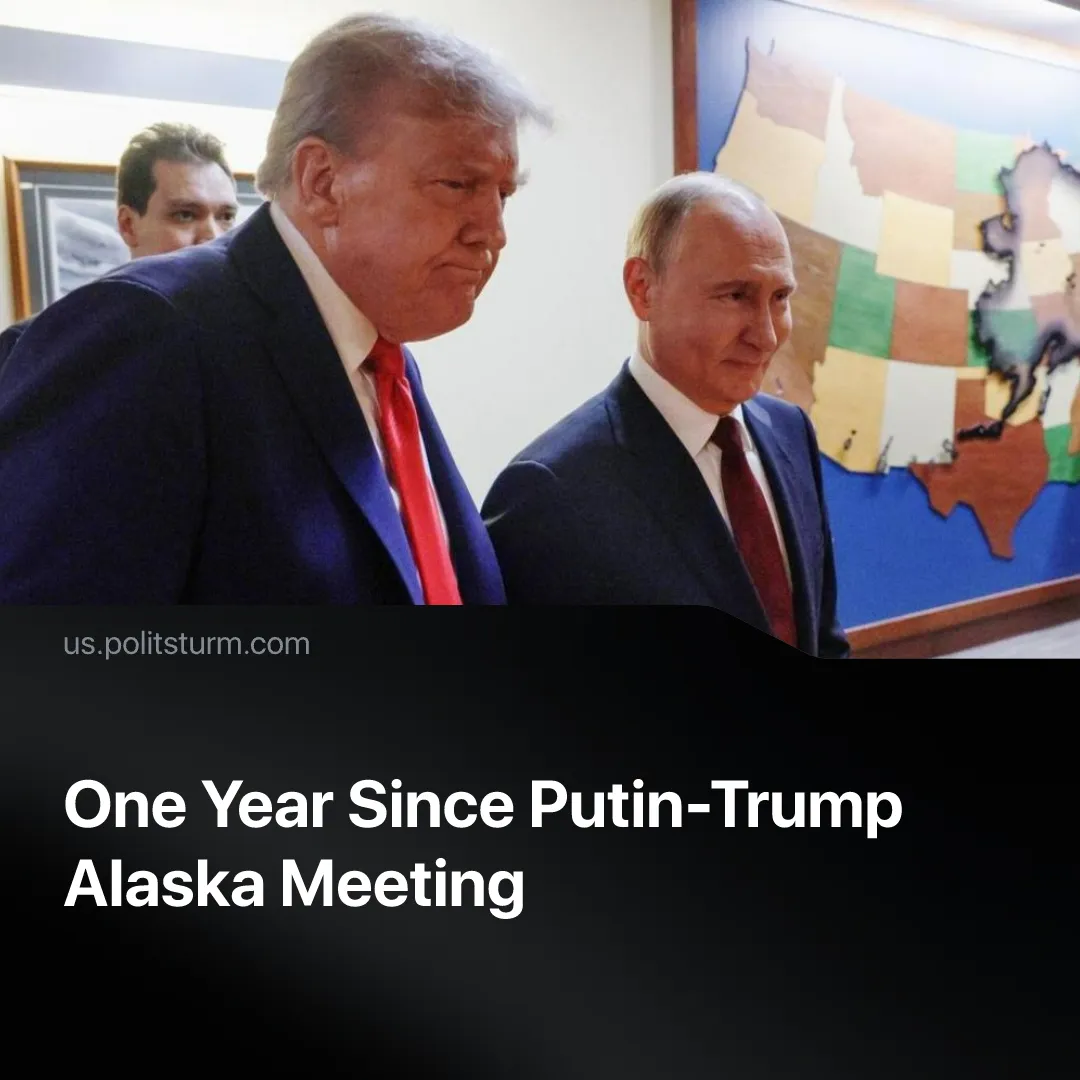
One year ago, Putin and Trump held peace talks in Alaska. Now, the “Special Military Operation” is still ongoing, lasting longer than the Eastern Front in WW2. Is there an end in sight?
Details. Soon after the summit, Russian officials noted that diplomatic “momentum” with the West had been “exhausted”. Now, US Secretary of State Marco Rubio says “there was no agreement in Alaska”, only a “proposal” that went nowhere. Similarly, President Putin recently clarified that “nobody signed anything” and negotiations are on hold.
► After Alaska, the USA set a June 2026 deadline for a ceasefire, but the follow-up summit in Budapest was cancelled. The peace plan remained in debate, while trilateral talks this year only produced small prisoner exchanges before negotiations were interrupted by the Middle East escalation.
► Mini-ceasefires during Easter and Victory Day did not stop the fighting, just as in 2025. As we reported, the first and second rounds of direct talks between Kyiv and Moscow also failed. Attempts to secure a localised Black Sea or limited “energy ceasefire” have likewise broken down.
► Putin vaguely claimed that Russia is “ready to continue talks”, but Foreign Minister Lavrov expressed concerns that “Alaska [...] was conceived to buy time for rearming the Kiev regime”. Whereas American officials had told Ukraine it faced imminent defeat whilst pushing the Alaska peace plan in 2025, the US is now increasingly confident in Ukrainian battlefield gains.
What have failed negotiations led to? Renewed military and economic pressure is now being used to force the other side to the negotiating table, with new offensives on land and air. Before these escalations, there was a brief period when Russia was willing to negotiate with the EU. European diplomats are still pushing for an independent negotiating position with Moscow.
► During the Alaska summit, American and Russian capitalists were secretly planning joint business projects. A year later, competition has resumed. For example, a US federal-backed $1.6 billion takeover of strategically valuable Kazakhstan rare earth mines has pushed out Russian and Chinese capitalists.
► Two months after Alaska, the US sanctioned Russian oil monopolies Rosneft and Lukoil, “as a result of Russia’s lack of serious commitment to a peace process”. Most recently, the US Senate authorised 100% tariffs on buyers of Russian oil and gas.
► This year, the USA is coordinating Ukrainian forces’ major strike campaign against Russian infrastructure. Attacks inside Russia are now 11 times as frequent as before the Alaska summit, with Washington prioritising oil refineries and terminals to undermine Russia’s profitable export sector. Ukraine has also targeted warehouses belonging to Wildberries.
► The “SMO” has now lasted longer than the Great Patriotic War (1941–1945), and the Russian economy is already contracting under the strain of the past four years. This has resulted in new fuel shortages and the exhaustion of financial reserves. Meanwhile, Ukraine faces worsening manpower shortages and massive debt.
Context. Global conflict has exploded since Trump’s “peacemaker” show last year. The US president began 2026 by declaring “peace on Earth” – two days later he invaded Venezuela. The following month, America launched its own “SMO” against Iran. That conflict has now spread as far as Africa, and caused a global economic crisis. Since the Alaska summit, the US bombed or threatened attacks on 11 countries.
► Bourgeois diplomatic rules are collapsing. Ceasefires are regularly broken, and decapitation strikes against high-ranking officials have become normalised. The US attacked Iran whilst in active negotiations with them. After Alaska, the last remaining nuclear arms control treaty between Russia and America (New START) has expired and will not be renewed.