

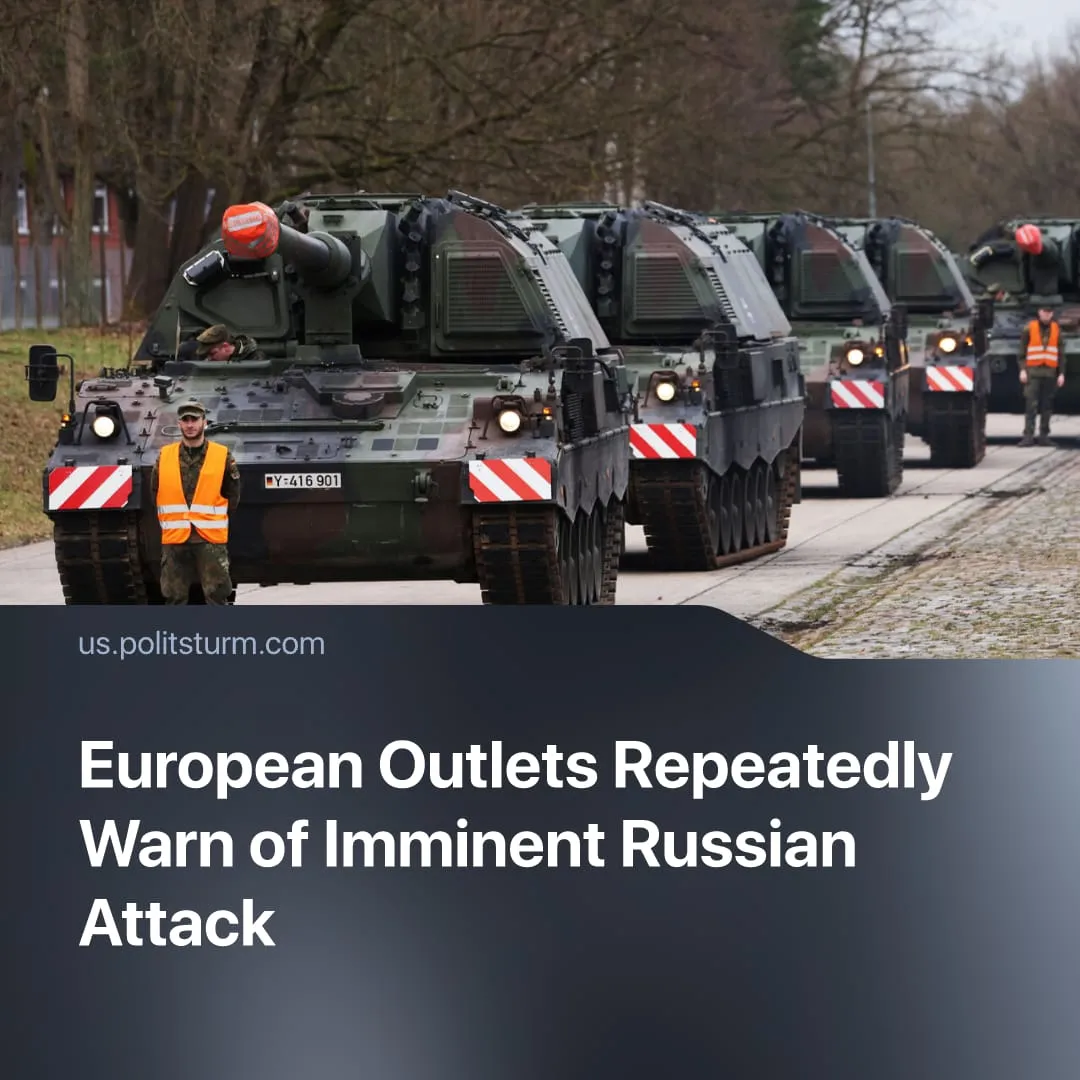
Major European outlets are repeatedly warning of an “imminent Russian attack”. The same governments driving this narrative need to justify rapidly growing military budgets.
Details. Major European newspapers are publishing articles with alarming headlines about a potential Russian invasion. At least four media, including The Guardian (UK), Euronews (France-based), Business Insider (German-owned) and The Times (UK) recently published materials on this topic.
► Euronews used the "Russian threat" in the headline of its article about Starmer's statement: "UK Prime Minister Keir Starmer says Russia could attack NATO within four years". Business Insider's article portrays not only a "Russian attack" as inevitable, but also the neutrality of the United States – a founding member of NATO – in such a case: "NATO eastern flank prepares to fend off Russia without US".
► This narrative is consistent with similar alarmist statements by the leadership of the EU and its member countries. For example, the Federal Finance Minister in Germany claimed that Putin would attack Germany and blamed the breakdown of peace in Europe solely on Russia: “Peace in Europe is threatened by Russian aggression. A balanced budget will not be enough to defend Germany against Putin. We must make up for three decades of underinvestment in our defense capabilities in a very short time. The moment to protect ourselves is now”.
In reality, a Russian attack on NATO is very unlikely. The Russian economy is already contracting under the strain of the past four years. Russian financial reserves have been largely exhausted, which was stated by the high Russian official.
► Additionally, European forces are currently larger than Russia's. Even without the US, the European NATO armies together count 1.47 million active-duty troops and 7,000 tanks, outnumbering Russia’s 1.26 million soldiers and 5,000 tanks. NATO also holds the advantage in naval and air power. However, Russia’s military production is larger, making millions more artillery shells per year and thousands more missiles and tanks.
► The hysterical media narrative of “imminent Russian aggression” serves to justify Europe’s share of this arms race to the domestic population. Global military spending has risen 41% over the last decade, with Europe recording the steepest growth.
Context. European imperialists have economic interests to further conflict in Ukraine, including plans to extract rare earth minerals there, $100 billion capital export committed for “reconstruction”, and the influential €90 billion EU loan framework.
► Historically, before World War I, the capitalist media in several European countries fuelled conflict fears through "invasion literature". “The Invasion” of 1910 was commissioned and profited from by newspaper magnate Northcliffe. It depicted a fictional German invasion of Britain, thus justifying militarisation and helping turn imperialist rivalries into hysteria over “national defence”.