

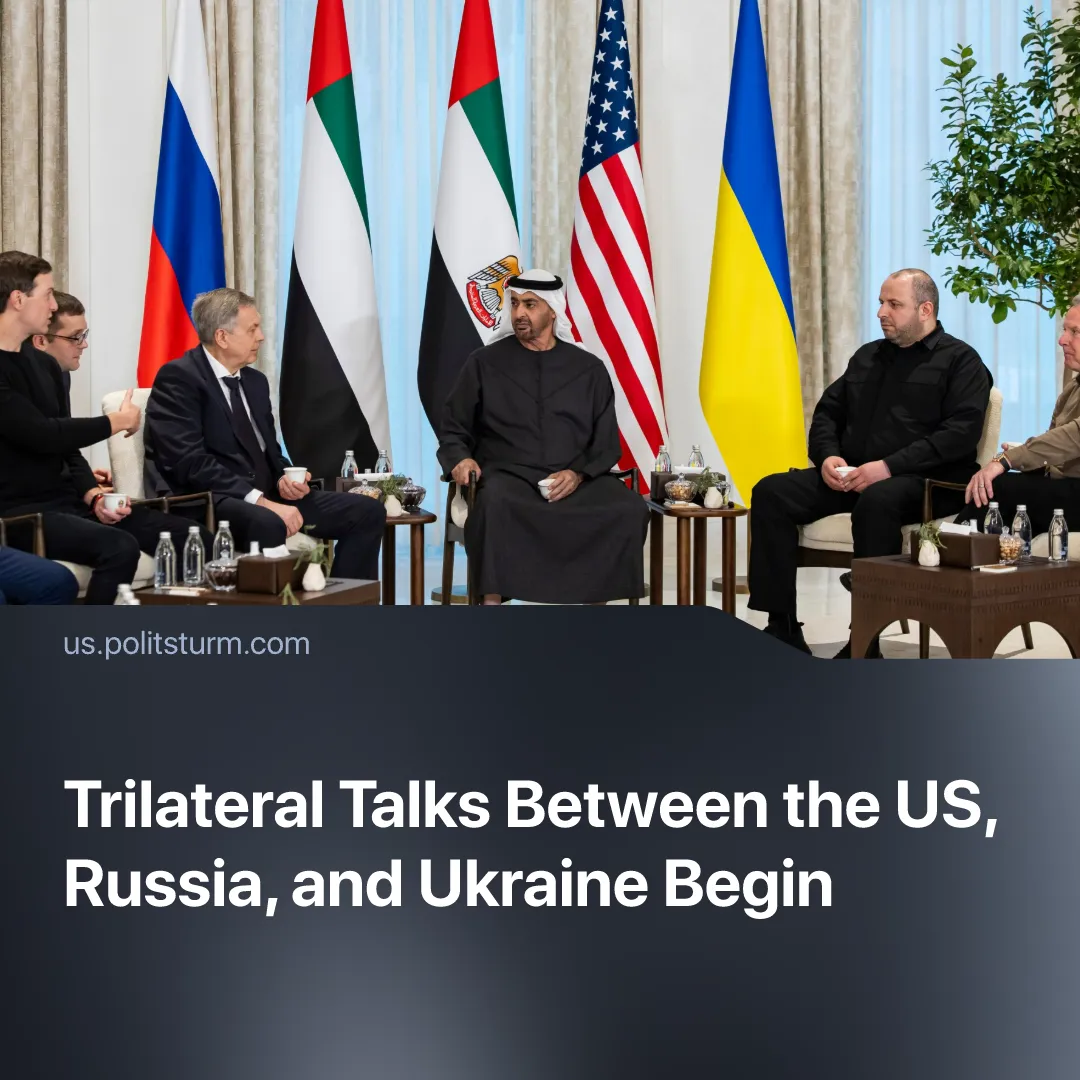
Trilateral negotiations between the US, Russia, and Ukraine begin after US threats of 500% tariffs and seizure of oil tankers on Russia.
Details. The first official trilateral meeting between the United States, Russia, and Ukraine since the start of the SMO took place in Abu Dhabi on 23–24 January 2026. Talks are being conducted at the working-group level on security issues, with representatives from Moscow, Kyiv, and Washington in attendance.
► The first round of negotiations produced no breakthrough. The parties failed to reach an agreement on key issues, including the basic parameters for ending the war. But the talks are proceeding in several stages – a second round has already taken place, with a third planned in the near future.
► While general settlement frameworks are being discussed, territorial questions, security guarantees, and the status of disputed regions remain “irreconcilable”. European allies are not participating in the Abu Dhabi talks.
Context. This month, the United States conducted an operation to capture Venezuelan President Maduro. Just two months prior, Russia had agreed to expand its oil cooperation agreements with Venezuela by extending them to around 2041. This operation effectively removed Russia's primary economic stronghold in Latin America. At the same time, Russia has faced growing economic strain, particularly in the energy sector, which remains its primary source of foreign revenue.
► The Trump administration is pushing legislation to allow 500% sanctions on Russian oil buyers, aiming to further cut Moscow's energy revenues. This pressure has been reinforced by US seizures of oil tankers linked to Venezuela and Russia, as well as Ukrainian strikes on Russia's "shadow fleet". At the same time, Washington's renewed security focus signals that the US continues to view Russia as a strategic threat, even though some of his proposals were seen as overly favourable to Moscow.
► Parallel pressure was applied to Ukraine, with the US pushing Kyiv toward compromises it had previously rejected. Despite earlier rounds of continuous contacts between the United States, Russia, and Ukraine over the past six months, including a big meeting between Trump and Putin in Anchorage, no concrete results have been reached. Despite this, Trump repeatedly stated that it is possible to reach a deal to end the SMO.
► Following the breakdown of negotiations in the past, Trump began accusing one side or the other of sabotage, depending on which party he believed was hindering US interests. In the same month, Trump named both Putin and Zelensky as the greatest obstacles to peace.
► At various points, he criticised Zelensky for his "unwillingness to compromise" while simultaneously suggesting that Moscow was prolonging the process. This was accompanied by increased pressure in the form of sanctions on Russia.