

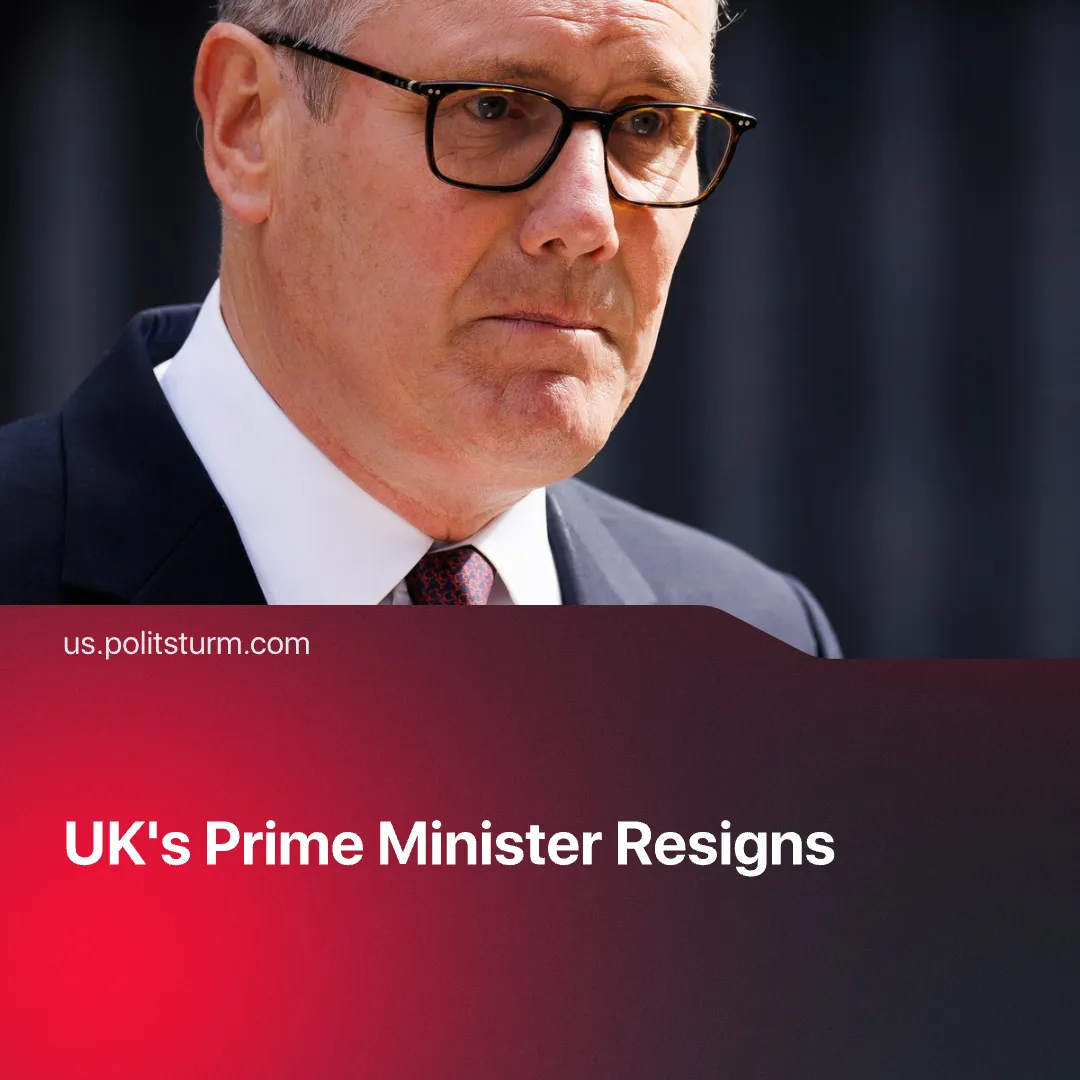
Starmer resigns as UK Prime Minister. The media has portrayed his 'left' replacement as Lenin. What are his actual policies?
Details. On 22 June, Keir Starmer announced his resignation as Prime Minister. The Labour Party is to open nominations from 9 to 16 July, allowing for a dispute to take place and for the party to have a new leader by the time Parliament returns from recess on 1 September. However, if only one person comes forward, there might be a new leader by mid-July.
► Pressure began in February after it was revealed Starmer had known the ambassador to the US had ties to the late pedophile Jeffrey Epstein. Initially defending the Prime Minister, after a terrible performance in the May local elections – with heavy gains for the populist right Reform UK – there was a party rebellion, with over 90 Labour MPs calling for his resignation. Even before any official announcement, Donald Trump said Starmer "will resign."
Context. Winning the 2024 election with a “landslide,” Starmer's approval reached a low of 19%. He had promised change from the 14 years of Conservative governance and to serve the working people – even calling himself a socialist.
► His government saw a number of u-turns on controversial policies, such as cuts to winter fuel allowance for pensioners or cuts to disability benefits. His government attempted to pander to the far-right on issues such as immigration and trans-rights, losing much support from the left.
► Labour's promised expansion of workers' rights was delayed and diluted. British workers faced worsening living standards: healthy lifespans shortened, essential goods became less affordable, and the poorest 40% saw falling wages. Recorded cases of modern slavery also reached a record high. Meanwhile, military spending rose to Cold War levels and support for Israel continued despite widespread public opposition. These developments coincided with record trade union membership growth in 2025.
► Labour had previously called for an end to the “chaos” of the Conservative leadership, which went through 5 Prime Ministers between 2016 and 2024. Now, with Labour’s contribution, the UK is set to have its 7th Prime Minister in 10 years. A trend of political crises is observed across the world, such as France and Nepal.
Important to Know. The most likely replacement is the (now former) Mayor of Manchester, Andy Burnham. His strong victory against Reform in the Makerfield by-election in mid-June made him a popular alternative. Numerous figures were also considered, but the party is still deciding whether someone else should contest to present an image of democratic dispute.
► Burnham has said people want change – a motif also used in Starmer’s election campaign. He said Labour must move to the left and that the “underdogs” should be championed. This image is further exaggerated by the media, with him even being referred to as “comrade Burnham,” and his train ride down to Westminster being compared to Lenin's train journey back to St. Petersburg for the October Revolution.
► However, in many ways he continues Starmer’s policies, such as justifying the far right through curbing immigration, welfare cuts and increased military spending (something many in government wanted more of). He also claims water and utilities should be publicly owned; in reality he means directly owned by the capitalist state, similarly to Starmer’s nationalisation of railways and steel, with profits distributed among the capitalist class while the burden is still borne by workers.
► Burnham does propose some unique policies. Under the umbrella of “Manchesterism,” referred to by him as a “business friendly socialism,” there are measures such as devolution, giving more financial autonomy for cities and shifting power away from London. He also defends proportional representation, as opposed Britain’s first past the post system. This changes the form of government, but does not alter its content, as none of the parties belong to the working class, meaning the state remains a tool for the capitalists.