

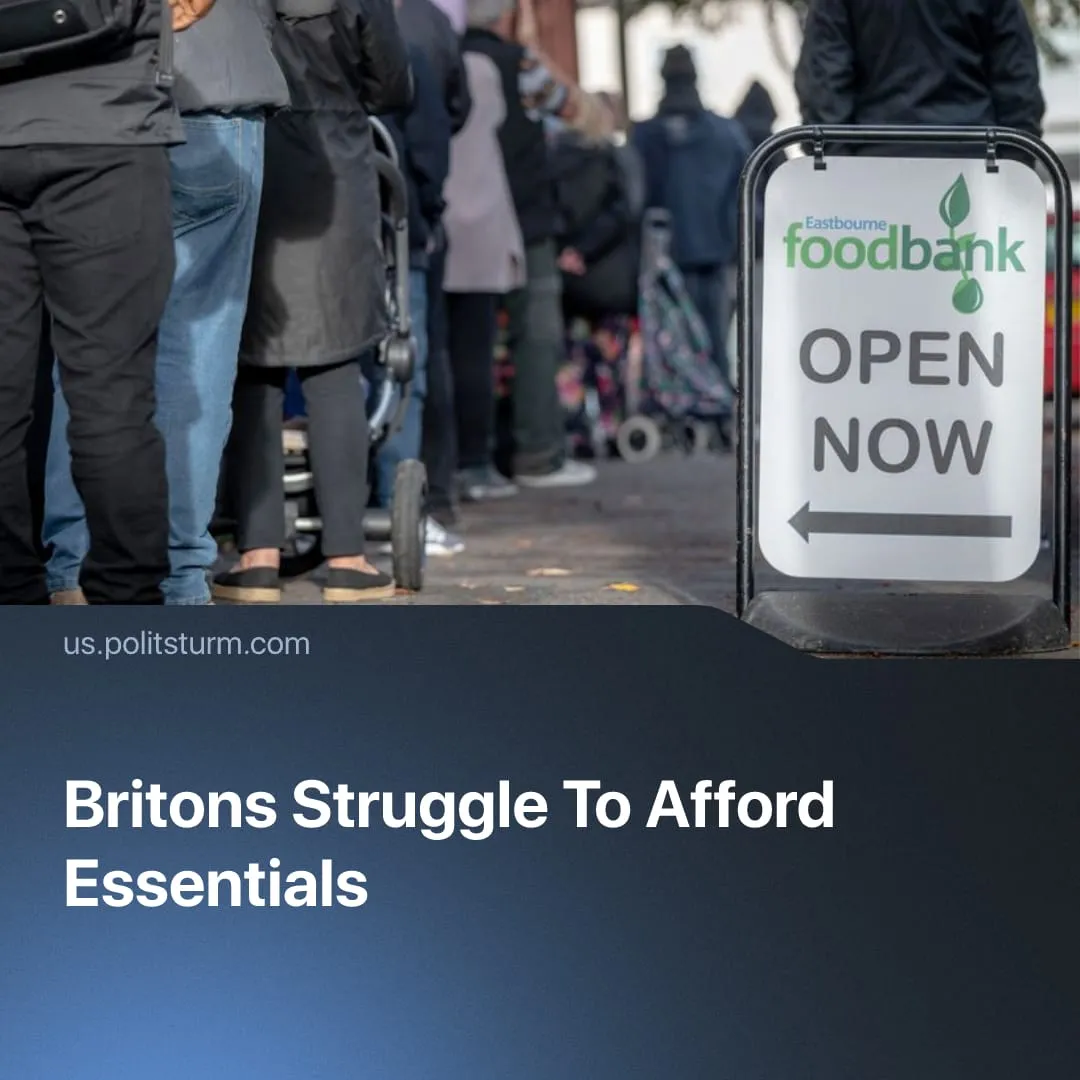
7.1 million UK households go without essentials, and the bottom 40% saw their real earnings decrease, despite Labour’s promises to tackle the cost of living crisis.
Details. 63% of UK citizens report that they need to cut back on essentials and consider inflation as the main economic issue. 5 million low-income households have cut back on or skipped meals because they cannot afford food.
► 30% of households in the UK are classified as being in “fuel poverty”.
► Nominal wage growth slowed to 4.3% for most workers, and the bottom 40% of households saw a 10.1% decline in real earnings. Plans to equalise wages between young workers and adults were delayed.
► For the 20% of the UK population that lives in privately rented flats, rent costs account for an average of 44% of their income. The social housing waiting list contains ~1.34 million applications, a ten-year high.
► The UK's unemployment rate hit a near five-year high in the last three months of 2025, reaching 5.2%. Among 16-24-year-olds, unemployment is above 16.1%, outpacing the five-year peak.
Context. The current Labour government was elected in a “landslide”, but with the lowest turnout in 20 years. It promised wide state-led interventions into housing policy, cheaper energy bills, low inflation and job creation. In reality, inflation has risen from 2.2% to 3.8%, and plans to build 300,000 houses yearly were missed.
► The Labour government has pursued a policy of increasing the profits of the capitalists, such as by freezing corporate tax at 25% and accelerating militarisation. 120+ business leaders backed the Labour Party as the preferred alternative in the 2024 elections, with Starmer often consulting them to attract investors.
► The government tried to expand austerity measures – such as not scrapping the two-child benefit cap and implementing a promised crackdown on “sickness benefits” – but faced a push back both from the public and their own parliament, causing a temporary retreat.