

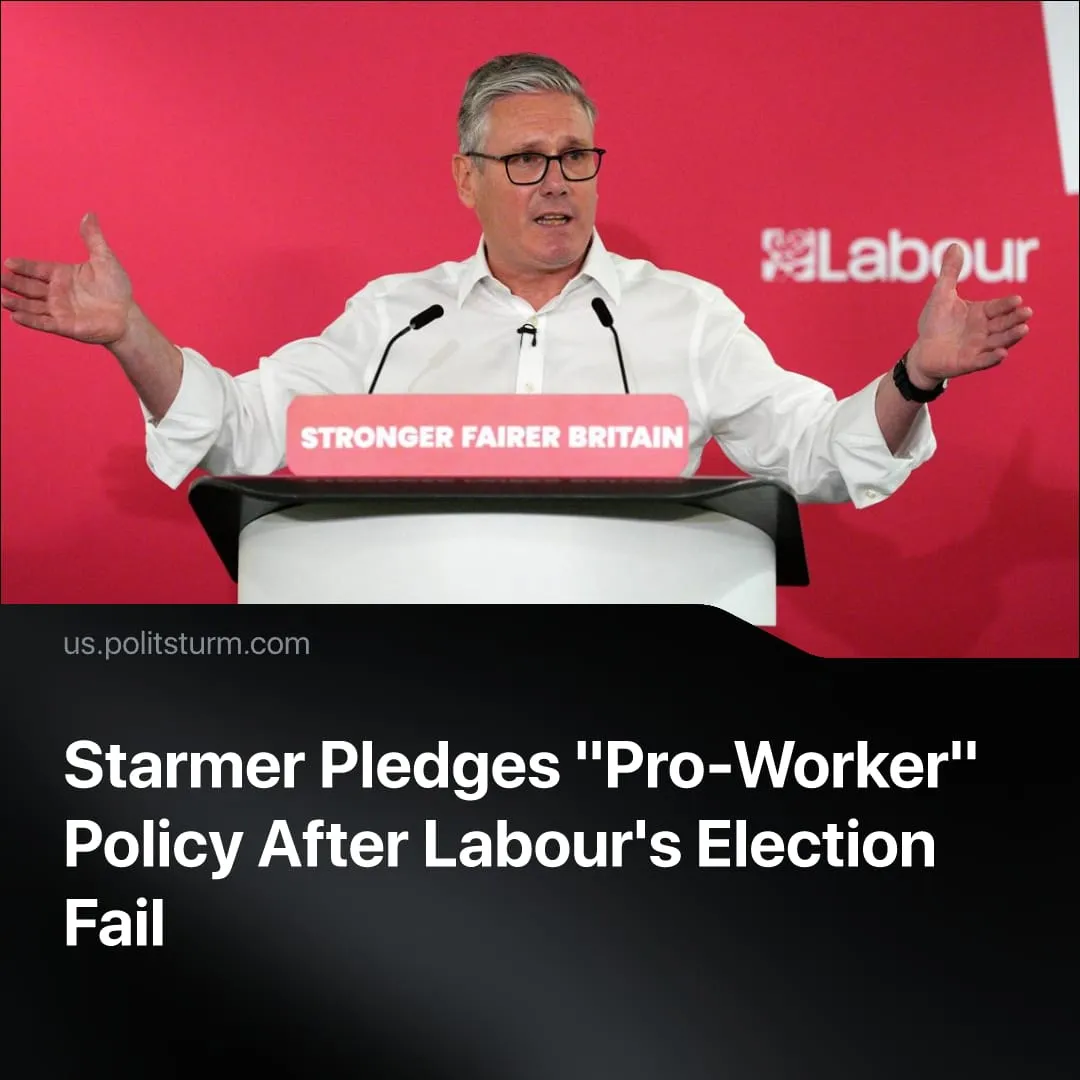
“I’m on the side of working people,” UK Prime Minister claims after disastrous election results. To prove this, he announced new policies aimed at defending the British capital.
Details. Labour suffered a major defeat in the 2026 local elections, losing 1,498 councillors while Reform UK gained more than 1,454 seats across former Labour strongholds. Labour also lost ground in Scotland and Wales, where the SNP advanced and Plaid Cymru brought an end to a century of Labour dominance in the Welsh Parliament.
► In his response speech, Starmer attempted to present himself as pro-worker, declaring that he was "on the side of working people" and recalling the experience of his working-class family, who "work harder and harder, but worry about the cost of living." He claimed Labour would "deliver for ordinary people" and bring "immediate change."
► As examples of this, Starmer then outlined three new policy priorities: nationalising British steel production, pushing for closer economic ties with the European Union, and enlarging the "Pride in Place" programme, which aims to direct £20 million in investment into struggling towns.
► Despite this repositioning, pressure on Starmer has continued to grow. More than 80 Labour MPs have reportedly called for his resignation or set a timetable for his departure. His health secretary, Wes Streeting, has quit the cabinet and called on Starmer to resign, while other more popular Labour members are preparing for a leadership contest.
Context. During Labour's time in government, living conditions for British workers have continued to worsen. Britain has faced worsening public health, rising youth unemployment, and growing difficulty affording essential goods.
► At the same time, Labour has expanded repression and surveillance measures by retaining anti-protest laws, broadening police powers, expanding facial-recognition surveillance, and pushed for the implementation of a digital ID system.
Important to Know. Despite presenting the new policies as pro-worker, Keir Starmer has consistently centred his programme around "growth," presenting increased profits and investment as the solution to Britain's crisis. Starmer's earlier defence of the two-child benefit cap, which affected the poorest workers the most, highlights the hypocrisy of his "pro-worker" language today.
► The nationalisation of steel production further secures a strategic industry for British capitalism. Having already taken emergency control and spent £419 million in public funds covering wages and raw materials, the government will now compensate the previous private owners for the asset. The earlier emergency control bill passed with cross-party support, including from right-populist Reform UK.
► Closer ties with the EU aims to strengthen Britain's position within a larger imperialist bloc amid global competition, aligning UK policy with EU strategies that increasingly include austerity measures to fund rearmament, tighter cross-border surveillance, and coordinated economic and military policy against rival powers.
► The "Pride in Place" programme offers only relatively modest £20 million funding packages for deprived councils, such as support for local businesses, while doing little to reverse austerity or meaningfully improve conditions for workers.