

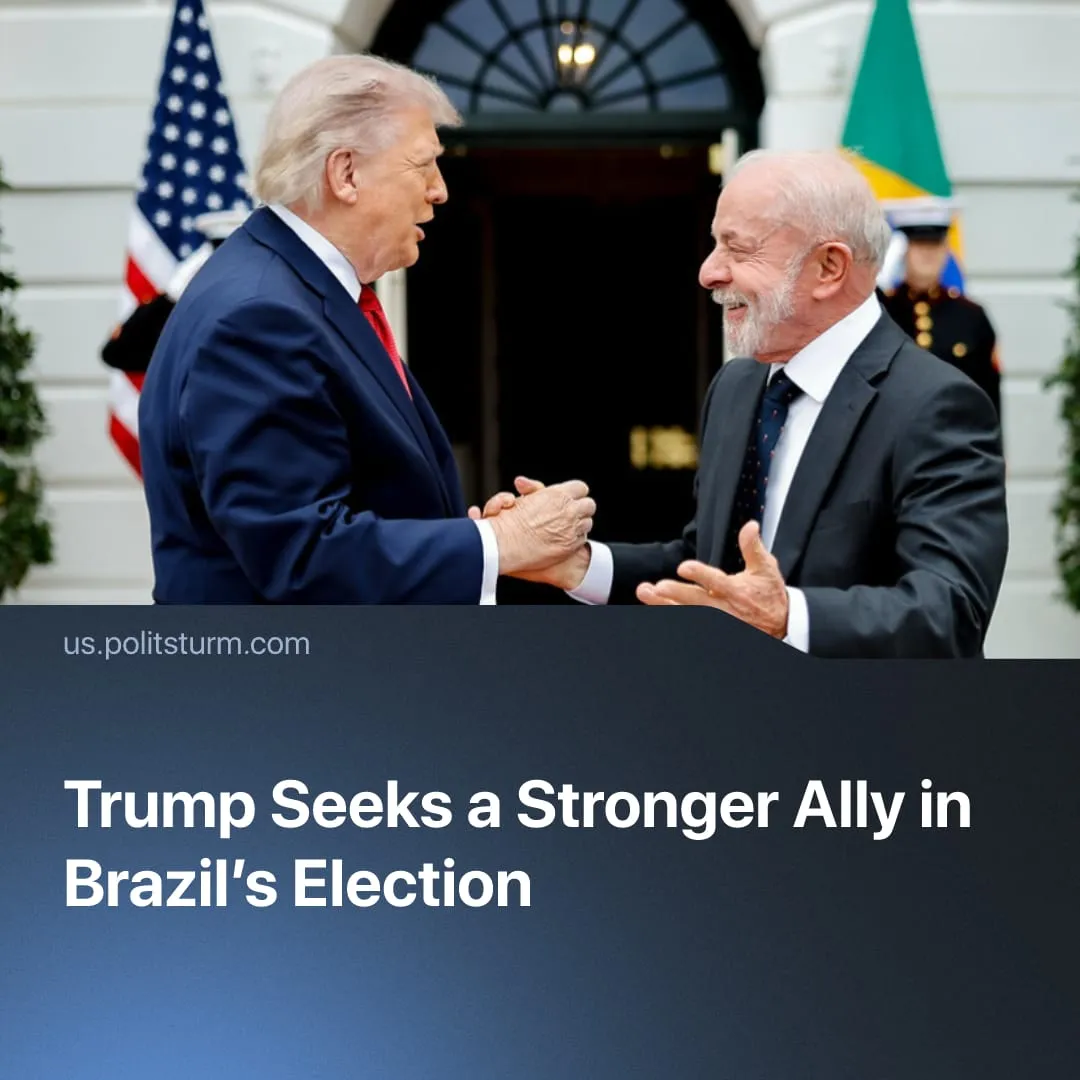
Trump eyes up Brazilian elections as he seeks to secure yet another ally in Latin America. Lula’s reformist government has directly contributed to the electoral success of the far-right.
Details. Trump has admitted to watching the Brazilian elections “very closely”, praised Flávio Bolsonaro’s “big victory” in the first round of elections, and condemned the “witch-hunt” of his father, ex-President Jair Bolsonaro. The Brazilian Intelligence Agency warned that the risk of American interference had reached critical levels.
► In the first round, Bolsonaro led with 47% against Lula’s 45.2%. Demonstrations are now taking place across Brazil as Lula supporters join a broad coalition mobilising to win the second round. Many polls now show the candidates virtually tied.
► Bolsonaro has promised to restart Brazil’s privatisation programme and previously expressed interest in privatising Petrobras, the state oil company – though his coordinator now denies this. He seeks closer integration with Washington rather than Beijing through free-trade agreements, rare-earth partnerships and support for Trump’s “Shield of the Americas”.
► Lula defends closer BRICS ties, cooperation with the “Global South” and reforms to institutions such as the UN. He promises “sovereignty” through increased military spending and protection of Brazil’s rare earths and other resources. He has ruled out privatising major state-owned companies and backed ending the six-day work week.
Context. Numerous Latin American countries, including Argentina, Colombia and Paraguay, have recently elected Trump allies, often amid allegations of US interference. These victories followed left-wing reformists who had increasingly lost workers’ trust. Venezuela and Cuba are somewhat different, but form part of the same picture.
► Austerity, privatisation and the rollback of workers’ rights followed, alongside US access to crucial resources. Often under the pretext of combating drug cartels, military cooperation with Washington has exerted further pressure across the continent, enacting the “Donroe Doctrine” and displacing Chinese capital.
► The US has heavily used its war on narcoterror to justify operations in Latin America. Trump accused Venezuela and Colombia of harbouring cartels he labelled terrorist organisations, and has recently classified two Brazilian cartels similarly.
► Brazil holds the world’s second-largest confirmed rare-earth deposits, is a major oil and gas producer, and plays a crucial role in food production. Covering nearly half of Latin America and maintaining close ties with China and Russia through BRICS, it is a high priority in Washington’s efforts to secure its “neighbourhood”.
Important to Know. Lula and his Workers’ Party were elected on promises to improve conditions under capitalism without replacing it. With initial mass support they secured some concessions, but exploitation continued and the workers’ movement was demobilised. With capitalism firmly intact, these gains were eventually eroded as capital renewed its offensive.
► Bolsonaro’s election would undoubtedly accelerate the deterioration of bourgeois democratic rights and Brazil’s submission to US interests. However, Lula’s election would not save Brazilian sovereignty either. Lula has overseen the sale of rare-earth mines to the US along with growing submission to Chinese capital. What is truly being disputed is not sovereignty, but which imperialist bloc Brazil will align with in a future major war.
► So-called communists in Brazil are surrounded by Trotskyists and opportunists, divided among small, fractured parties or operating as individual influencers without any vanguard party. Whatever the result, the task of communists is to build a genuine party of a new type, influential among the masses and asserting an independent class position.
Politsturm regularly provides communist analysis of political situations, and is working to create genuine vanguard parties around the world. Follow us on Telegram, YouTube, Discord and X. Join us to help us in our work.