

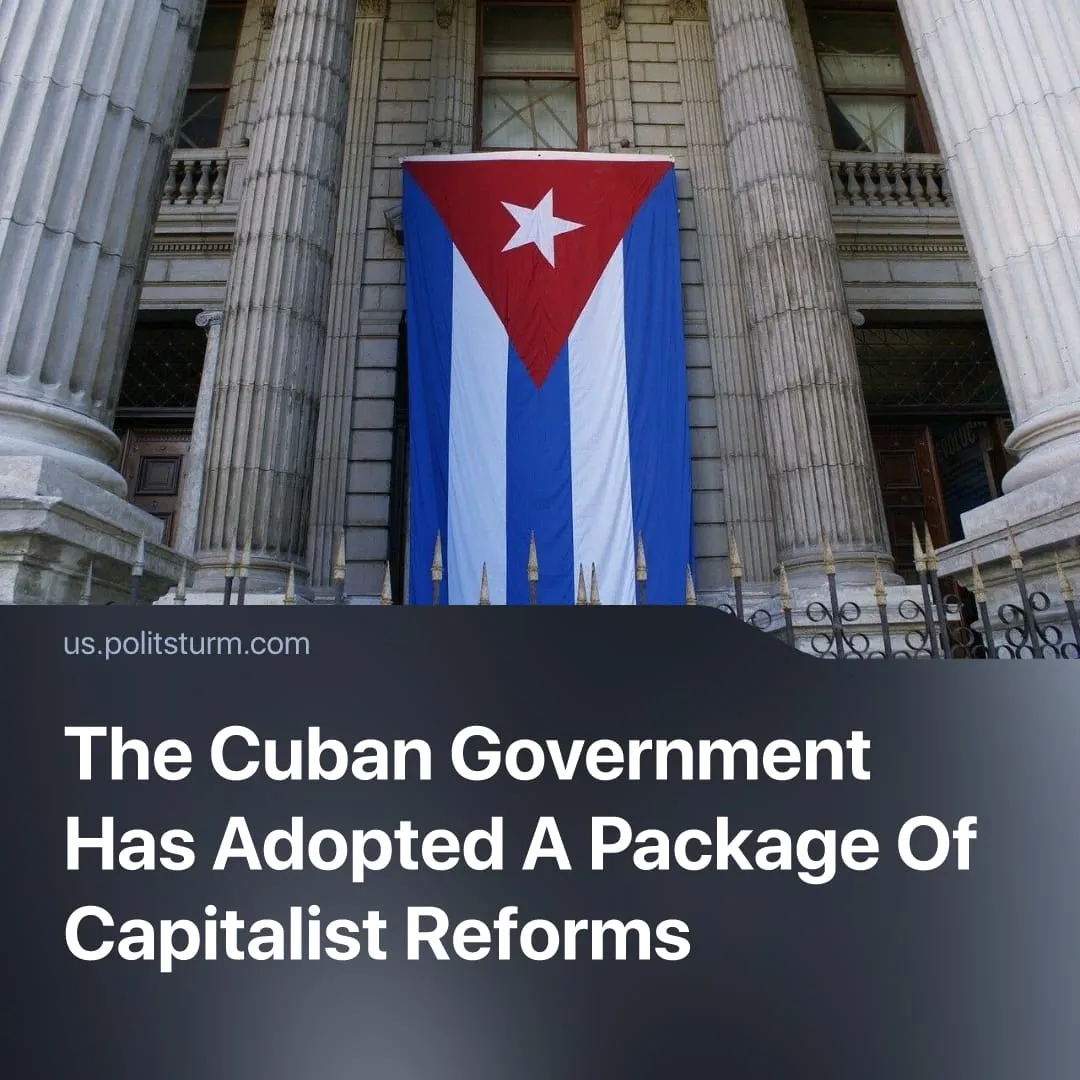
Cuba becomes capitalist. New laws include the legalization of the bourgeoisie, IPOs for state-owned enterprises, and invitation of American capital.
Details. On June 18, the Cuban parliament adopted a package of "economic and social reforms".
► The document consists of 176 "transformations" grouped into 23 sections. Politsturm has grouped the most important changes.
General transition to capitalism. Many of the “reforms” establish the framework of a typical market economy. Price determination is transferred to the private sector, to be governed by market forces (Sections 1, 7, and 13). The creation of private banks is permitted (Section 11). The list of prohibited activities for non-state economic actors has been shortened (Section 12). The capitalization of private companies is permitted (Section 1), as is the right to own more than one private company and to hold shares in multiple companies. Corporate taxes and "economically unjustified taxes" are reduced to encourage the growth of private capital (Section 12).
Public ownership turns into state-capitalist ownership. "Socialist state enterprises" will lose their special position in the economy and be restructured as commercial companies. State-owned companies will be able to acquire shares in other companies. Mechanisms for bankruptcy, liquidation, and restructuring of public-sector assets will be established, and non-governmental organizations and individuals will be able to purchase shares in them (Section 1). State-owned enterprises will access resources and foreign currency through market mechanisms. State orders will be fulfilled through contracts (Section 3). State-owned enterprises will also be permitted to use foreign platforms for the purchase and sale of fuel (Section 6). The role of central planning will be reduced to "an instrument for diagnosis, forecasting, and adjustment of [economic] policies". In essence, a legislative formalisation of state-capitalist ownership.
Privatization of state property. Section 1 establishes a "National Program for the Assessment and Registration of Ownership Rights to State Commercial Assets," which will conduct an inventory and issue certificates of ownership. Local governing bodies will be free to control local enterprises as they see fit.
Elimination of the state monopoly on foreign trade. Companies will be able to independently enter foreign markets and manage their own import and export operations (Sections 1 and 7). The requirement to obtain permits from the Ministry of Foreign Trade and Investment has been abolished (Section 15).
Opening the domestic market to foreign capital. Private and foreign capital participation in the import and sale of fuel is permitted. Restrictions on the use of foreign currency in transactions between the domestic market and foreign-owned companies have been lifted. Foreign currency accounts may now be opened without government approval (Section 11). Section 14 is devoted entirely to foreign investment: investors will have access to land on 99-year usage agreements, real estate companies will be able to purchase residential properties, and cultural heritage sites will be open to private investment.
Inviting American capital into the country. Section 16 proposes a transition to "partial dollarization" of the Cuban economy. Section 17 lifts restrictions on tourism companies. Section 19 opens the country to the establishment of branches of foreign companies, including international retail chains, restaurants, and fast food outlets.
► In addition to general investment authorization, the reforms place particular emphasis on an investment program for Cuban emigrants (Section 2). The Cuban diaspora in the United States is the largest community of Cubans outside the island, numbering nearly 3 million people compared to a total national population of approximately 11 million. The rhetoric around "Cubans abroad" is intended to obscure the fact that the opening of the Cuban economy is primarily designed to attract American capital.
A reduction in the role of the state in the social sphere. A sharp reduction in the number of budgetary agencies is proposed (Section 4). The creation of microcredit organizations is permitted (Section 11). Territorial and urban planning, food security, and municipal public services will be "decentralized" (Section 5). Subsidies for the purchase of goods will be replaced by fixed per-person cash payments (Section 9).
Tax increases. Section 12 introduces a value-added tax and raises taxes on land and water transportation, official documents, environmental services, advertising, and commercial publicity.
Context. The adoption of these laws consolidates processes that have been unfolding in Cuba for decades. Even prior to these reforms, Cuba's economy was dominated by large state monopolies – most notably GAESA, which controls around 40% of GDP – alongside small private businesses, both operating along capitalist lines. In 2024, the private sector became dominant in Cuban commerce for the first time, accounting for 55% of economic activity.
► The “reforms” were tabled amid intensified US pressure in the Caribbean, marked by the military escalation and effective takeover of Venezuela in January. Since then, the US Navy enforced a blockade of Cuba in an effort to push the island back under American influence. This prompted US–Cuba secret negotiations, reportedly conducted through secret talks similar to those that preceded Venezuela's reorientation toward Washington.