

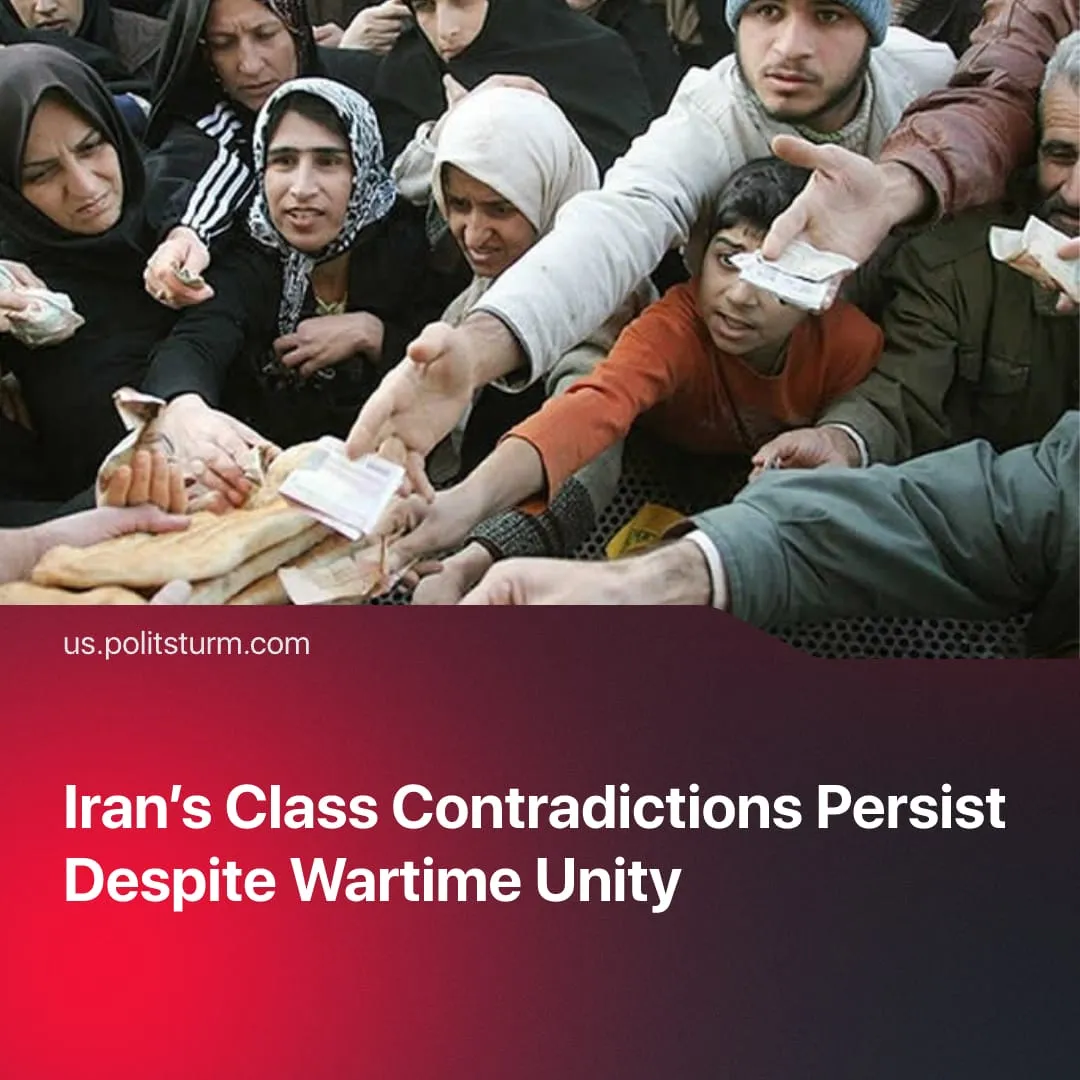
Iran’s class contradictions have not been resolved through conflict, despite nationalist sentiment rallying around “defence of the homeland.”
Details. Iran’s economy faces deep structural deficits and mounting pressure. Official data from the Statistical Center of Iran show point-to-point inflation above 73%, with staples such as cooking oil rising by over 200%. This surge is sharply eroding living standards, with 36% already below the poverty line before the recent escalation.
► Chronic strain on Iran’s power infrastructure has led to recurring rolling blackouts across major cities, driven by rising demand and fuel constraints. At the same time, the country faces a systemic water crisis, with authorities imposing supply cuts and rationing in urban centres, deepening the ongoing economic damage caused by Western sanctions.
► These crushing economic conditions triggered large protests across the country in early 2026. However, Iran had already been experiencing frequent protests in preceding years. In 2024, nurses walked out of hospitals over unpaid wages, while in 2023, pensioners and industrial steel workers in Ahvaz rallied because they could no longer afford basic food.
► In response to the broader protest waves in the lead-up to the conflict, state repression reached extreme levels, with reports indicating that the death toll rose into the thousands.
► Through nationalist and religious messaging in official media, the government has fostered wartime unity in “defence of the fatherland,” temporarily overriding labour action. This has driven pro-government mobilisations, including mass demonstrations and symbolic actions such as civilians forming human chains around key infrastructure sites.
Context. Iran’s national revenues rely heavily on oil exports, while military-linked conglomerates control all major state-owned enterprises and operate as near monopolies, often cited as accounting for around 60% of GDP.
► Iranian capital has suffered compounding regional defeats, including the loss of allied influence in Syria, the systematic weakening of its proxy network across the Middle East, and the strategic defeat of its allies in Gaza.
Important to Know. Because the underlying economic conditions of capitalist exploitation remain intact, the current illusion of ideological unity is temporary. Once the wartime justification wears off, or if the economy worsens further, these unresolved contradictions will break through government control and could rapidly develop into a revolutionary situation.
► Without the organised leadership of a genuine communist party, this working-class anger remains highly vulnerable. Competing foreign powers actively attempt to exploit these domestic movements, aiming to hijack protests or uprisings to install a compliant, pro-Western capitalist state, as they attempted during the pre-war protests, encouraged and supported by Trump and Israel.
► While global sanctions intensify the crisis, capitalist relations remain the primary cause of poverty. The Iranian bourgeoisie systematically exploits its workers and represses dissent even without external pressure. Throughout the strictest periods of international sanctions, the number of high-net-worth individuals in Iran actually increased by over 20%, allowing the ruling elite to secure record profits and continue living luxurious lifestyles abroad.
For a deeper analysis of the US-Iran conflict, see the Marxist position on this subject: The Middle East: Architecture of War.