

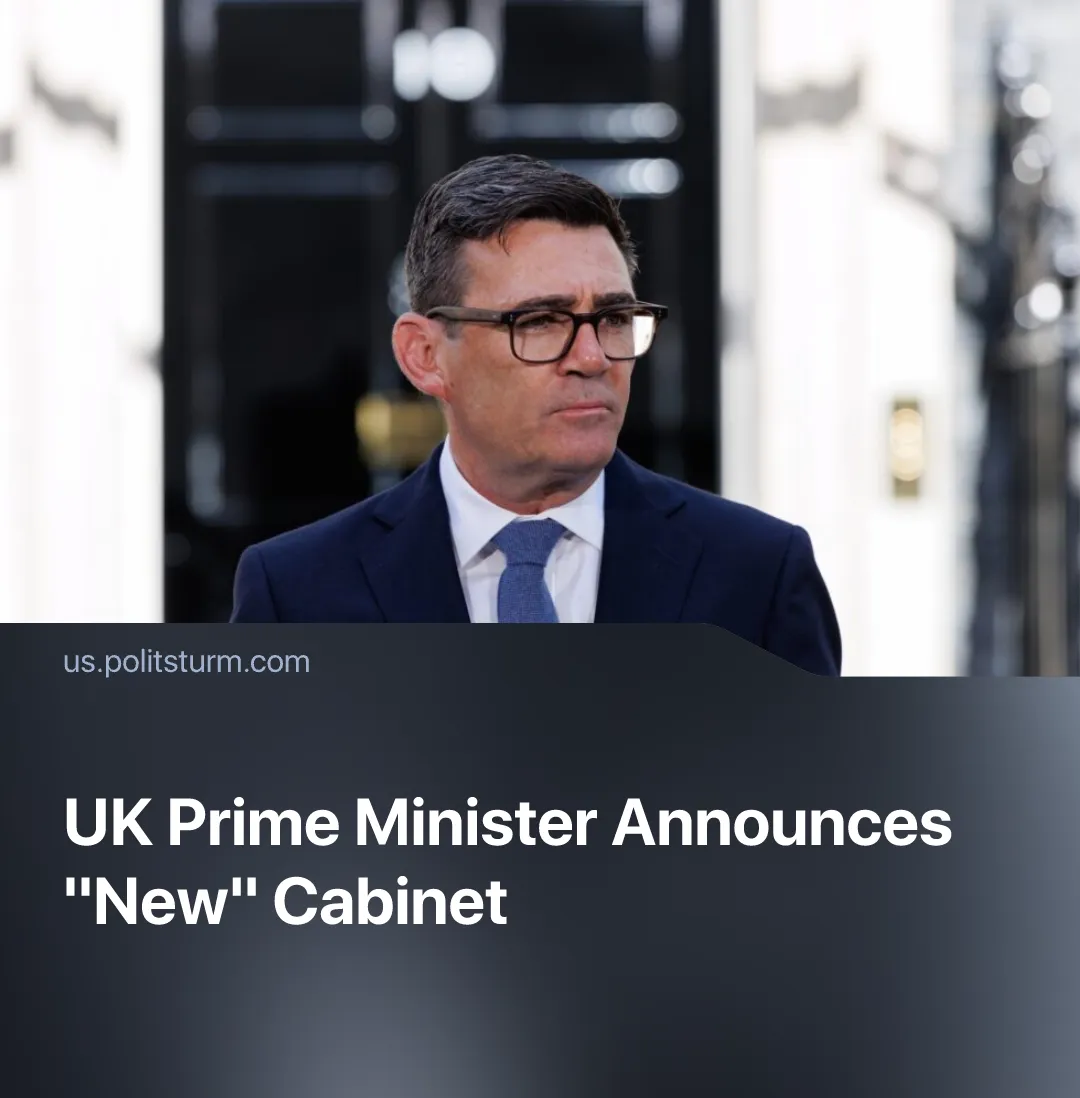
The UK's new “Trump-approved” Prime Minister forms his Cabinet. It maintains many MPs from Starmer’s cabinet, including those who defended militarisation and who strengthened the police.
Details. On July 20, Andy Burnham took office as the new Prime Minister after Keir Starmer’s resignation, and named several Labour members of Parliament to join his cabinet, with many of the former PM’s old cabinet retaining important positions.
► John Healey was appointed Chancellor, i.e. the chief financial minister. He had resigned from his post as Defence Secretary two months prior due to a military spending dispute with former Prime Minister Keir Starmer, demanding more funds. Even the opposition, which had also demanded a higher military budget increase, welcomed Healey's return.
► Shabana Mahmood remains Home Secretary. She is known for her goal of building an AI-powered permanent surveillance system in prisons and policing in general, her harsh stance on immigration and deportation, and her push to grant police extra powers to suppress protests.
► Wes Streeting was appointed Defence Secretary. He was previously Health Secretary, but resigned after “losing confidence” in Starmer's leadership. As Health Secretary, Streeting sought to attract more private investment into the National Healthcare Service (NHS) – an approach he’s expected to apply in his current role at the Defence Ministry, alongside cutting waste. Streeting was also among the potential successors for Starmer.
Context. Starmer’s government was elected amid economic stagnation and a cost of living crisis; he promised stability, change and “wealth creation" through a partnership with private capital. However, upon taking office, they failed to meaningfully change the situation; the party had vague policies and went through numerous U-turns, the cost of living crisis persisted, and the far-right continued to grow.
► Similarly, Andy Burnham says people seek change, and promises to “immediately” reduce the cost of living through “business-friendly socialism”. Some of his proposals are deprivatizing municipal services, making public transport free for young people, delegating some power to the regions, and introducing a vague housing plan. Additionally, he has promised targeted tax cuts for small businesses and higher taxes on retailers like Amazon.
► Upon his election, Burnham was endorsed by Donald Trump, who wished him “good luck”. Burnham recently authorised oil drilling in the North Sea – something that Trump criticised Starmer for refusing to do. The two also discussed trade, military alliances and the demining of the Hormuz Strait, agreeing to maintain close contact.