

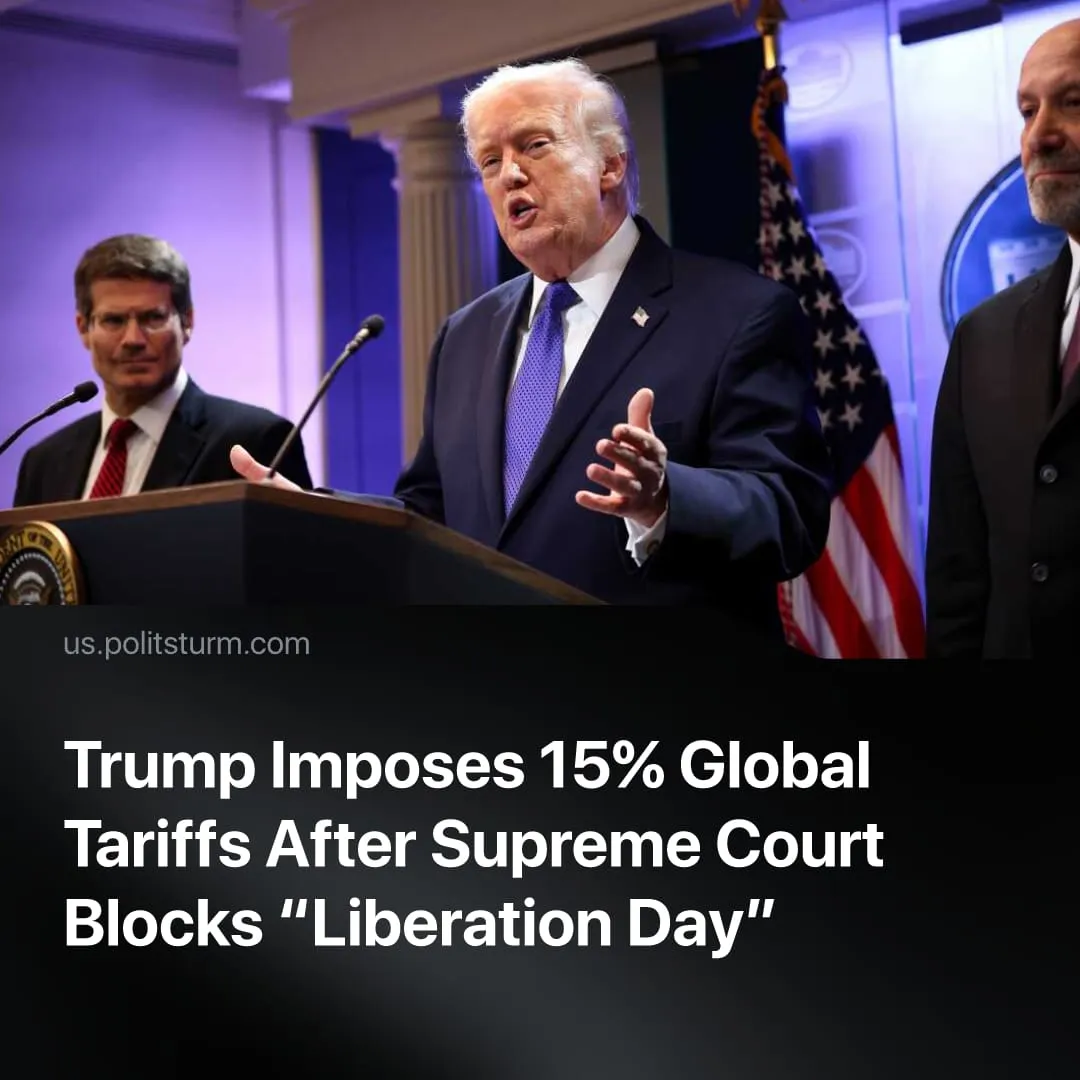
US Supreme Court blocks ‘Liberation Day’ tariffs. Trump responds by using executive powers to enforce 15% additional global tariffs.
Details. The Supreme Court ruled 6–3 that Trump’s “Liberation Day” tariffs – and all second-term tariffs imposed under emergency powers – were unlawful, holding that the president cannot impose such tariffs without Congressional approval. The majority included three Republican- and three Democrat-appointed justices, including two of Trump’s, while the three dissenting conservative justices defended broader executive authority.
► Following the ruling, Donald Trump held an emergency press briefing denouncing the decision as “very unpatriotic,” insinuating the Court was influenced by “foreign agents” and “radical left democrats,” and boasting that his executive powers allow him to enforce even harsher trade measures such as embargoes.
► Trump responded by enforcing the 10% “Liberation Day” tariff he had planned, then immediately raised it to the legal maximum of 15%; these measures are limited to 150 days unless extended by Congress, with Trump signalling additional “legally permissible” tariffs will follow.
Context. This ruling reflects conflict within the capitalist class. The Trump-aligned dominant factions use tariffs to strengthen the US, constrain traditional allies, and prepare for conflict with rival imperialist China. While other sections fear market instability, damaged alliances, and growing domestic unrest, preferring the more predictable “Biden-era” management of imperialism through regular liberal-democratic mechanisms.
► Throughout his second term, Trump has repeatedly expanded executive authority – on trade, immigration, and internal repression – testing constitutional limits and further centralising control of the state. When federal courts ruled against his emergency tariffs earlier in his term, he proceeded to enforce them.
► Trump is likely to continue using executive trade powers. He has already imposed a new global tariff and plans further trade investigations and import taxes under other statutes, such as those allowing tariffs for balance‑of‑payments issues and national security concerns – these powers are temporary, narrower in scope, slower to implement, and cannot be set at arbitrary rates.