

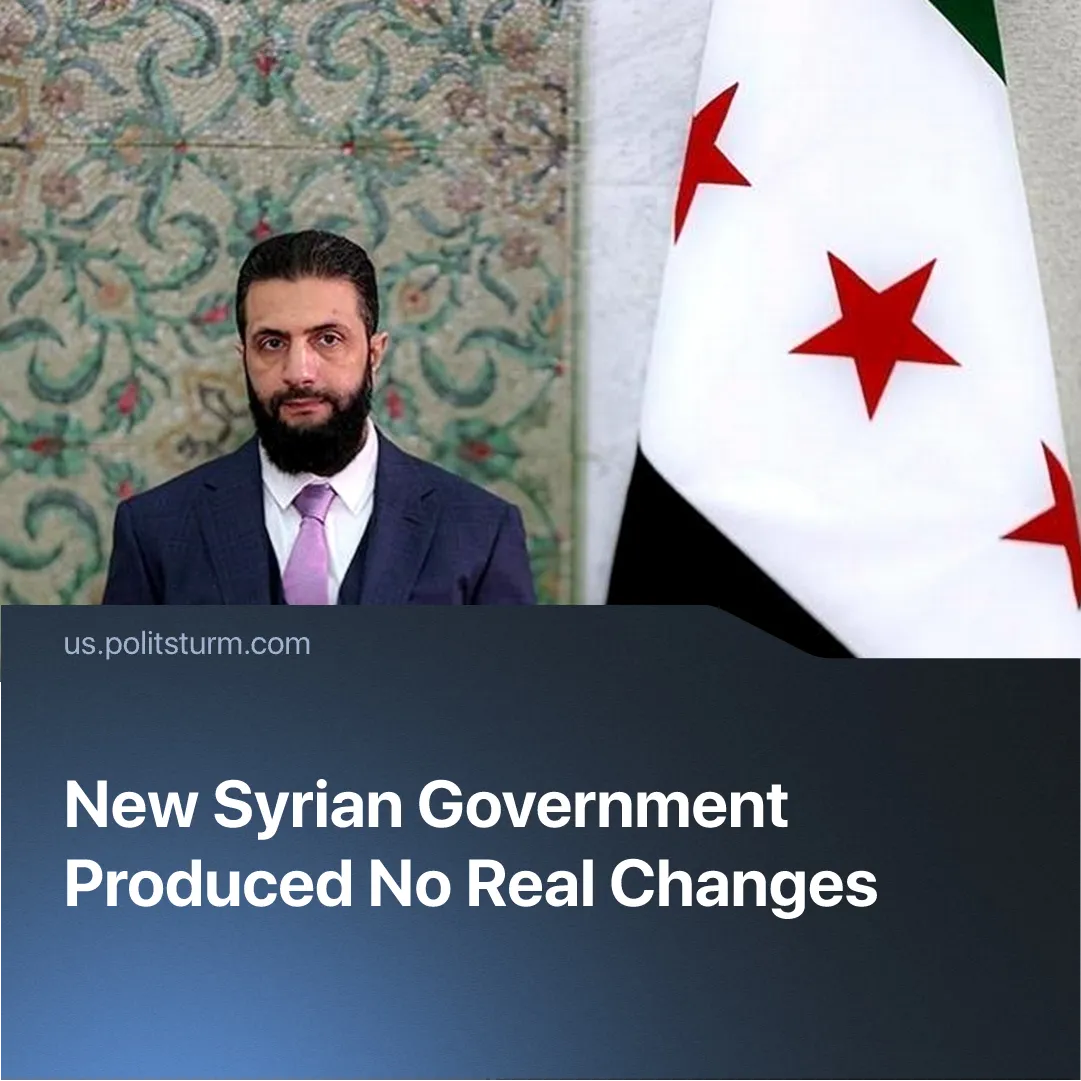
The Assad regime fell in Syria a year ago. Since then, the new government has failed to address a single major issue
Details. Since overthrowing the Assad regime one year ago, the Islamist-led Syrian rebels have consolidated a new government, achieving internal and external recognition. In 2025, their Syrian Transitional Government (STG) established direct control over 70% of Syrian territory, set up a new constitution and parliament, and promised democratic reforms.
► The STG also achieved international recognition by the UN, representing Syria at the General Assembly. NATO imperialists endorsed their proxy’s state-building efforts; Assad-era Western sanctions on Syria were lifted.
► Despite their loss, Eastern imperialists China and Russia also cautiously accepted the STG. Trump invited the new President on a state visit, as did Putin, who congratulated him on the anniversary of Assad’s fall. Only Israel and Iran broke with their blocs and remained hostile to Syria’s new regime, due to regional priorities in opposing Turkish expansion.
► The new government proclaimed its “free-market” orientation, and announced privatisation. The lifting of sanctions and Syria’s reintegration into global financial systems enabled Western investments, attracting $28 billion in the first six months. 1.2 million wartime refugees returned to Syria this year. All this enabled the first GDP growth surge in 15 years, after the civil war (2011–2024) had destroyed Syria’s economy.
Context. Syria has long been a battleground for contending imperialist forces, who fight to gain control of the country’s resource wealth. Both sides of the civil war – Assad's defunct Baath Party and the former Syrian rebels – represented different capitalist interests.
► Iranian, Russian and Chinese capitalists previously exploited Syria through their puppet Assad – militarily backing his brutal regime to secure their profits. They have lost ground in the Middle East this year, including in Syria, due to defeat in the imperialist regional war.
► Western capitalists sought to take over Syria from their rivals by funding rebel groups, including jihadists. One year ago, Ukrainian and Turkish NATO forces supported the rebel offensive that toppled the Assad regime, ousting the Russo-Iranian presence.
Important to Know. The new government serves predominantly Western capital, which took charge of Syria’s logistics and energy sectors from its previous imperialist owners. Assad’s fall enabled Turkey’s monopolies to flood the Syrian market; their exports there surged by 54%. Turkish capitalists expect further profit opportunities, projecting another 50% increase in trade volume with Syria, planning to eventually reach $10 billion annually. This rewards their intervention in the civil war.
► Despite the STG’s attempts to appease foreign imperialists, it is powerless to stop continued interference in Syria. This year, Israel invaded the south, sponsoring Druze separatism. Iran supported insurgents undermining the STG to maintain smuggling routes. Turkey directed its proxies in Syria’s new army to attack Kurdish and Alawite minorities, furthering economic interests. Russia hosts Syrian exiles, including billionaire capitalist Rami Makhlouf, who are actively funding private armies of rebels to undermine the STG and fragment Syria.
► Mainstream Syrian capitalists have changed their tactics, using the STG for domestic reforms and geopolitical realignment because their old regime failed to secure their class position. Despite former loyalty to Assad, they have made deals with the new government, endorsing the STG’s vision of economic opening and increased profits.
► Syria’s elites have promised the masses that they will bring the old regime’s torturers and executioners to justice, but have simply replaced these with new ones. “Revolutions” that are not led by the conscious, organised working-class itself always end this way.