

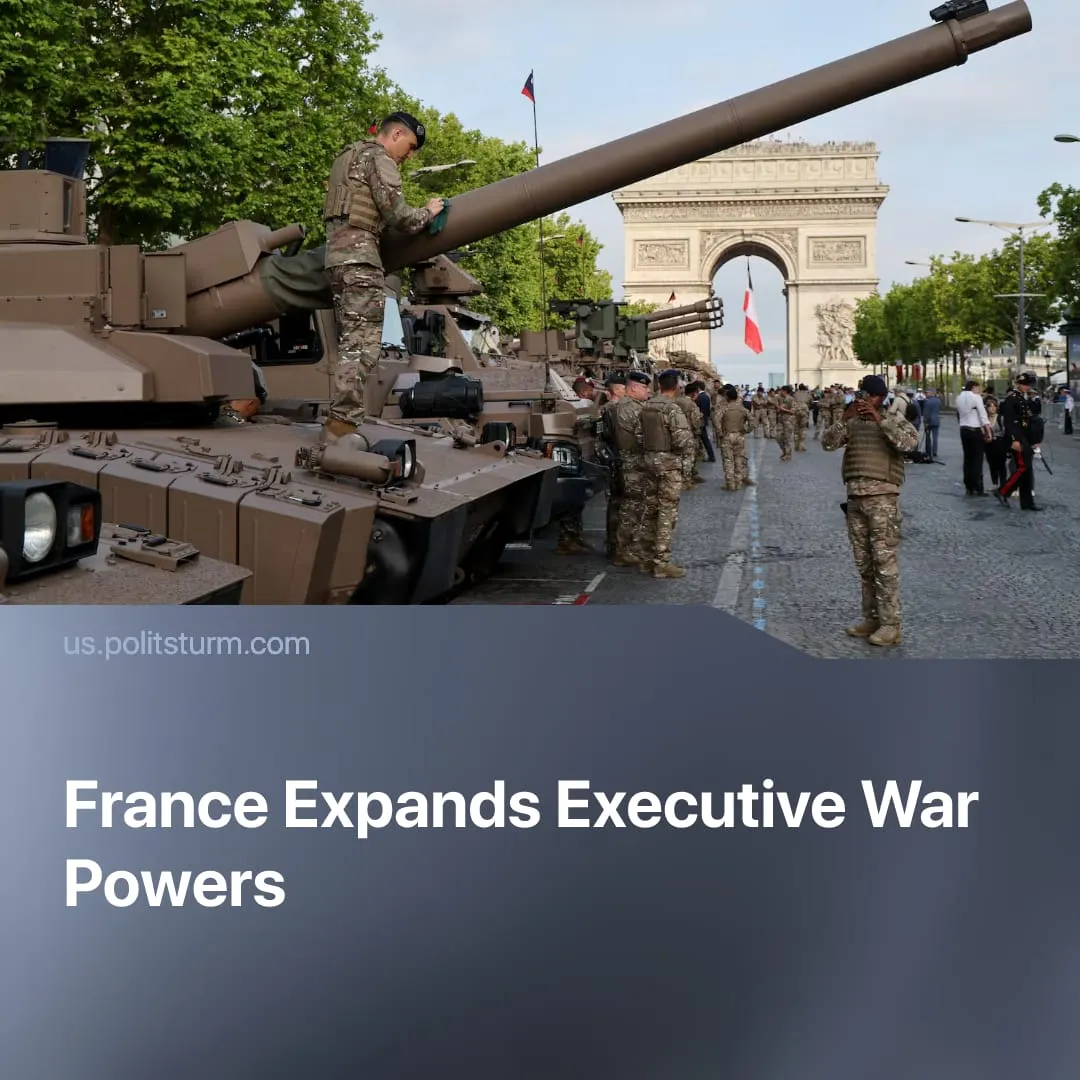
France expands executive emergency powers for war. A party co-founded by a former SS officer stands to inherit them.
Details. France's government has advanced an update to the Military Programming Law, creating a new "national security alert state" that would allow the executive to rapidly expand its powers during a "major security crisis."
► The law would allow the government to bypass administrative barriers, accelerate military infrastructure projects, requisition resources, and facilitate the deployment of French and allied troops. Although largely framed around the possibility of war with Russia, the criteria for declaring such a crisis remain vague.
► Macron's government and the far-right National Rally both voted in favour of the law. While LFI, the Greens, and “Communists” formally voted against, their criticism amounted to little more than complaints that the emergency trigger criteria were too loosely defined. Left-wing deputies were also notably absent during the vote itself, with only 17 bothering to vote against it.
Context. Current polling suggests the far-right National Rally could win the 2027 presidential elections, meaning these expanded emergency powers may soon fall into even more reactionary hands. Although National Rally previously held more anti-NATO and pro-Russian positions, it has largely abandoned them, and now supports intensifying France's "war economy" policies and militarisation.
► National Rally was co-founded by Jean-Marie Le Pen alongside a Waffen-SS veteran. Le Pen himself had served as an intelligence officer in Algeria, conducting interrogations during the Battle of Algiers, work he later described as resembling that of "an SS officer and a Gestapo agent."
► France and Germany have both sharply accelerated militarisation in recent years, including expanded rearmament programmes, "voluntary" conscription, new nuclear and missile projects, and proposals for broader European nuclear protection, as both states attempt to position themselves as leading powers in a remilitarised Europe.
► Europe had already been militarising for years, but these efforts accelerated sharply as relations with the United States worsened over disputes such as Greenland, trade tensions, and differing approaches to conflicts like Iran.