

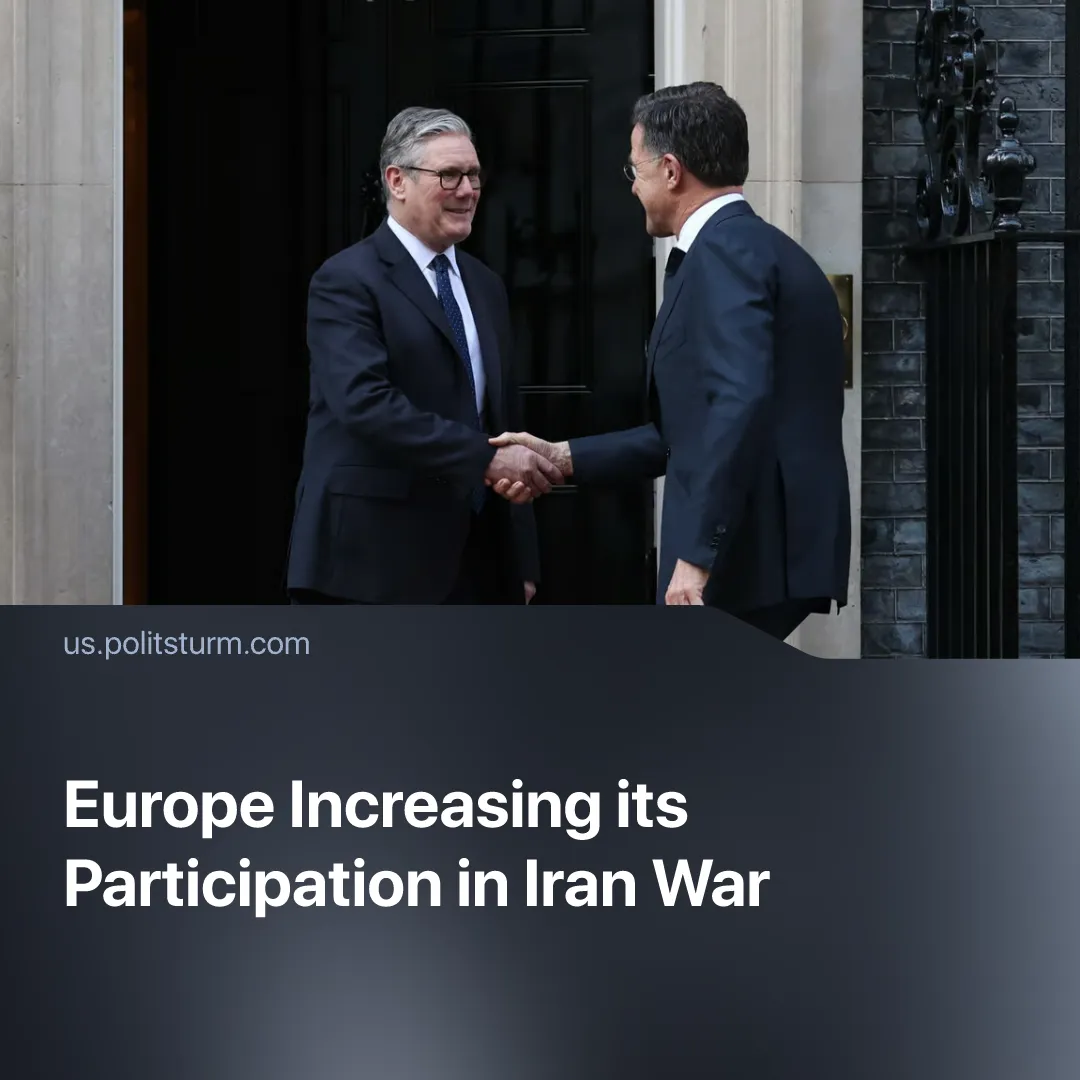
European countries are beginning to offer direct support to open the Strait of Hormuz after having previously resisted, calling it “not our war.”
Details. European countries initially denied Trump’s request for help in opening the vital Strait of Hormuz. The EU’s foreign policy chief, Kaja Kallas, explained that Europe had “no desire to engage in military action against Iran.” Germany said “it is not [their] war” and the UK’s Prime Minister said they would not be “drawn into” the wider conflict, along with similar statements from other European countries.
► Predictably, Trump reacted negatively. Having previously warned of a “very bad future” for NATO should it deny assistance, he called the refusal to assist in the Strait a “very foolish mistake” and expressed disappointment in leaders such as the UK’s Prime Minister. Donald Trump then claimed that he does “not need the help of anyone!”
► Despite the initial firm posturing, countries began offering indirect assistance, such as the UK allowing its bases to be used to degrade Iran’s missile sites, whilst France has, for the first time since the start of the conflict, allowed American bombers to cross its territory.
► Now the UK is expected to lead a coalition of 30 different countries – including Germany, Italy, France and the Netherlands – which will discuss “appropriate measures” to reopen the Strait, with the Prime Minister already suggesting he might send minesweeper ships to help clear the passage for commercial vessels.
Context. Since Trump’s latest term, Europe has accelerated efforts to decouple from the US and exert its own imperialist power – both as individual countries or as a bloc. Europe has previously militarily supported American wars in the Middle East, which ended up dragging on for years.
► The EU’s primary concern is the military operation in Ukraine, which it continues wanting to support via loans – with this only being blocked by Hungary. A war in Iran risks diverting attention and resources away from Ukraine.
► Around 20% of global liquified natural gas (LNG) passes through the Strait of Hormuz. Europe gas is expected to rise 40% above previous forecasts for 2026, with predictions showing they will remain elevated in 2027 as it must compete with Asian markets for the limited supply. EU gas storage currently stands at 29% of capacity.
► The current war in Iran is unpopular with the European population, with this likely becoming more acute as the economic downturns caused by the war are shouldered by the working class. Public opposition to the war has been opportunistically used to boost domestic popularity, such as Spanish Prime Minister Pedro Sanchez.
For a deeper analysis of the US-Iran conflict, see the Marxist position on this subject: The Middle East: Architecture of War.