

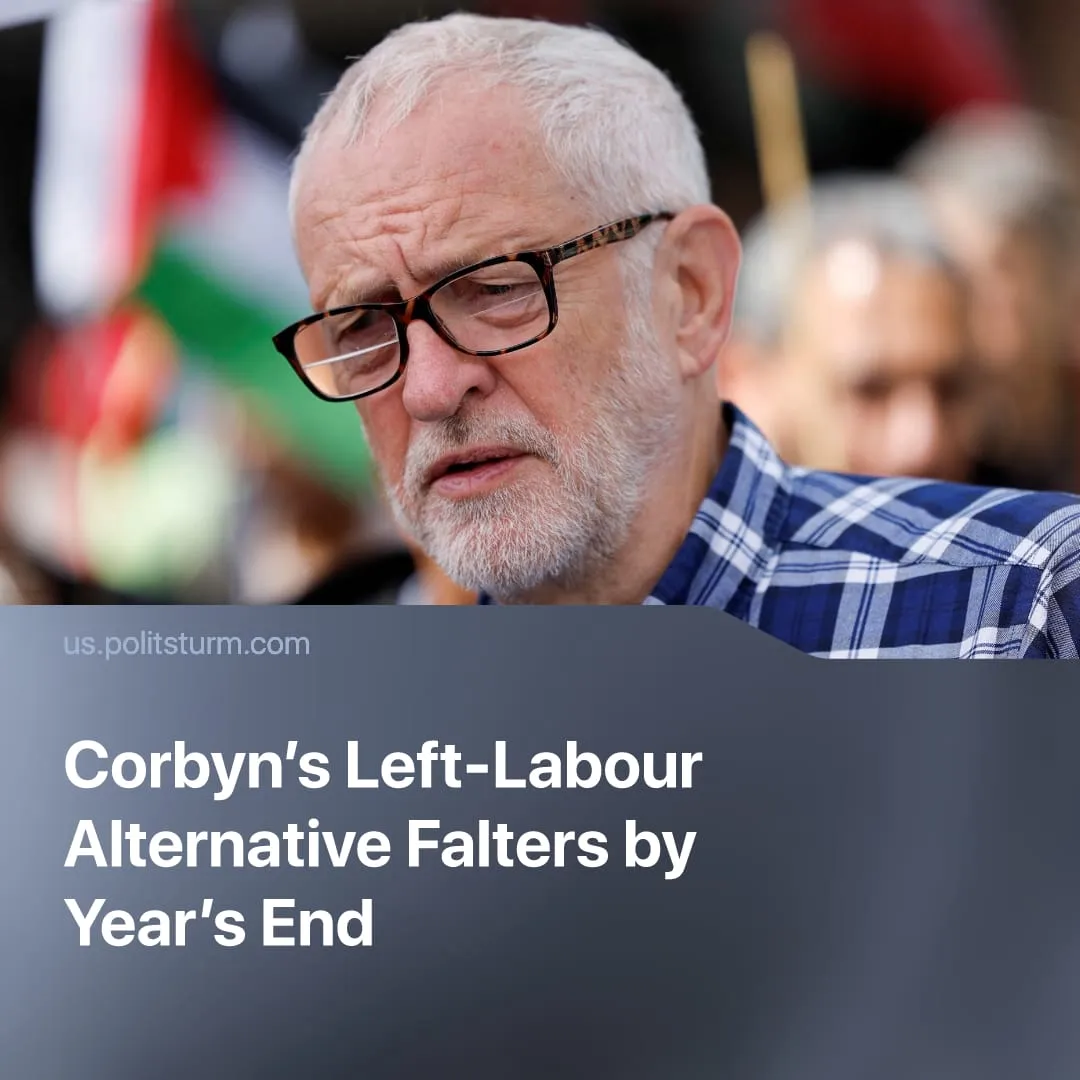
Corbyn promised a “fully democratic socialist party” in early 2025. By year’s end, Your Party had fallen to public infighting, split into factions, and adopted a programme similar to Labour's.
Details. In July, after leaving Labour, MP Zarah Sultana announced a new party with the former Labour leader Jeremy Corbyn. Using populist language, she presented the project as a "genuinely democratic socialist" party.
► Signs of enthusiasm for a new movement were clear. Many expressed interest in joining via social media, with 800,000 sign-ups to the party newsletter, and unofficial branches were formed to discuss the party's local reach. Opinion polls showed significant potential for the new party. Trotskyist groups quickly called for entry, seeking influence.
► The project was marked by immediate public infighting over procedures, leadership and membership. Tensions peaked when Sultana opened a membership portal without collective agreement, prompting accusations of a power grab from Corbyn’s camp and leading to disputes and legal threats.
► As these conflicts played out publicly, Your Party lost momentum while competitors on the left advanced. The Green Party, under new “eco-socialist” leadership, surged from around 68,500 to roughly 150,000 members, while Your Party’s eventual launch lagged at about 50,000 paying members.
► These conflicts reflected a deeper political split over the party’s structure, which became clear at the founding conference. Corbyn’s faction argued for banning dual membership and establishing a unified leadership to prevent infiltration and impose a clear hierarchy, appealing primarily to his former Labour support base. By contrast, Sultana advanced “maximum democracy”, collective leadership and dual membership, openly courting a broad, organised layer of left-wing and Trotskyist groups organised in the “Socialist Unity Platform”.
► Despite the populist slogans, the party ultimately adopted a programme closely mirroring Labour’s.
Context. The UK's two traditional parties have seen popularity fall sharply, with Labour at 16% and the Conservatives at 18% with voter turnout declining overall, reflecting growing dissatisfaction. 12% still express interest in Corbyn and Sultana's new party amid deep political and economic stagnation.
► We have already shown that previous “socialist alternatives to Labour”, such as the Socialist Labour Party in 1996 and the Respect Party in 2004, initially attracted activists and discontented voters. However, they were unable to retain this support due to organisational weakness, internal conflicts and a lack of coherent policy. This pattern is now being repeated.
Important to Know. The struggle for socialism requires a scientific understanding of capitalism – its laws, contradictions, and historical limits – rather than moral outrage and vague populist slogans. "Socialist" groups such as Your Party lack Marxist leadership and operate on revisionist or opportunist deviations from Marxism, or in its absence altogether; consequently, they are incapable of developing correct practice, producing chronic organisational instability and paralysis.
► The central flaw in Your Party is its fetishisation of “maximum democracy” in the absence of theory and discipline. While workers’ democracy is a component of socialist organisation, it is not an end in itself in the struggle against capitalism. Detached from correct theory and without democratic centralism, the organisation is weakened by factionalism and petty-bourgeois influence, producing endless discussion and paralysis.
► As Lenin emphasised, democratic centralism is a necessity for the victory of socialism: “The experience of the victorious dictatorship of the proletariat in Russia has clearly shown even to those who are incapable of thinking or have had no occasion to give thought to the matter that absolute centralisation and rigorous discipline of the proletariat are an essential condition of victory over the bourgeoisie.”