

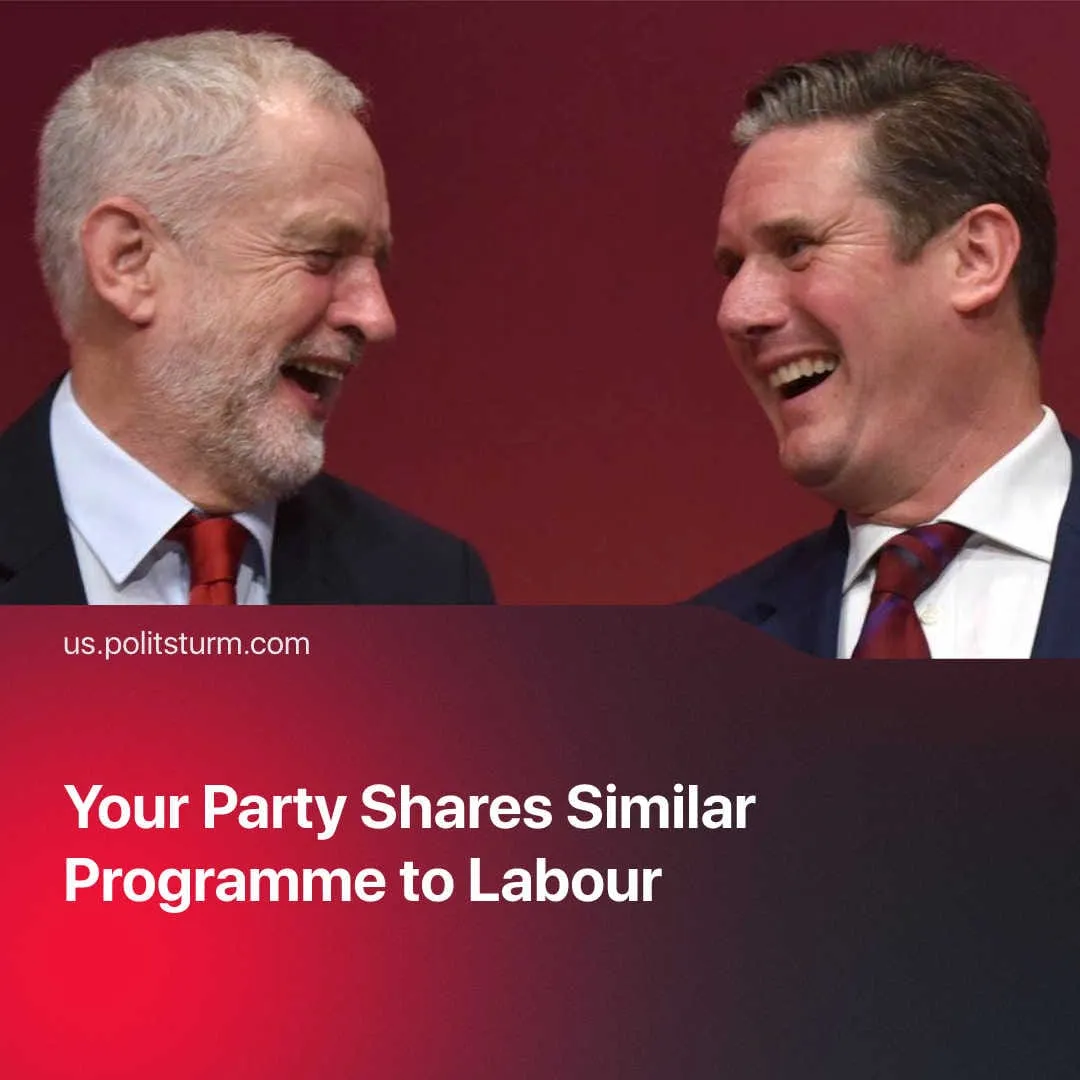
The UK’s new "left alternative to Labour" failed to present anything seriously different from Starmer's programme at its first congress.
Details. On the last weekend of November, members of Britain’s newest left party – now officially called Your Party – voted to decide the party’s policies and political positions, along with how the internal structure of the party will work.
► Politically, the party fails to present anything radically different from other left-wing reformist parties and even from the Labour party itself. The stated goals, formally outlined in its evolved constitution, amount to timid reformist demands cloaked in socialist wording. In its congress, the political statements in the constitution were voted on, and a finalised version is to come out in the near future.
► The agreed upon constitution outlines that “Your Party stands for freedom – from poverty, exploitation and war.” Similar phraseology can be found within Labour’s own constitution, which states the party fights for a society free from the “tyranny of poverty, prejudice and the abuse of power.” Both brand themselves as socialist parties and claim to defend democracy, accountable to the people.
► Your Party recognises capitalism as the cause of inequality, but aims to achieve the “democratic and socialist transformation” of society through the “public ownership of key sectors and services.” If this is all it takes to create socialism, then Labour has taken the first steps for them by nationalising British rail and by taking control of the UK's last virgin steel plant.
► The main difference between the two parties is their internal structure. Your Party members have voted to adopt a Central Executive Committee over a single leader, with party officials being liable to recall. But this will be rendered useless by Your Party’s permission of dual membership and having already split into numerous factions.
Context. The Labour Party formed in 1900, like Your Party, as a conglomerate of leftist activists, trade unionists, socialists and Marxists. But already in 1913, Lenin had already branded it a workers’ organisation “that is most opportunist and soaked in the spirit of liberal-labour policy,” with Labour revealing itself to be against real socialism by opposing the workers’ state in Russia – all whilst formally stating in its 1918 constitution that its goal was the common ownership of the means of production (this clause being removed after 1995).
► The UK’s Green Party has also experienced a surge in popularity, as workers lost confidence in Your Party over its public infighting and disunity. Adopting some radical phraseology and proposing slightly bolder reforms – even claiming they will abolish landlords – their growth represents the British workers’ desire for a real alternative to capitalism, but a lack of a true vanguard party which can lead them.