

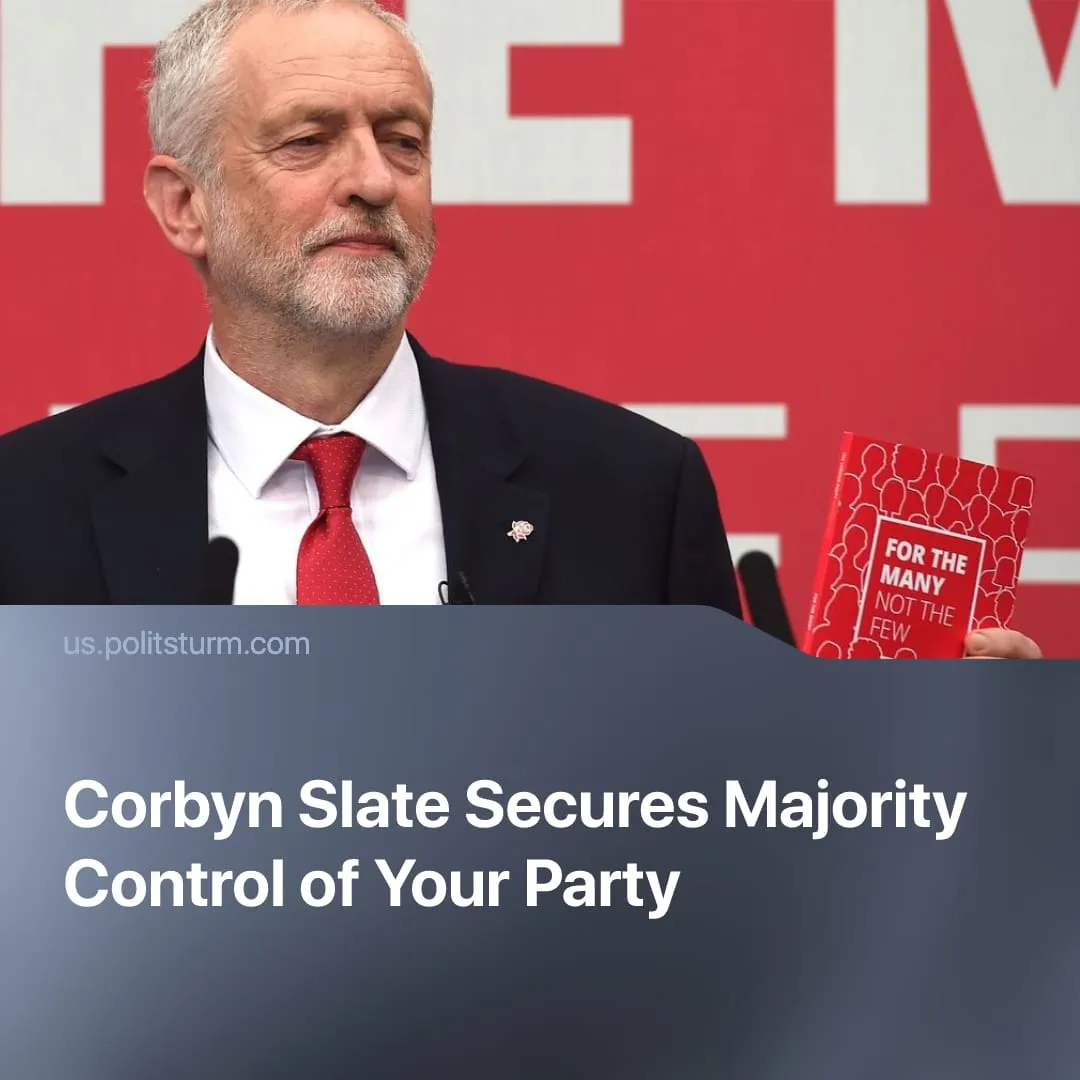
Corbyn’s slate won a majority in Your Party's leadership. With low turnout, the new “socialist” party cements its current irrelevance relative to other “non-establishment” parties.
Details. “Your Party” has announced the results of its Central Executive Committee elections. Of the 24 contested seats, 14 went to Jeremy Corbyn’s “The Many” slate, 7 to Zarah Sultana’s “Grassroots Left”, and 3 to independents. Corbyn is set to become parliamentary leader.
► Turnout was markedly low. Out of 40,985 verified eligible members, only 25,347 cast a vote – 61.8% of paying members. This stands especially in sharp contrast to the original over 800,000 who initially signed up to the party’s mailing list at its launch.
► Following the result, Jeremy Corbyn said members had voted for “a mass, socialist party that takes the fight to Starmer and Farage” and emphasised the need to unite the movement against Reform’s “fear, divisiveness and racism”, calling for cooperation “under a common cause of redistribution and peace.”
► Zarah Sultana’s Grassroots Left issued a statement calling for Your Party to work together “with no more witch-hunts or stitch-ups” and for previously expelled members to be reinstated, emphasising the need for “mutual respect, open debate, and a shared focus on the real issues facing us.
► Corbyn is now likely to build the party around the same vague social-democratic platform that defined his Labour leadership, consciously reviving its imagery and rhetoric to capitalise on residual loyalty ahead of the next elections. His slate’s name, “The Many,” deliberately echoes the 2017 Labour manifesto branding.
Context. We have previously outlined how “Your Party” has steadily lost the trust and interest of the working class. Factional disputes, particularly between the two main leaders, and the absence of any meaningful change, even in the party's program, have seemingly extinguished its initial public appeal.
► In the final results of the Gorton and Denton by-election, the Green Party of England and Wales won, with Reform UK in second place. National polling shows a similar pattern, with Reform and the Greens gaining ground as support declines for the Labour Party and the Conservative Party.
►The Greens, similar to Your Party, use left-populist language, promising redistribution but refusing rupture from the capitalist system and, therefore, are unable to deliver any meaningful change. Reform UK appeals to the “ordinary worker”, painting itself as “anti-establishment” – but it is run by capitalists and former Conservative Party members to strengthen private enterprise and tighten control over labour.