

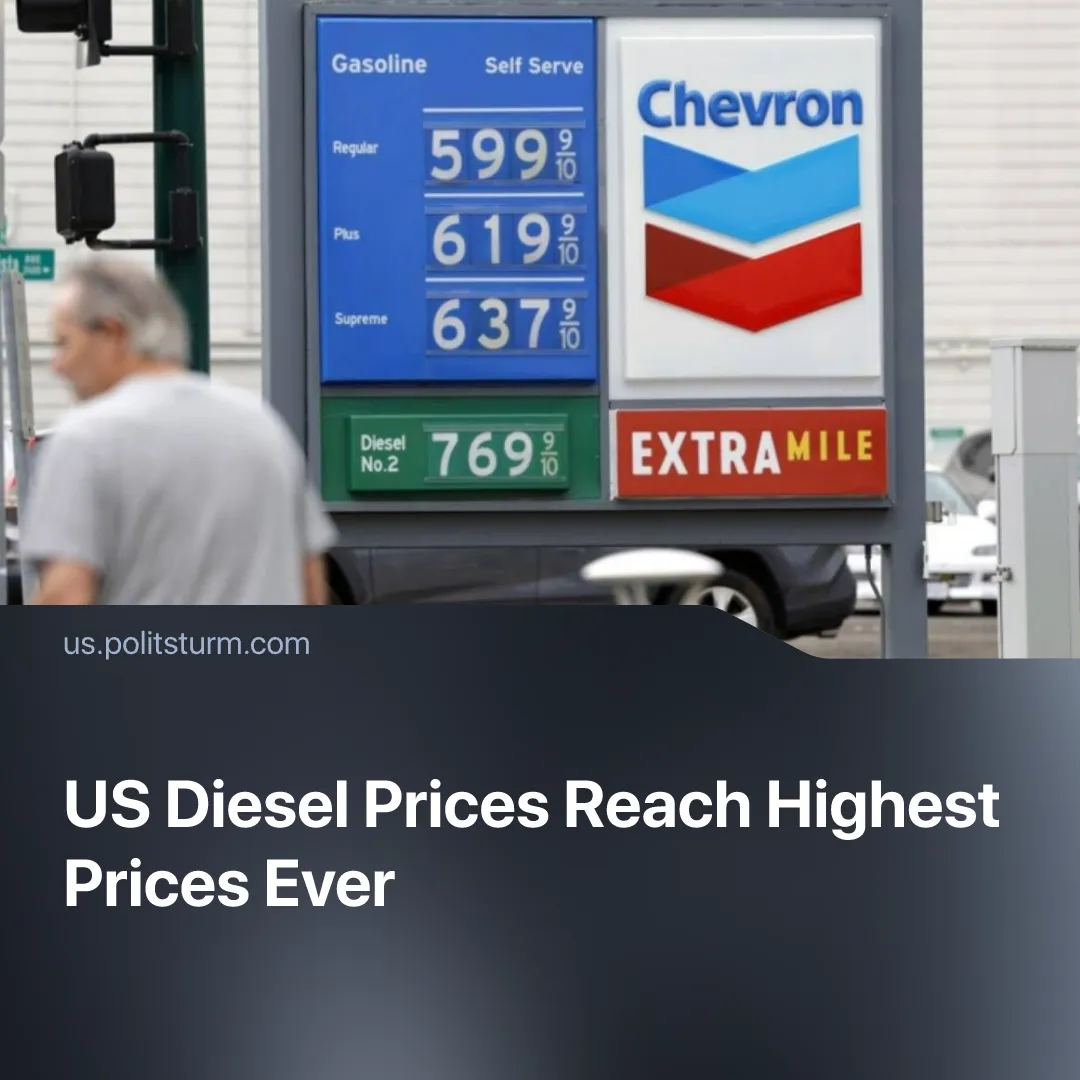
US diesel hit $6 a gallon for the first time in history. Trump’s administration started the war that caused it and deregulated the industry that profits from it.
Details. On September 11, the national average diesel price surpassed $6 per gallon for the first time ever, with 28 states recording new all-time highs. In California, the average reached almost $8. Prices are expected to rise further into early 2027 as global diesel supplies remain tight.
► Diesel powered trucks, agricultural machinery, and construction equipment, higher diesel prices feed directly into the cost of everything workers buy. Fuel accounts for roughly 15–30% of the total cost of food alone, and farmers have reported diesel costs doubling compared to the previous year, with the increase passing through every stage of production, transport, and retail.
► Oil companies are gaining huge profits from the same supply shock. Chevron's quarterly refining profit was six times higher in 2026, despite processing less crude and selling less product. Since the conflict began, US refining margins have averaged more than $50 per barrel, over twice their 10-year average, helping companies such as Valero, Phillips 66, Marathon Petroleum and ExxonMobil report record or near-record quarterly earnings.
Context. Trump's administration has consistently served oil capitalists. It opened hundreds of millions of acres of federal land to drilling, approved nearly 6,000 drilling permits – a 55% increase over the previous administration – cut bonding requirements for oil and gas companies from $500,000 to $25,000, and loosened regulations on production from public lands.
► The immediate shock came from the war with Iran. The closure of the Strait of Hormuz disrupted Middle Eastern oil exports, while Russia's diesel export restrictions further tightened the market. US diesel inventories fell to around 13% below the five-year average.
► The economic consequences have also damaged support for the administration. Trump's approval rating fell to 35% in a September Reuters/Ipsos poll, with the Iran war and higher fuel prices cited among the factors hurting his standing. Before the conflict, Trump repeatedly promised low energy prices; during the conflict he argued that higher oil prices benefit the US because “when oil prices go up, we make a lot of money” – “we” meaning the capitalist class.