

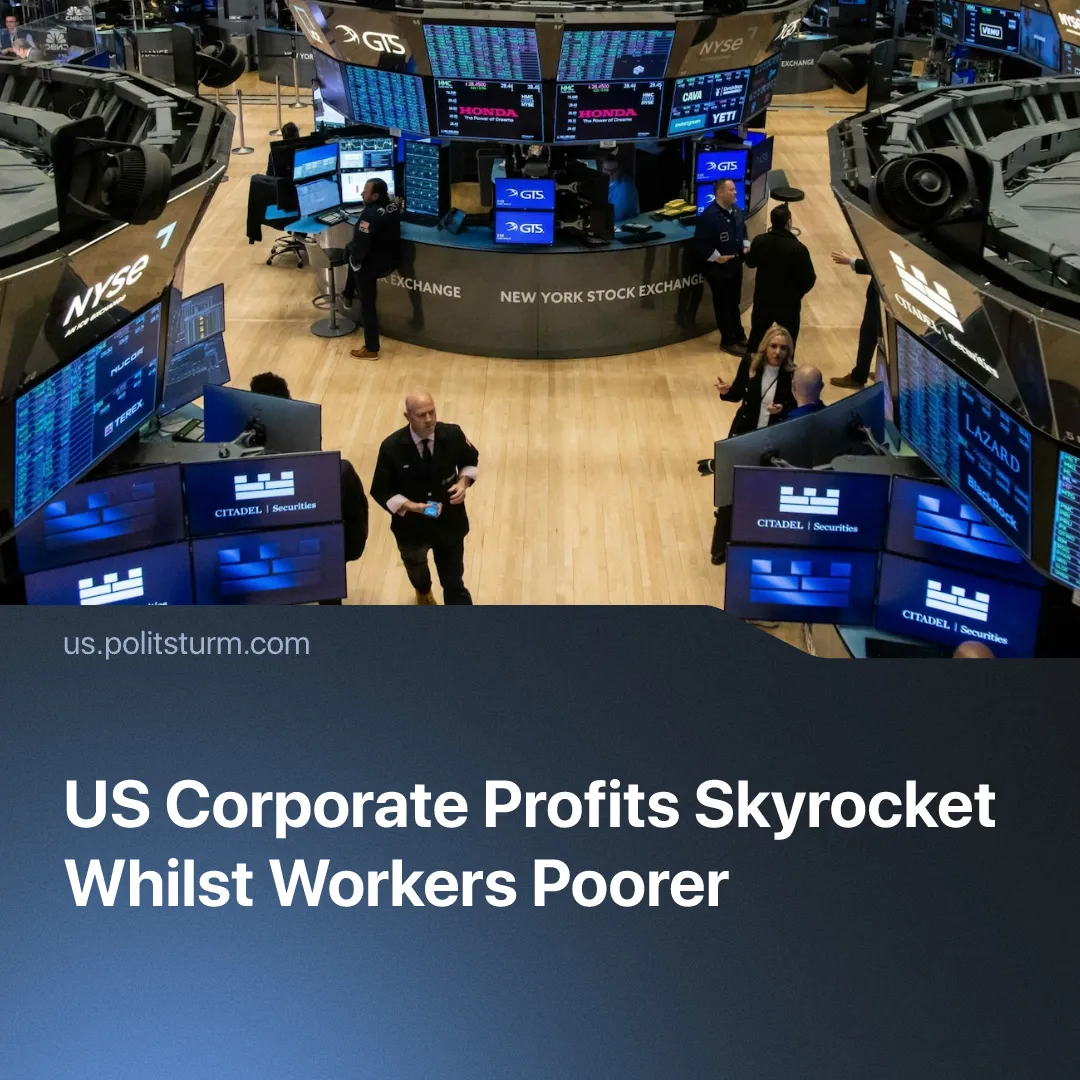
Wall Street capitalists make record profits, whilst inflation eats into American workers’ wages.
Details. Throughout Summer 2026, Wall Street stocks continued climbing despite the Iran conflict. By the start of June, the S&P 500 had gained 11% since the beginning of the year, the Nasdaq 16.5%, the Dow Jones 6.3%, while the Russell 2000 rose 17.1%, with major technology companies continuing to drive the rally during the ceasefire.
► Even in July, during renewed Middle East fighting, stocks ticked higher, led by record-high profit reports from five major American banks. Benefiting from wartime economic volatility, capitalists enjoyed a 53% revenue surge for Goldman Sachs’ markets division, and a 30% boost for JPMorgan’s investment division.
► Crude oil has jumped above $100 per barrel again, remaining well above its pre-war level of around $70. Whilst American workers face ruinous gasoline costs – back over $4 per gallon at the pump – whilst the higher oil prices increased revenues for fossil fuel giants. ExxonMobil and Chevron are expected to generate $60 billion in extra profits in 2026.
► At the same time, American workers’ real wages continue dropping. The overall Consumer Price Index (CPI) increased by 3.5% year-on-year in June 2026, led by 3% inflation of food prices and 15% increase in energy costs. Over half of Americans say their financial situation is worsening, showing that wages continue to lag behind the rising cost of essentials.
Context. The Trump administration has repeatedly made clear that workers' living standards are not a priority. Asked about Americans struggling with rising living costs, President Trump said he "doesn't think about" their growing financial burdens. The President also clarified “it’s not possible” to fund healthcare during wartime. At the same time, his administration continued strengthening ties with big business, appointing corporate executives to key advisory positions and advancing policies favourable to major capital.
► Support for big business has been expanded while reducing social spending through the Big Beautiful Bill Act, which slashed $120 billion from welfare programmes including Medicaid and SNAP. At the same time, US House Speaker Mike Johnson backed an additional $350 billion increase in defence spending to fight what he called "communism on our own shores”, proposing further social spending cuts to fund it.
► As we’ve covered previously, President Trump has repeatedly used public office to benefit corporate allies and his own financial interests. When he publicly urged Americans to "go out and buy a Dell computer" in July, the company’s stocks rose by 7.8% in one day. A few months prior, Trump had discreetly bought up to $5 million in Dell stocks, just before he boosted the company’s value by 30% through assigning them lucrative Department of War software contracts. Capitalist Michael Dell’s net worth increased by another $34 billion thanks to the President.