

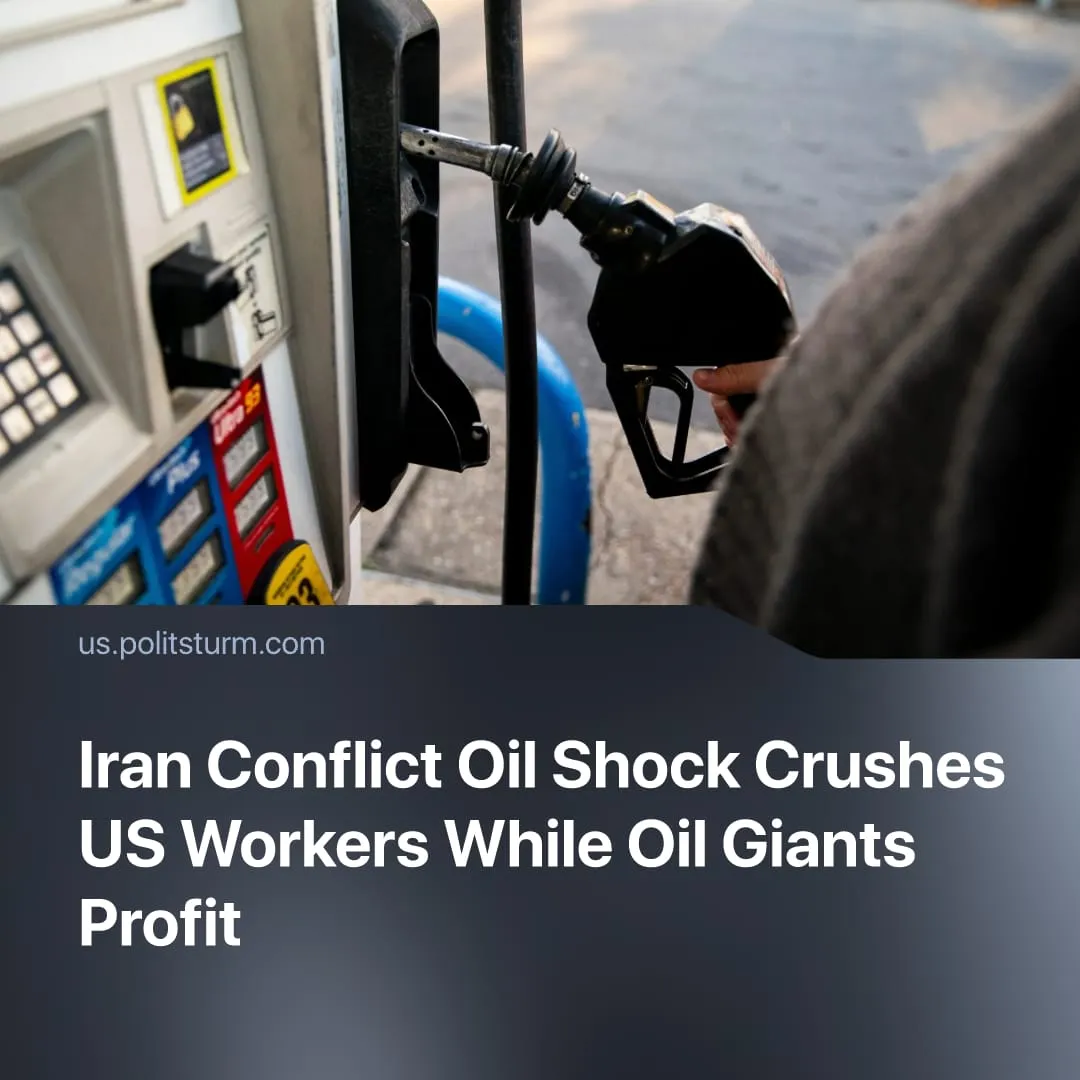
Whilst 76% of Americans drive to work, oil giants are set to pocket $60 billion in extra profits as fuel costs soar.
Details. The blockade of the Strait of Hormuz has driven global oil prices to about $120 per barrel. Since the war began, US gasoline prices are up 52%, reaching over $4 per gallon, while diesel has surged 50% to a record high.
► In response, the IEA released ~400 million barrels from emergency reserves – the largest release ever – and urged oil rationing. But the move has only temporarily stabilised prices, the release equals just 20 days of normal Hormuz traffic, only 4 days of global demand.
► Workers are feeling the hit immediately through higher commuting costs, which cut real wages even if pay stays the same. Capitalists pass on rising freight costs as higher prices. Since the conflict began, US inflation has surged to its fastest annual and monthly rate in years.
► Road transport is vital to the US economy. Diesel trucks carry nearly 75% of freight, whilst 76% of workers drive to work. Transport is already Americans’ second-largest expense, costing over $10,000 per year.
► US GDP growth remained at around 2%, with oil impacts not showing yet. Industrial output, on the other hand, decreased by 0.5% in March, the worst figure in months. However, US energy monopolies such as ExxonMobil and Chevron are expected to generate over $60 billion in extra profits in 2026 due to surging oil prices.
Context. The conflict in Iran has triggered a worldwide energy shock. The International Monetary Fund has warned of “higher prices and slower growth” across all major economies. In Europe, the crisis has increased energy costs by around €24 billion, raising inflation and putting major economies such as Germany and the UK at risk of recession due to industrial strain.
► In Asia, which is heavily dependent on Gulf energy imports (up to 70% for countries such as Japan and South Korea), the shock has caused fuel shortages, inflation, supply chain disruptions, and refiners are facing output cuts. However, countries with substantial reserves, such as China, have proven more resilient.
► Since Trump resumed office, living conditions for US workers have continued to worsen due to rising costs of essentials. Large-scale conflict spending has resulted in pressure on social programs and public services. Higher inflation and stagnant real wages have reduced purchasing power, leaving many households financially strained.