

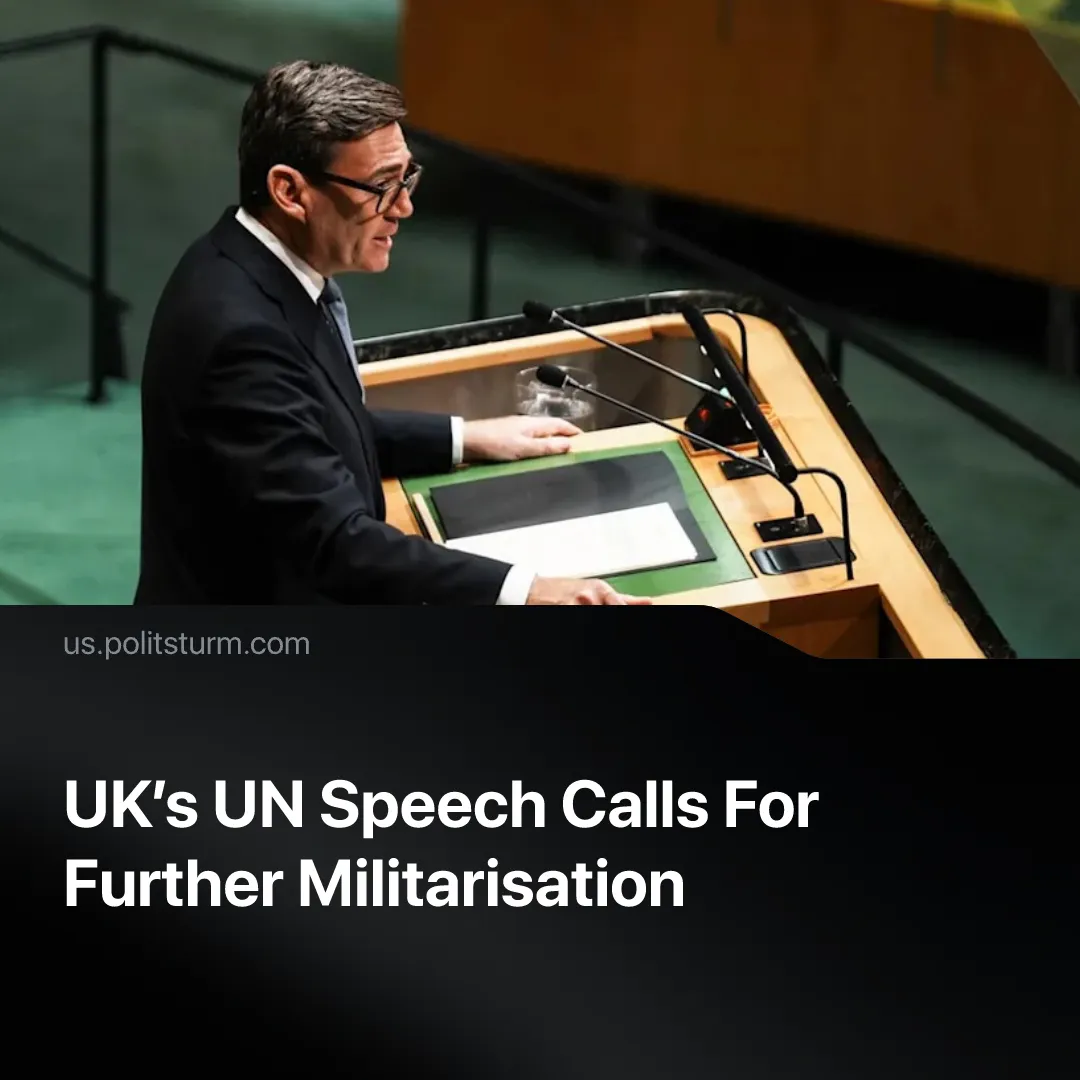
During a UN speech, the UK’s Prime Minister acknowledged that economic problems fuel instability, but called for further militarisation to overcome “division” inflamed by imperialist rivals.
Details. On 22 September, Andy Burnham delivered his first speech as the UK’s Prime Minister at the United Nations General Assembly. The main topic was “how the world can come through the turbulence of today”, with Burnham arguing that “overcoming the forces of division and instability starts with national security”.
► He responded by stating the UK will “keep investing in our defence – meeting our NATO commitments and strengthening European capabilities”. He specified that the UK “will be relentless in building up […] hard power and deterrence”, whilst claiming not to “play Russia’s game of trading escalatory rhetoric”.
► He then attributed growing division to Russian interference, describing Russian agencies’ alleged disinformation and amplification of far-right narratives as an “insidious campaign” creating “a narrative of decline, stoking division and sowing despair”.
► Burnham argued that economic insecurity makes people more vulnerable to outside influence, effectively presenting discontent as a result of predominantly external forces. Essentially, he argues that improving living conditions would foster loyalty to the imperialist state. In response, he announced a new National Centre for Information Defence to “detect, attribute and disrupt” hostile state information attacks.
► He used the conflict against Russia to invoke class collaboration: “nothing brings the British people together across [...] class more than their hatred of injustice – the misuse of power against the powerless… we will always stand for the underdog against the bully… That’s why we are so united behind Ukraine”.
Context. UK militarisation is accelerating as the state prepares for potential conflict with Russia. The government plans to “reallocate the budget” from other departments to boost defence spending, aligning with NATO’s target of 3.5% of GDP by 2035. Burnham even linked this militarisation to his reindustrialisation and youth employment plan, promoting more apprenticeships in weaponry.
► Defence Secretary John Healey claimed that increased military spending would strengthen domestic industry and create new jobs, exaggerating its role in solving economic problems he acknowledged.
► 63% of UK households report cutting back on essentials. Real wage growth in the UK has slowed from 4.3% in December to 3.5% by September, whilst the bottom 40% saw a decline in real earnings.