

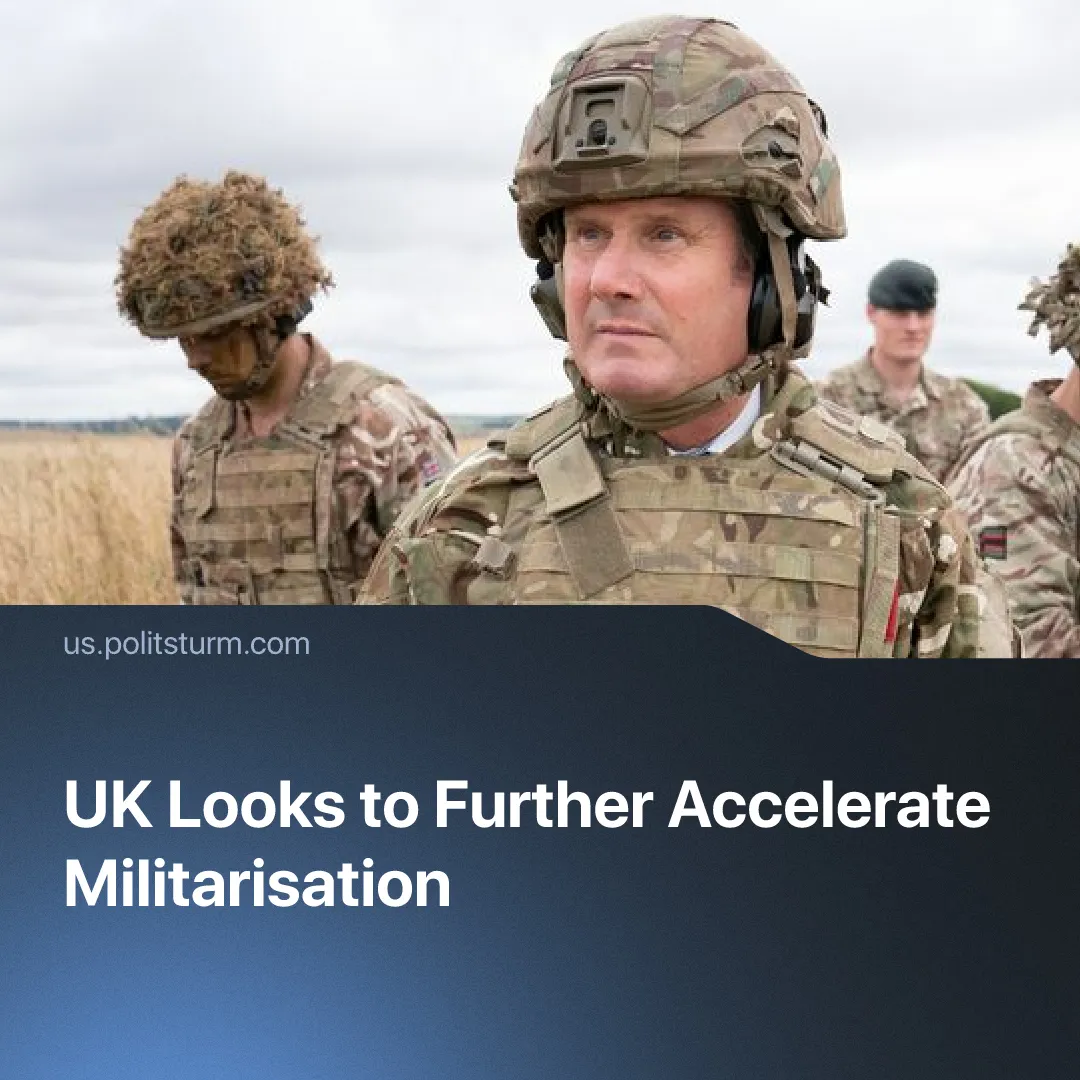
UK declares hard power the “currency of our age” as military spending expansion is considered.
Details. The UK government is considering a major military expansion, with Prime Minister Keir Starmer signalling support for raising defence spending to 3% of GDP by 2029.
► The estimated annual cost of the increase is around £17.3 billion per year by 2029, according to the Office for Budget Responsibility. The Treasury is considering cutting government spending in other areas to finance the military expansion.
► Starmer justified the shift by claiming that “hard power [...] is the currency of our age”, arguing that Britain must increase military spending to respond to growing global threats.
Context. This proposal represents an escalation of the government’s existing plans to expand military spending, which already include raising defence expenditure to 2.5% of GDP by April 2027, with a further rise to 3% following 2029.
► Similar militarisation drives are underway across multiple capitalist states, as governments increasingly acknowledge the likelihood of intensified inter-imperialist conflict and prepare for future wars.
► Starmer is currently facing a deep political crisis, with widespread speculation that his leadership may not survive the current term. The UK’s Defence Secretary is widely viewed as a potential successor, underscoring the growing political weight of the military apparatus within European states. Similarly, France's last Minister of the Armed Forces was chosen to head the new government, and Germany's current Defence Minister is the most popular politician.
► At the same time, the British working class is already under severe pressure. Unemployment has reached 5.2%, economic growth has stalled, and the government has indicated that a planned increase to the junior minimum wage may be delayed.
► Increased military spending under these conditions will be financed through austerity and pressure on social spending, as seen across Europe, further straining living standards while redirecting public resources toward the military.