

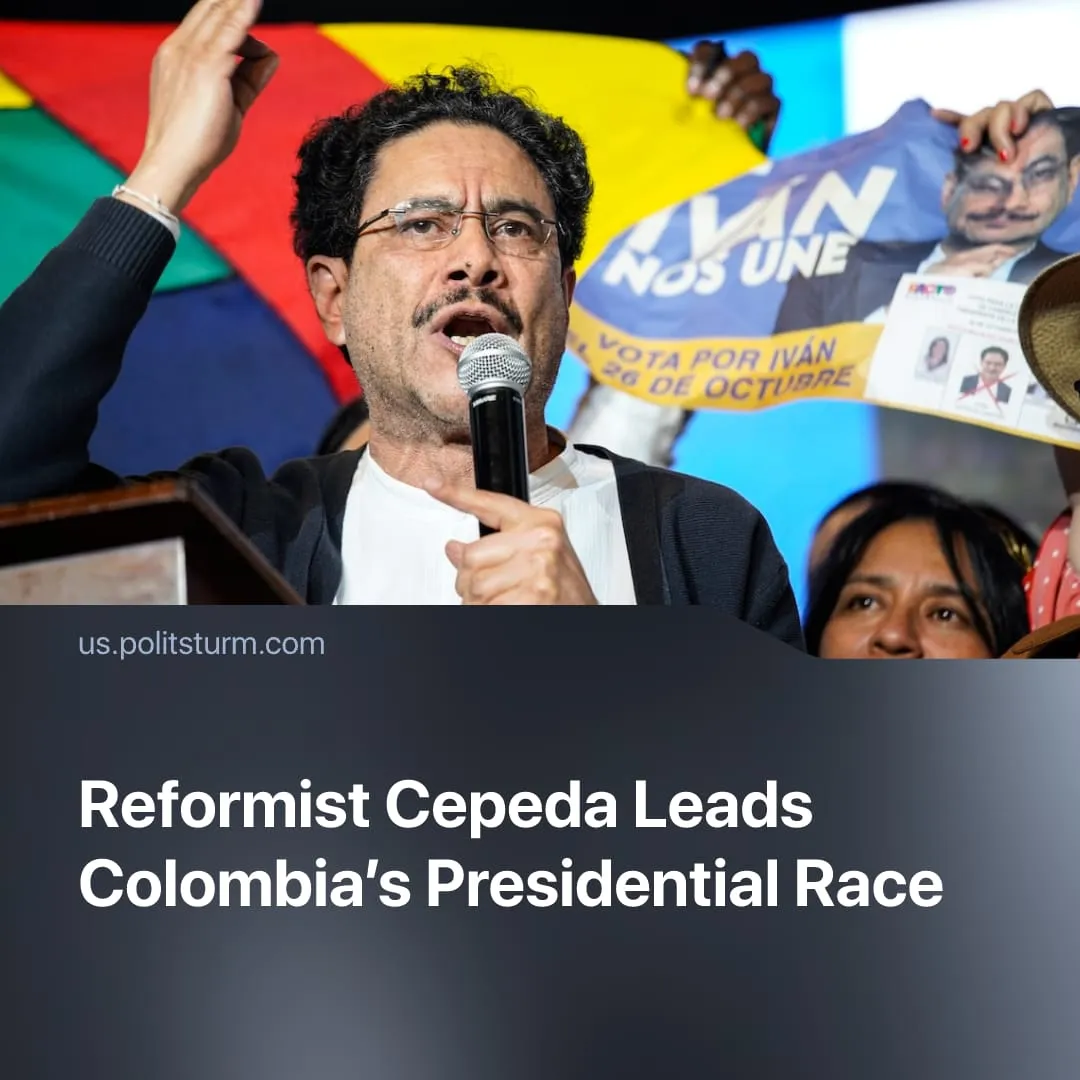
Colombia's left reformist candidate is leading in polls for the presidency. The failures of his centre-left ruling coalition are strengthening pro-US right-wing forces.
Details. Senator Iván Cepeda won the presidential primaries for Colombia's centre-left ruling party, Historic Pact. He is expected to represent the broad left-wing coalition in the May 2026 elections.
► With his populist campaign and social-democratic programme gaining support, Cepeda is currently leading the presidential race. Polls give him 37% of the vote, compared to 18% for his closest right-wing opponent, De la Espriella, though some polls place the right wing ahead.
► Cepeda is a left-wing reformist, campaigning largely on a platform similar to that of the current president, Gustavo Petro. He advocates social-democratic policies and claims that a “peaceful” transformation of the capitalist system through a “democratic revolution” is possible.
► Like Petro, he uses anti-American rhetoric to consolidate support at home while, in practice, accommodating US interests. He relies on nationalist posturing and radical slogans yet never challenges Colombia’s structural dependency or capitalist subordination, as outlined in our article on Bolivarian socialism.
► Cepeda’s political career has centred on legal advocacy for victims of state terror through the National Movement of Victims of State Crimes, focusing on prosecuting individual perpetrators and demanding institutional reforms. This treats repression and terrorism as abuses by individual officials rather than as products of the capitalist state itself.
► Cepeda is also a critic of the Soviet Union, describing it as “authoritarian” for violating “individual liberties.” He supported revisionism and the dismantling of Colombia’s communist movement.
Context. Under Trump, US imperialism has been reasserting its control over South America, as evidenced by the situation in Venezuela, Cuba, and Peru.
► Trump threatened military action against Colombia both before and after Nicolás Maduro was removed from power in 2026, claiming that Colombia was facilitating cocaine production.
► The current president, Gustavo Petro, has been unable to implement his social-democratic reforms due to opposition from Congress and the capitalist bureaucracy. His promises have failed to resolve the economic crisis.
► The main opposition party, a right-wing force, is actively pushing to deepen relations with the United States, effectively serving as a proxy for US influence in Colombia.