

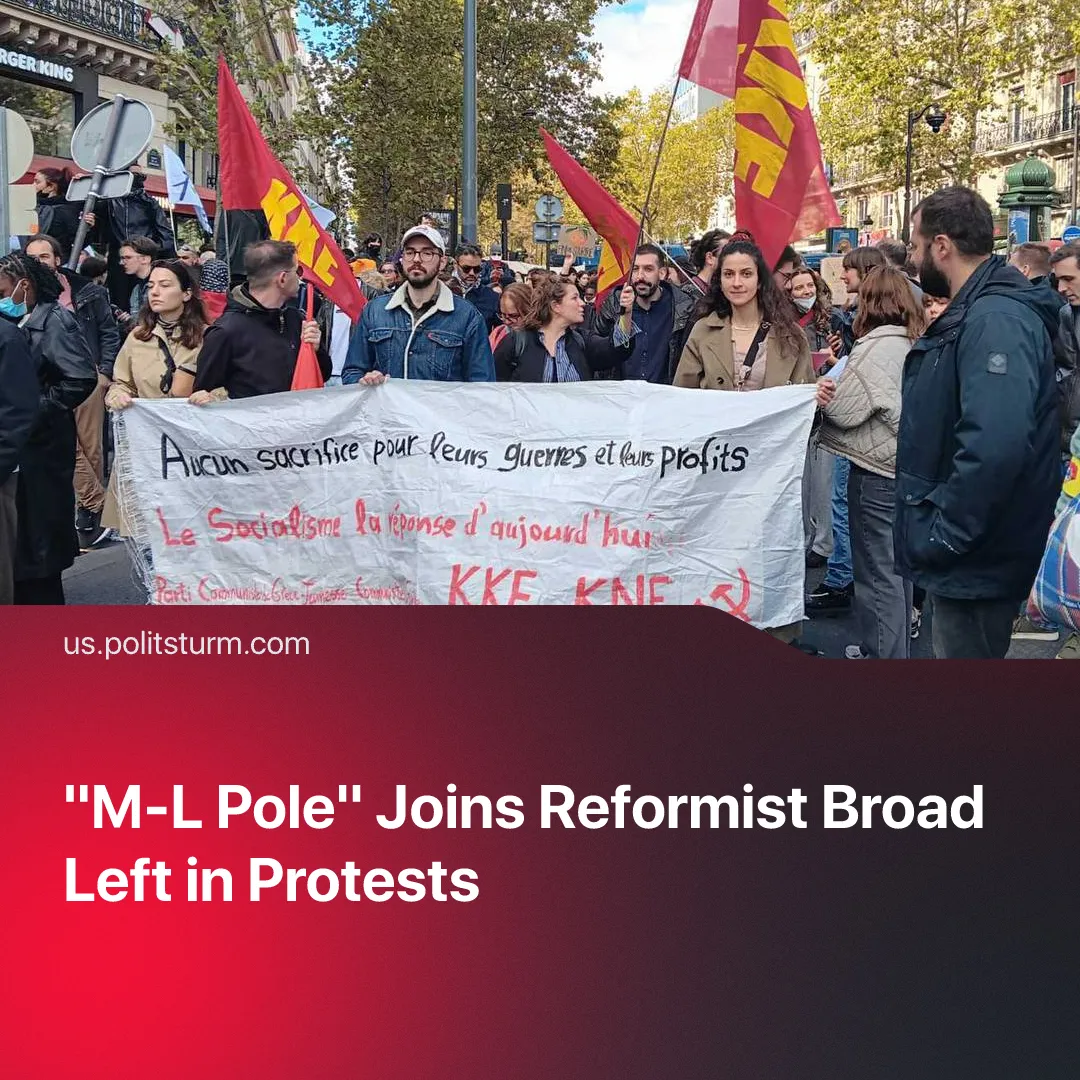
So-called “Marxist-Leninists” join bourgeois reformists, Trotskyists and anarchists in channelling discontent into bourgeois politics or encouraging adventurist actions.
Details. “Left” bourgeois figures have sought to draw electoral support from the recent European protests. France Unbowed has sought to strengthen their position amongst young voters, with Mélenchon claiming that attacks on his party have given them a “significant surge in popularity in high schools, where [they] were already well-received”. Spanish President Sanchez has called snap elections to “renew and expand people's support”, so that the “Spanish people” need to “decide what future [they] want”.
► Trotskyists have sought to benefit from the protests. The French section of the Trotskyist RCI has praised the protests as a “turning point in the development of the class struggle” and see themselves as a part of Mélenchon’s broad left opposition, issuing their own “battle plans” to the protestors. NPA defended property damage by students, while demanding a “fundamental transformation of our society”. British Trotskyists, talking of a “new phase of struggle”, are taking part in the protests with 25 members.
► Anarchists, such as the Anarchist Federation, have romanticised the protests, praising their spontaneity, lack of leadership and disorganised rioting, urging them to go further. Failing to recognise that spontaneous protests have broken out numerous times before and not led to the “expropriation of capitalism”, they proudly proclaim “the time has come”, “we have everything to take”.
► So-called Marxist-Leninist parties have offered support without presenting an independent communist position. The KKE, at the helm of the “Marxist-Leninist Pole”, tailed the movement by offering statements of solidarity without critical analysis and joining demonstrations. Similarly, Germany’s KP calls for Marxists to give spontaneous protests an “anti-capitalist perspective” without recognising the weakness of the communist movement or addressing the influence of provocateurs and opportunist organisations.
Context. The protests began in France in early October over school funding, before spreading across Europe amid deepening capitalist crisis. Rising inflation, soaring fuel and housing costs, deteriorating public services and worsening working conditions fuelled discontent among workers, students, lumpen and other strata. These spontaneous protests were subsequently pushed towards looting and arson by provocateurs and adventurist “ultra-revolutionary” groups.
► Similar movements have emerged repeatedly over the past decades. The Yellow Vests movement in France, the Black Lives Matter protests and the international pro-Palestine movement all mobilised large numbers of people around genuine grievances. However, their size and militancy did not translate into meaningful changes. Similarly to today’s protests, “ultra-revolutionaries” pushed protests to riots or engaged in adventurist actions.
Important to Know. The broad-left strategy promoted by Mélenchon has been applied repeatedly over recent decades, including by Corbyn in Britain and Mamdani in New York. Despite presenting themselves as alternatives to the political establishment, these movements have not challenged the foundations of capitalism.
► By presenting themselves as radical alternatives to established parties, broad-left structures attract working-class support and bring smaller left organisations into their alliances. These organisations ultimately strengthen the leadership of the broad-based structures, helping them consolidate their position within bourgeois parliament while keeping working-class discontent within the existing political system.
► So-called communists, seeing protests as an end in itself, supporting them no matter the context or their capacity to influence them, submit to the influence of these “broad-left” coalitions, both consciously and unconsciously. Rather than gaining influence through participation, they end up dragged along by the spontaneous movement, hoping for a “lucky break” where the masses finally turn to communist groups for leadership.
► This lowers “Marxist-Leninists” to the level of other “left” orgs, like anarchists, which at every expression of worker discontent, expect that “the time has come” to take power, trying to get workers to go beyond what the situation allows for. The creation of the “Capitol Hill Autonomous Zone” during the BLM, or the sabotage of factories which shipped weapon components to Israel are examples of this. They failed at leading to revolutionary change and often invited further repression from the state.