

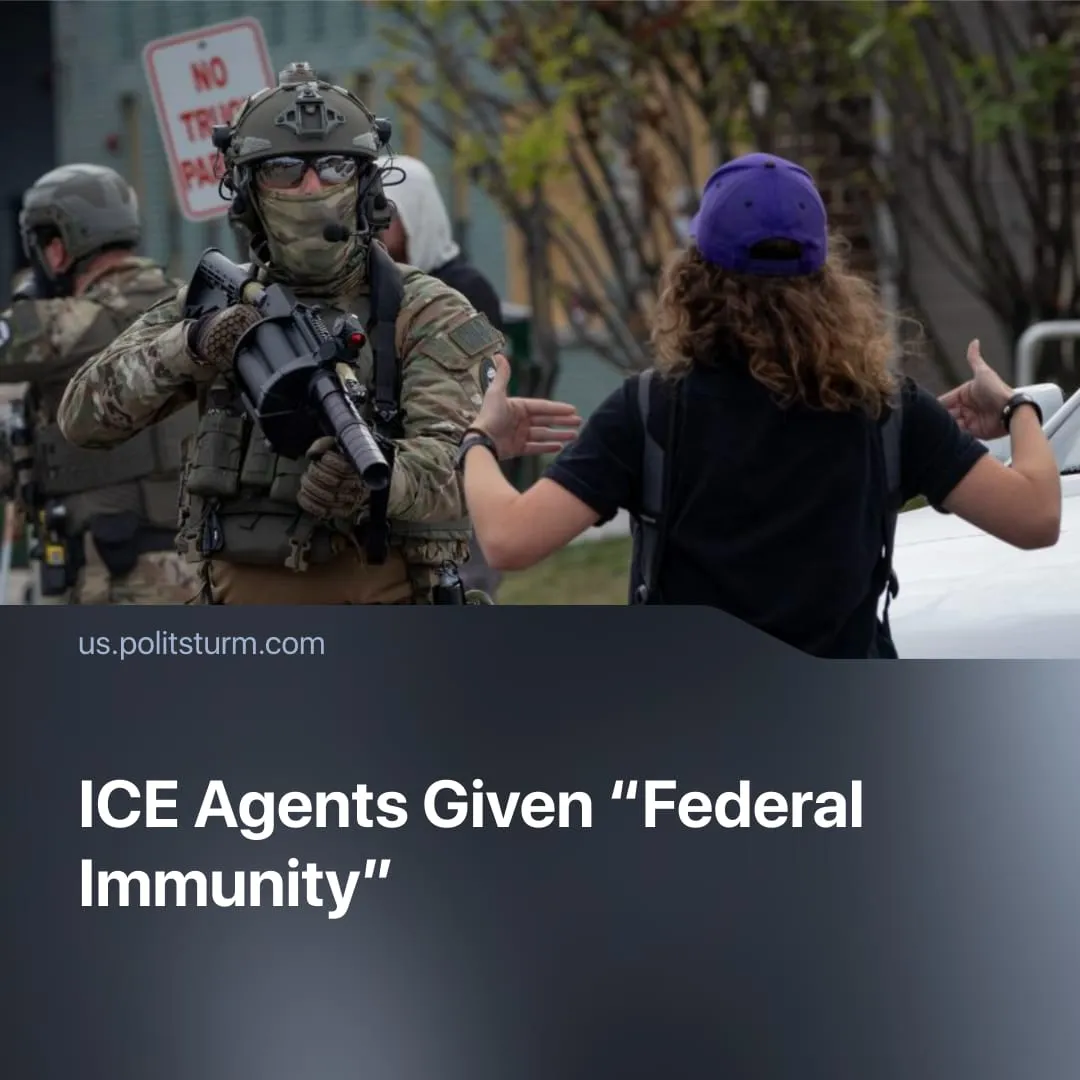
ICE agents may have been permitted to violate American laws. What does this mean?
Details. The Department of Homeland Security (DHS), the federal agency that oversees immigration and border enforcement through Immigration and Customs Enforcement (ICE), amplified comments by White House Deputy Chief of Staff Stephen Miller telling ICE agents that they “have federal immunity in the conduct of your duties,” while warning that anyone who obstructs them would be committing a felony.
► Legal experts and constitutional scholars have pushed back against Miller’s claim, stating that federal agents are not immune from prosecution if they violate state or federal law.
► A growing number of states, municipalities, and civil-rights organisations are also contesting this narrative, filing federal lawsuits against DHS and ICE enforcement practices they describe as unconstitutional, dangerous, and politically motivated. However, these legal challenges have so far produced no meaningful successes. Even minor restrictions, such as a preliminary injunction limiting certain protest-related tactics, were later overturned on appeal.
Context. The controversy comes amid an expanded federal immigration enforcement surge under the Trump administration, with thousands of DHS and ICE agents deployed to cities such as Minneapolis. It intensified after an ICE agent fatally shot 37-year-old Renee Nicole Good in Minneapolis.
► The killing of Renee Good, a U.S. citizen, ignited widespread outrage, mass protests and a strike after video footage and eyewitness accounts challenged official claims of self-defence. The Justice Department declined to pursue a civil-rights investigation, prompting resignations from federal prosecutors involved in the case.
► Trump, Vice President Vance, and DHS Secretary Kristi Noem, despite this, have repeatedly defended ICE actions and confirmed “absolute immunity,” framing agents’ actions as “just doing their job.”
Important to Know. Given the Trump administration’s documented pattern of acting beyond legal and constitutional limits, claims of “federal immunity” function not as descriptions of existing law, but as an executive directive that ICE enforcement will proceed without fear of prosecution when it crosses legal boundaries.
► In practice, this enables ICE agents to advance the priorities of the executive branch, including mass arrests, intimidation of migrant communities, and suppression of protests, while bypassing meaningful oversight from local authorities, courts, or state governments – effectively subordinating other branches of power to federal enforcement.
► Past ICE operations already show what this enables: warrantless or deceptive arrests, prolonged detentions without clear charges, family separations, and documented allegations of physical and sexual abuse in detention facilities – practices that have rarely resulted in criminal accountability and now are further normalised under immunity claims.
► The Trump administration’s “federal immunity” messaging has a historical parallel in Heinrich Himmler’s Schutzhaft orders in Nazi Germany, where the state explicitly told enforcers they could act outside the law with political protection. Like then, these signals make it clear to ICE agents that they can use force without fear of punishment.