

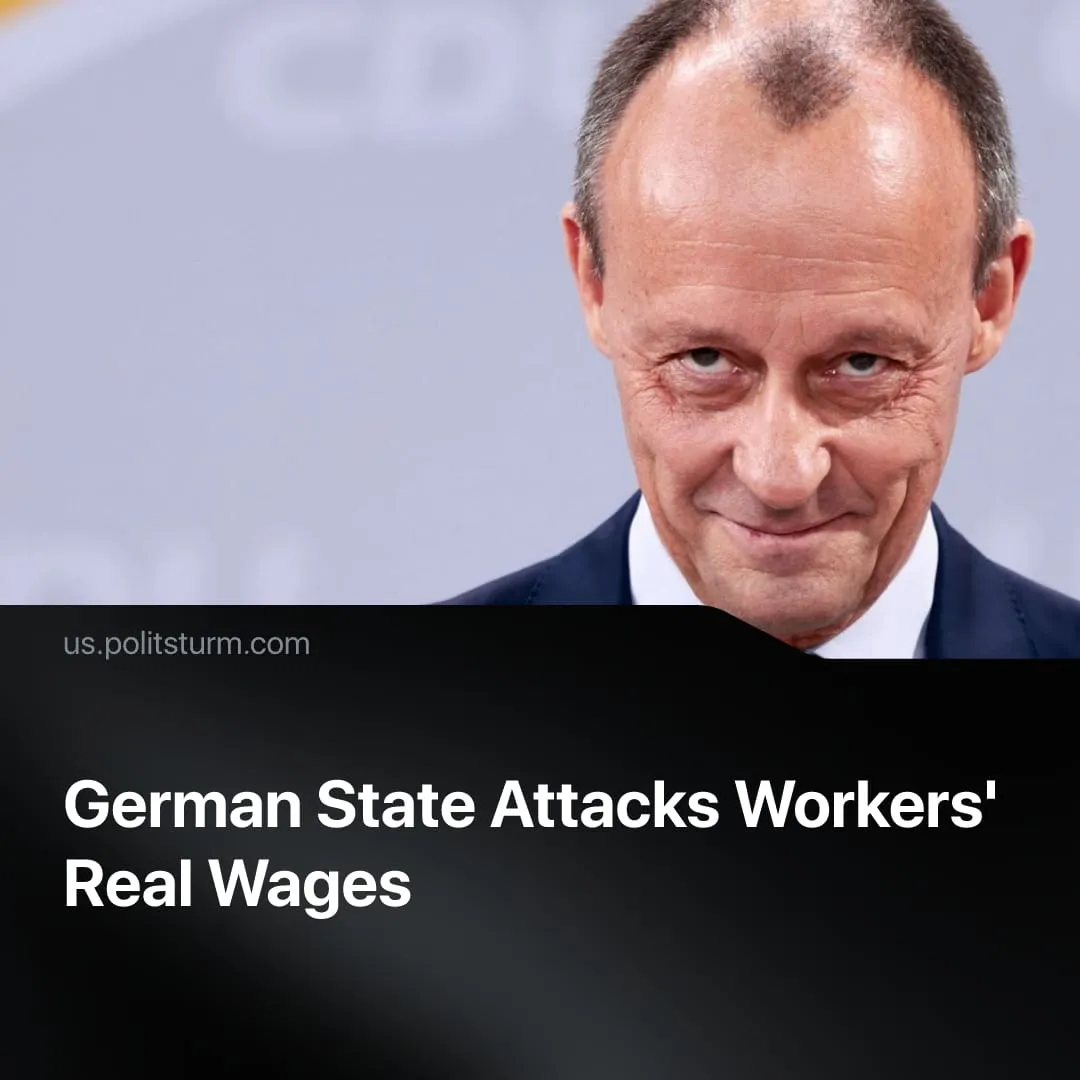
Germany clamps down on labour costs after promising to do so earlier this year. The ruling party promised this will somehow help curb the far-right.
Details. The German government's recent legislative package includes measures to reduce labour costs by tightening scrutiny of sick leave, financially rewarding workers who remain employed beyond retirement age, and expanding the use of fixed-term contracts, giving capitalists greater flexibility in hiring and dismissing workers.
► The government also announced tax relief for lower-income workers, but admitted this would only give them savings of €600 annually. The average expenses of German households have already risen by 2.6% over last year due to inflation, so annual living costs are €945 higher. Workers are still poorer even with tax relief.
► At the same time, a new 2% tax surcharge will apply to annual incomes above €280,000. While presented as making the rich contribute more, the measure only taxes the salary of high-income professional workers. Because wealth and assets remain untouched, the truly rich owners of capital will be able to evade their tax burden.
► The government aims to build around 100,000 new affordable homes annually, while Germany is estimated to need around 320,000 new homes each year until 2030, leaving a substantial housing shortage unresolved.
► In 2021, Berlin voters backed a city referendum calling for the expropriation of large private housing companies to address the rent crisis. The federal government has now blocked its implementation, arguing it undermines legal protections of property rights and investor confidence. Conservative party leader Markus Söder described the federal move as a "clear rejection of everything that concerns socialism and nationalisation."
► Alongside these labour reforms, Germany continues its rearmament programme. The 2027 draft budget raises core defence spending by another +30% over last year, from €82.2 billion in 2026 to €109 billion, reaching €130 billion when support for Ukraine and security spending are included. Meanwhile, the government is cutting healthcare spending by 10% and forcing workers to pay more for medicine and insurance.
Context. Earlier this year, Chancellor Friedrich Merz described labour costs as Germany's biggest economic problem, arguing that high welfare spending, generous pensions and shorter working hours were undermining Germany's competitiveness. He called for benefit cuts, pension reform and raising the 48-hour work week limit up to 73-hour weeks.
► Support for the far-right Alternative for Germany (AfD) has steadily grown over recent years, becoming the biggest party in Germany with a 30% plurality in polls. Conservative Chancellor Friedrich Merz has argued that "changes are necessary so that many things can remain as they are," defending the budget reforms as a way to restore confidence in the system.
► Germany is also carrying out its largest military expansion since reunification, sharply increasing defence spending and committing special funds of over €100 billion for rearmament. At the same time, plans to expand conscription have only proceeded cautiously, as German capitalists are hesitant to remove workers from the job market amidst economic slowdown.