

Protests Spread to Switzerland as European Discontent Grows. Even the supposedly “prosperous” and “stable” country is not immune to the capitalist crisis.
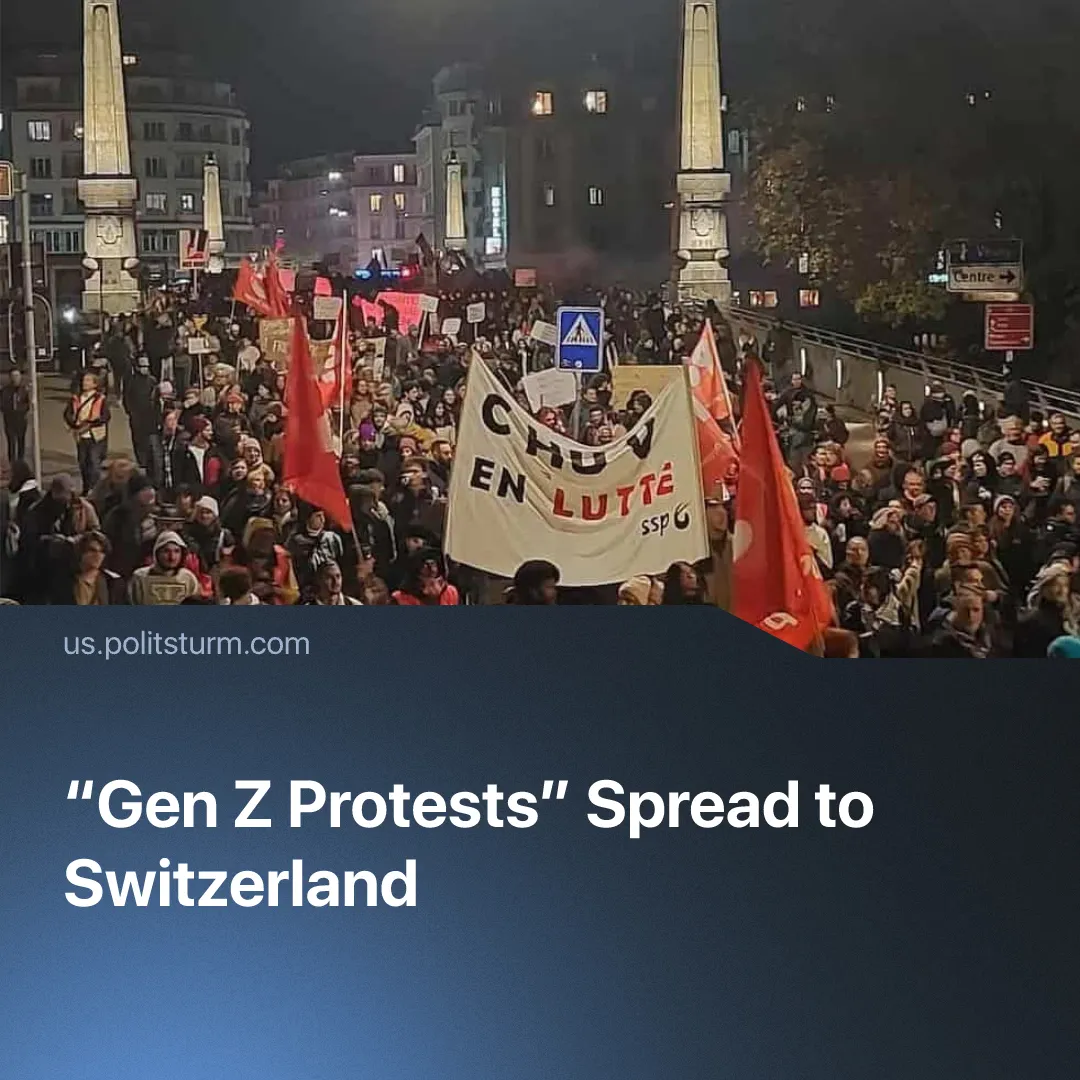
Details. The wave of youth protests that swept across Europe in October also reached Switzerland. On the night of 31 October–1 November, several hundred people took part in unauthorised demonstrations, primarily in Zurich and Basel, under the common slogan "We've had enough – in Switzerland too". Both demonstrations escalated into clashes with police, looting and rioting.
► Three weeks later, on 20 November 2026, approximately 40,000 people, according to the organisers, demonstrated across around ten Swiss cities as part of the Trotskyist-led “International Youth Strike movement”. The demonstrations were primarily coordinated by the Trotskyist Young Socialists Switzerland, with students and apprentices from 65 educational institutions participating. Most demonstrations remained peaceful, although isolated incidents of unrest occurred.
► The disturbances of 31 October–1 November were widely condemned by the bourgeois press and political parties, including the social democrats. Several parties called for tougher police measures. On 20 November, police in Zurich arrested or temporarily detained 33 people and issued around 60 removal orders. Sections of the bourgeois press attributed the protests to political radicalisation and "opportunistic violence".
► The authorities made no concessions to the demonstrators' demands and instead took action against organised worker mobilisation. Even before the 20 November strikes, the Vaud cantonal government had declared the planned industrial action unlawful and called on public-sector workers not to participate.
Context. The 2026 spontaneous European protests were driven by outrage at declining living standards among workers, students, the lumpen and other strata. The protests were subsequently steered towards looting and arson by provocateurs and "ultra-revolutionary" adventurist groups. The bourgeois media blamed so-called "far-left" organisations, while governments intensified repression.
► Switzerland has long cultivated an international image of prosperity, neutrality and political stability. Official websites promote its high living standards and favourable conditions for capital investment. The state also promotes its tourism industry through an image of tranquillity and luxury. Switzerland's banking sector is similarly presented as a stable and neutral financial centre.
► Behind this image, for the average worker living costs remain exceptionally high. Swiss consumer prices are 71.3% above the EU average, with household costs reaching 131.3% above it. Wages and purchasing power have yet to recover to their pre-Covid levels, despite modest increases. In 2024, approximately 743,000 people lived below the poverty line, while 16.4% of the population, or around 1.45 million people, were at risk of poverty.
► Switzerland has increasingly abandoned its historically proclaimed neutrality, imposing sanctions against Russia, accelerating militarisation and raising planned defence spending by 5% to 1% of GDP. The Swiss bourgeoisie seeks to unshackle itself from neutrality constraints to manoeuvre more freely in international conflicts and pursue its imperialist interests. In September, 70.15% of voters rejected an initiative to enshrine stricter neutrality provisions in the constitution. Bourgeois parties campaigned against it, exploiting fears of economic isolation and military insecurity.