

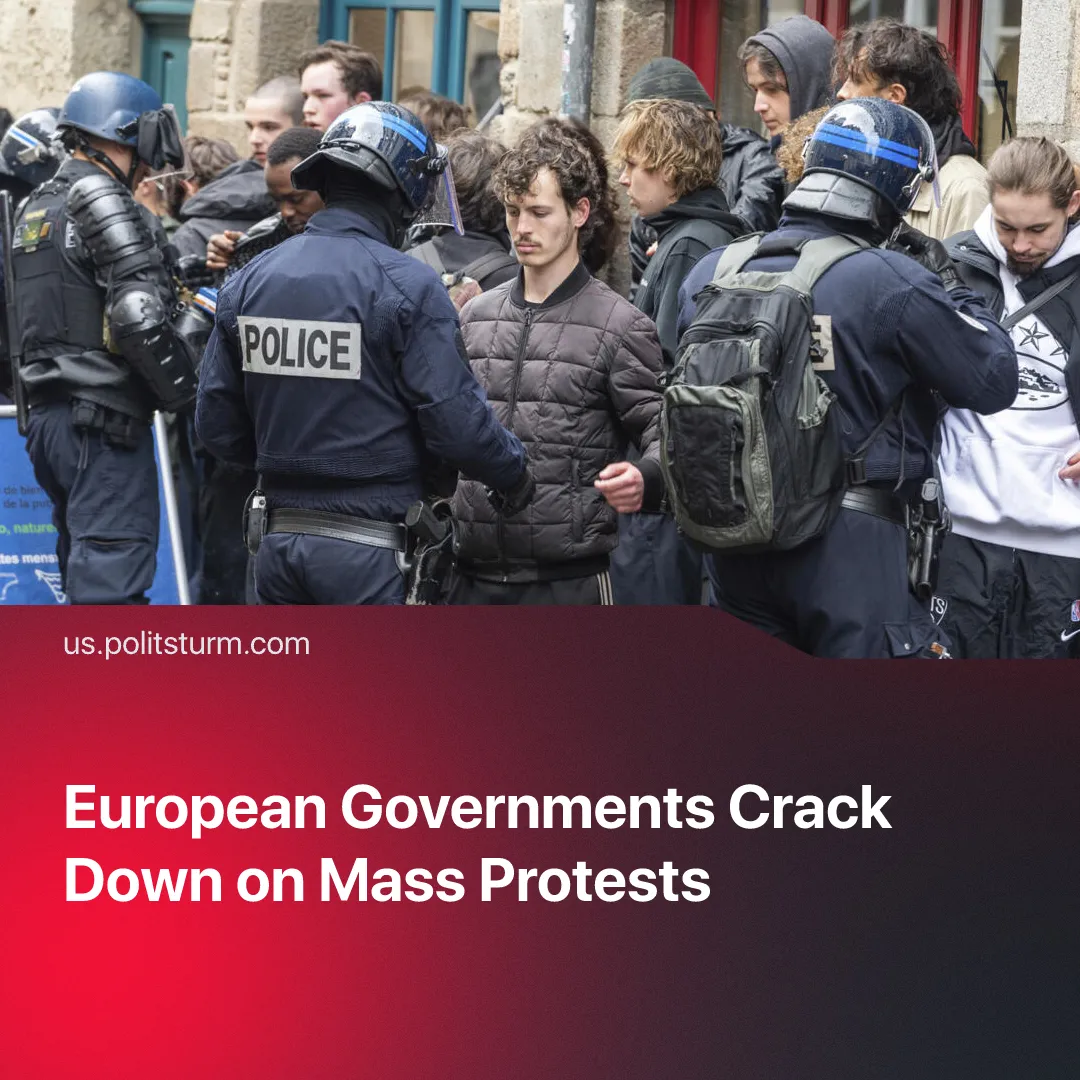
European governments responded to mass protests with militarised policing, protest bans, censorship and mass arrests.
Details. Across Europe, police forces were militarised. France deployed 70,000 police officers, supported by specialised military units, drones, helicopters and water cannons, for October 24 demonstrations. Italy deployed 500 soldiers to Milan and prepared drone surveillance and additional security forces for protests. In Albania, police used tear gas, water cannons and rubber bullets against demonstrators in Tirana.
► Freedom of assembly was restricted. France banned demonstrations in several cities and imposed curfews following riots. In Lyon, far-right activists marched during a curfew on October 19, while authorities restricted other demonstrations. In Belgium, Liège banned street gatherings of more than three people from October 8 to 16.
► In some countries, moves were made to censor and control information. The French state asked telecom operators to prepare for temporarily suspending social media access in areas affected by protests. The government also strengthened cooperation with platforms to identify and suspend accounts accused of promoting violence or looting. More than 100 reports were submitted ahead of October 24, around half resulting in account suspensions.
► Harsh prosecution was used against protesters. French courts fast-tracked riot cases, jailing 217 people after around 2,700 detentions. Half of those imprisoned had no prior criminal record, while lawyers condemned rushed hearings and politically driven pressure for harsher sentences. Similarly, in Albania, the government approved an electronic register of people referred to prosecutors over protest-related violence, allowing border police to prevent them from leaving the country even without a court-ordered travel ban.
Context. The protests began in France in early October over underfunded schools, before spreading across Europe amid deepening capitalist crisis. Rising inflation, soaring fuel and housing costs, deteriorating public services and worsening working conditions fuelled discontent among workers, students, lumpen and other strata. Initially organised demonstrations were subsequently pushed towards looting and arson by provocateurs and adventurist “ultra-revolutionary” groups.
► European states have been undergoing fascisation amid rising inter-imperialist tensions and militarisation. Alongside increased military spending, governments have expanded surveillance and restricted democratic rights. For example, The Czech Republic criminalised the promotion of communist ideology in 2025, while European governments have introduced further digital surveillance measures.
► Looting and arson have previously provided governments with pretexts to restrict democratic rights and expand repression. During France's 2018–2019 Yellow Vest protests, incidents of arson, looting and clashes with police were used to justify new anti-riot legislation, expanding police search powers and introducing harsher penalties for protesters.