

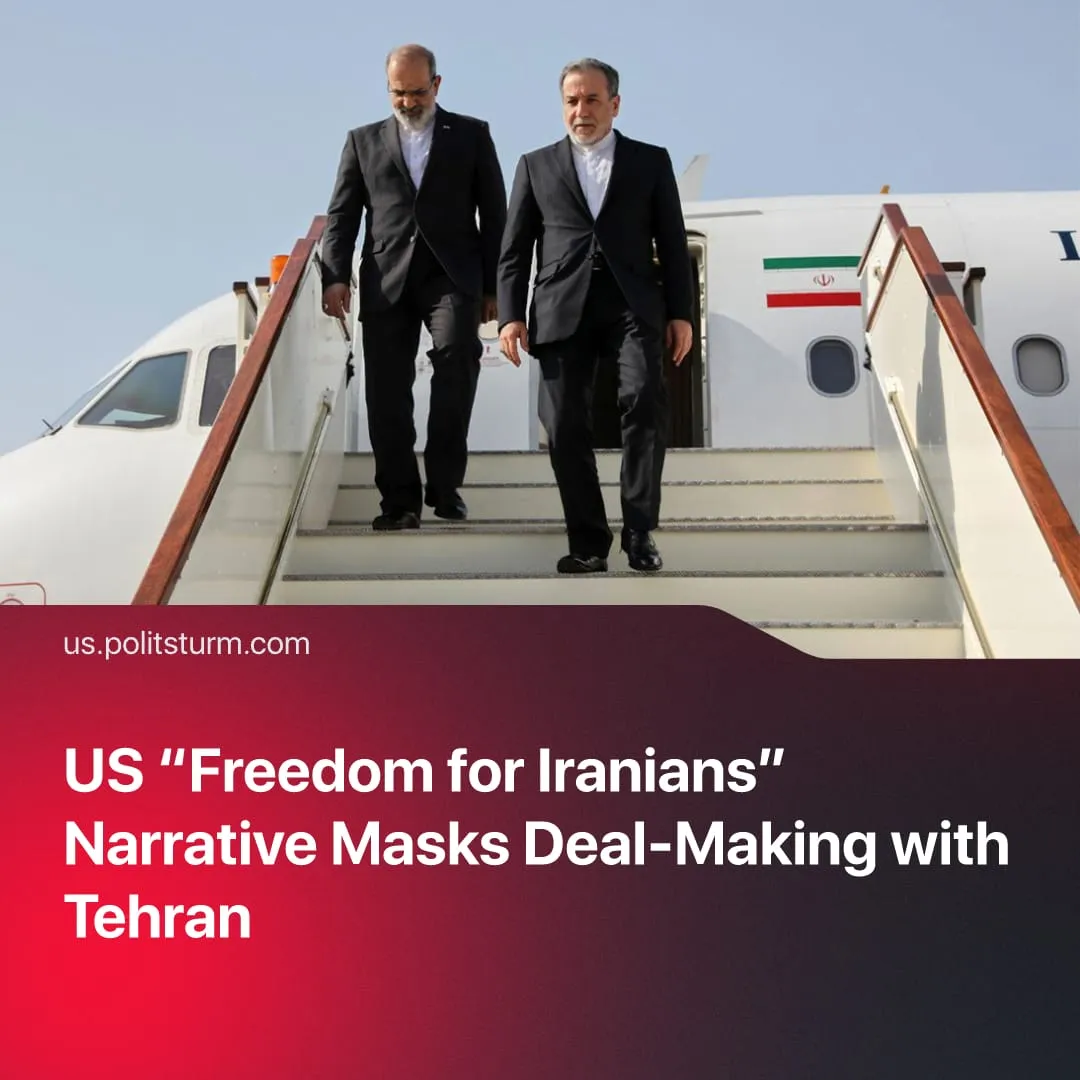
"Freedom for Iranians" serves primarily as US domestic propaganda, while US policy continues to work with the existing Iranian leadership.
Details. US rhetoric around Iran, especially from Trump, was framed as a mission to “free” the Iranian people, with open rhetorical support for protests before the war and threats to intervene if the regime used force against demonstrators, presenting the US as a defender of popular struggle.
► Reza Pahlavi, the exiled son of Iran’s former Monarch, put himself forward and was amplified in Western discourse as a pro-Western “suitable candidate” for a new regime, yet he was sidelined as the US prioritised negotiations with the existing leadership, with Trump calling him “very nice” but questioning whether he could “garner support” inside Iran.
► At the same time, Trump framed “regime change” as an internal reshuffling of the Islamic Republic, while admitting that some of his preferred replacements had been killed in US strikes. Nevertheless, some reformist elements were still willing to negotiate, as seen in recent ceasefire negotiations.
► He also referenced a model based on the Venezuela operation, where he stated the US would “run the country until […] a proper transition”, after the removal of Nicolás Maduro while continuing to work with remaining state officials, contrasting this with earlier approaches like Iraq in 2003, which he has criticised.
Context. Trump has launched a 2026 offensive against rival blocs, securing Venezuela and pushing back China in Panama before escalating in the Middle East, aiming to pull Chinese-aligned states into the US sphere by aiming to work with pro-US sections of their capitalist class rather than through lengthy and ineffective regime change operations.
► In Iran, this reflects an existing division within the capitalist class, where reformist elements have advocated rapprochement with the US under sanctions pressure and a reformist president was elected. The current ceasefire talks therefore represent a continuation of this line.
► In Venezuela, a similar pattern emerged as opposition leader Maria Corina Machado was elevated in Western discourse, including receiving the 2025 Nobel Peace Prize, but then sidelined in favour of working with Maduro’s deputy and existing state figures.