

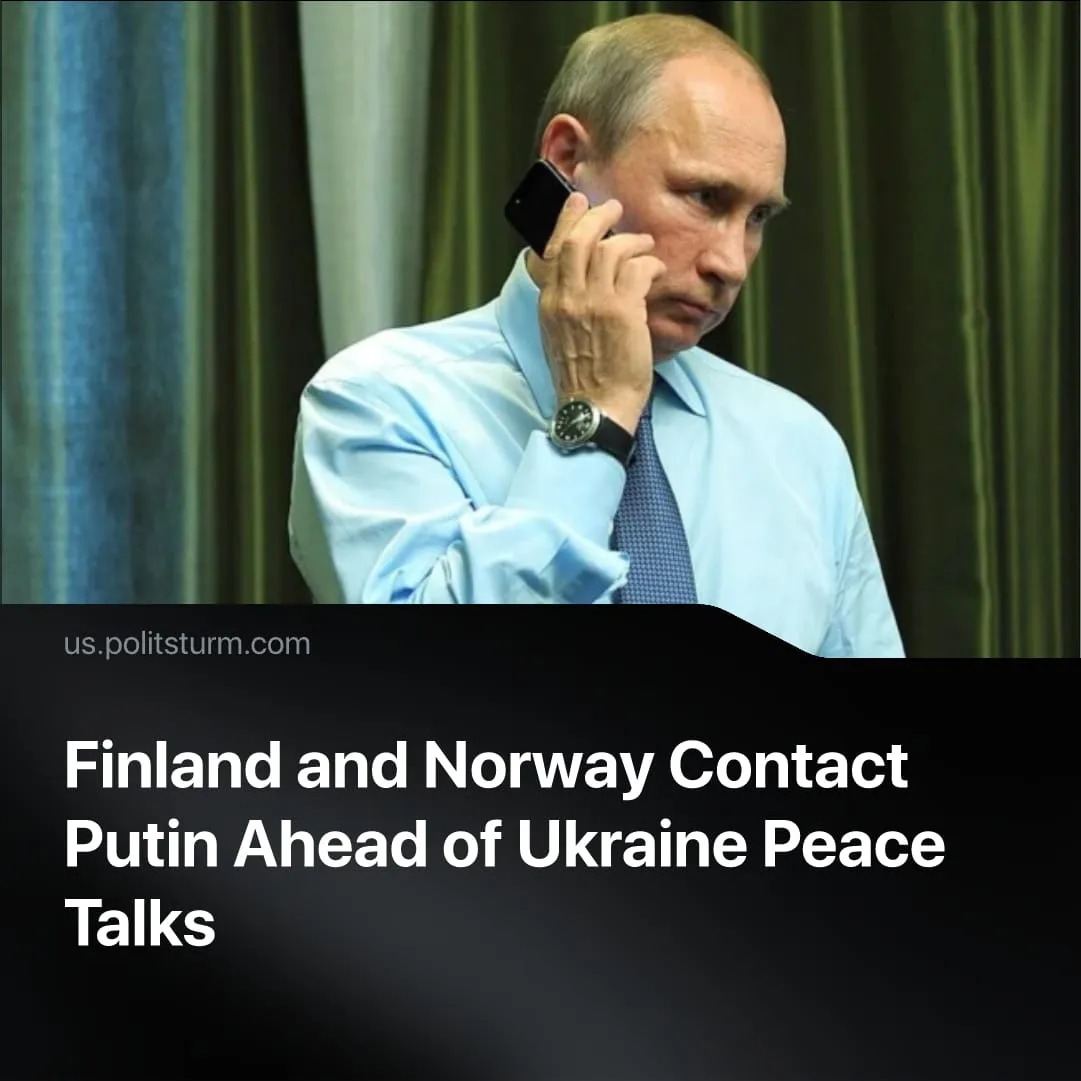
Finland’s president and Norway’s prime minister called Putin. Sidelined by US-led peace planning, European leaders are now seeking to assert their interests in Ukraine.
Details. On 27 October, Finnish President Alexander Stubb and Norwegian Prime Minister Jonas Gahr Støre held a phone call with Putin lasting around 90 minutes. They aimed to convey messages directly about future negotiations to help resolve the conflict, ahead of planned talks in Abu Dhabi, according to the Finnish Presidency. Stubb described the discussion as “frank and substantive”, while Støre stressed the importance of de-escalation.
► In its account of the call, the Kremlin said lasting peace required full and unconditional consideration of Russia’s interests, and described EU and NATO policies as “confrontational”.
► Danish Prime Minister Mette Frederiksen criticised the call as uncoordinated, arguing that European countries should maintain a united position. Swedish Prime Minister Ulf Kristersson said he had “pretty low expectations” for this type of direct conversation. Following the call, an EU spokesperson said the bloc remained committed to a just and sustainable peace and to increasing pressure on Russia.
Context. On 20 October, Finnish President Alexander Stubb and Norwegian Prime Minister Jonas Gahr Støre met US envoy Steve Witkoff and Ukrainian President Volodymyr Zelenskyy in Oslo. The following day, Witkoff met Putin in St Petersburg. Kremlin aide Yuri Ushakov then said Russia was willing in principle to resume trilateral talks with Ukraine and the US in November, the first such talks since February.
► European governments have previously opposed being excluded from US-led negotiations with Russia. In November 2025, Washington proposed a 28-point peace plan that envisaged recognising Crimea, Donetsk, and Luhansk as Russian, restricting Ukraine's armed forces and excluding NATO membership. European states objected to the proposals and submitted their own amendments, seeking to influence the terms of a settlement
► European governments have substantial economic and strategic interests in Ukraine. The EU and its member states have provided €231.5 billion in “support”. Ukraine's reconstruction needs are estimated at nearly $588 billion, while its deposits of critical raw materials are of interest to European companies. The EU's €90 billion loan for 2026–27 also allocates €60 billion to defence procurement and industrial capacity, providing business for European arms producers.
► European militarisation accelerated throughout 2025, with EU member states’ defence spending reaching €418 billion, creating further opportunities for arms producers. The UK also called for further military expansion. European governments have repeatedly invoked the threat of a Russian invasion to justify rearmament, reinforced by media warnings of an imminent attack.