

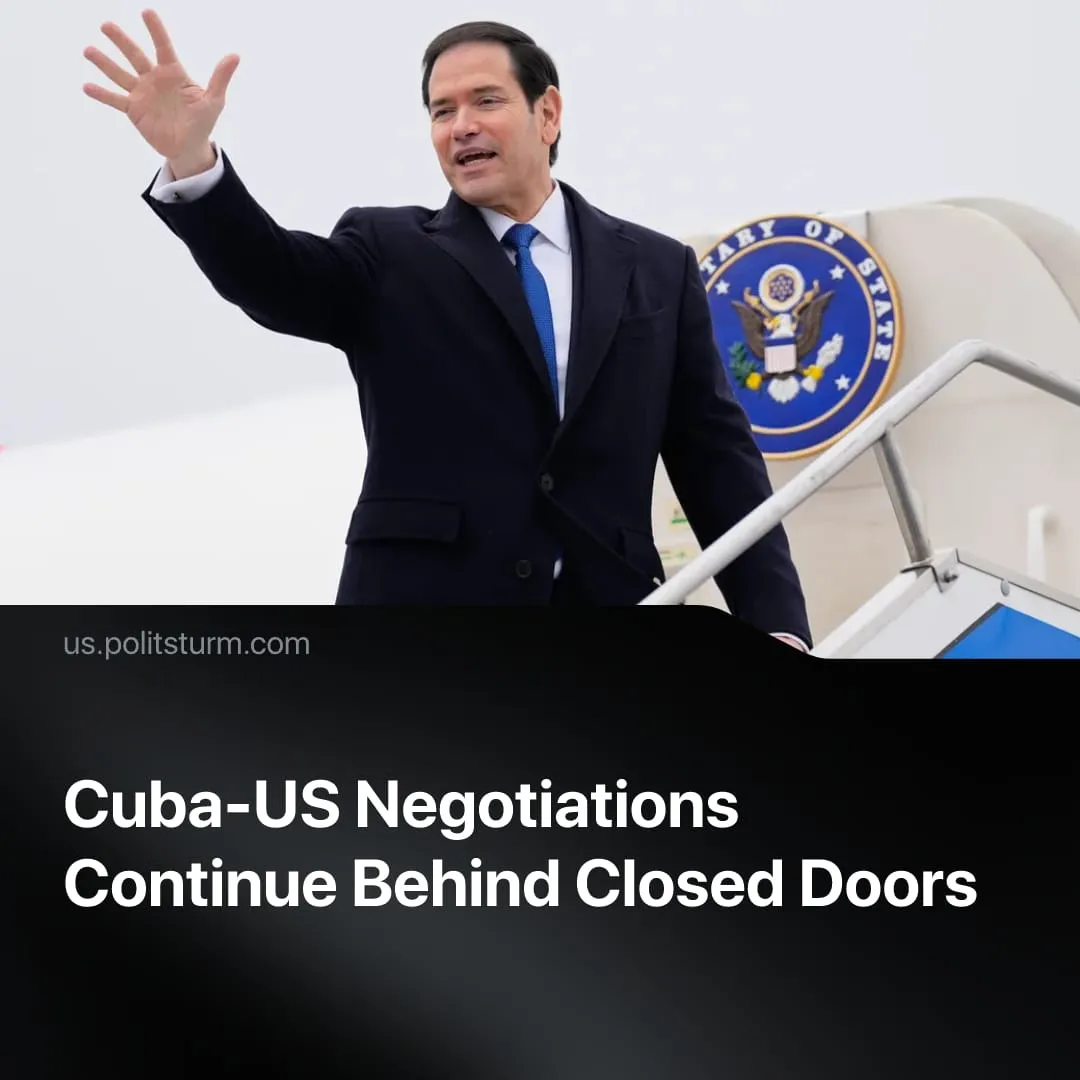
Cuba's Foreign Minister says talks with Washington ended with "no progress." Behind closed doors, Cuba's dependence on US trade is growing, while Castro's relative meets CIA directors and brokers real estate and fuel deals.
Details. In March, American and Cuban officials confirmed that negotiations had been taking place. In April, a Cuban foreign ministry official described the ongoing talks as ‘respectful and professional’ and devoid of threats.
► By mid June, the bourgeois “Communist Party of Cuba” used US sanctions and the deteriorating economy as a pretext to bring forth full capitalist restoration that had been in discussion for a decade. The reforms accepted two of America’s main reported demands: liberalize the economy, open to American business, buy US oil, and expel Russian and Chinese intelligence operatives.
► However, on June 30, Cuban Foreign Minister Bruno Rodríguez stated that while the US had been "respectful" in discussions, this had come alongside additional sanctions, declaring there had been "no progress". By September 7, Rodríguez declared there were "no negotiations or agreed agenda" at all.
► Contradicting Rodríguez’s claim, the US has continued to describe talks as ongoing. On September 22, Trump told the UN General Assembly that Rubio was “deep into negotiations”. Cuban delegates simultaneously staged “resistance” with a symbolic walkout.
► Secret negotiations have persisted throughout the course of the “official” negotiations. Washington has been searching for a successor to President Díaz-Canel, reportedly weighing three candidates: Óscar Pérez-Oliva Fraga (Fidel Castro's grand-nephew and Cuba's deputy prime minister); Raúl Guillermo Rodríguez Castro, Raúl Castro's own grandson; and Lázaro Alberto Álvarez Casas, Cuba's Interior Minister.
► Rodríguez Castro is Washington's clear favourite. Rubio met him secretly in February. CIA Director Ratcliffe travelled to Havana to meet him in May. Castro tried to broker a fuel deal with a Florida energy firm in June, but Washington blocked it at the last minute. He remains deliberately unsanctioned by the US while Díaz-Canel, Alejandro Castro Espín and other relatives have all been targeted.
► Castro is also meeting with American capital directly. Trump Organization-linked executives, through the firm Dominari Holdings, have travelled to Cuba to discuss hotel investments with him, eyeing the sector left vacant by departing Spanish chains Meliá and Iberostar.
► American exports are already rapidly moving in, specifically to the private sector, increasing the economy’s dependence. US exports to Cuba have surged to over $600 million this year, with fuel, cars and food among the main goods entering the country. The US Treasury has authorized oil exports from Florida and Texas to Cuba's private sector, exceeding $160 million this year, directly fulfilling Washington's third reported demand. Regarding this increased trade, Cuba’s top diplomat in the US said, “It’s positive… but the United States should not restrict any imports to Cuba”.
► Washington is using sanctions to control which foreign capital can access the Cuban market, while US-connected firms benefit from the resulting trade flows. Cuban imports are being rerouted through Florida shipping lines, with firms connected to Cuban-American Republican donors benefiting. Meanwhile, Continental Strategy – led by a Cuba hardliner – has been hired by multiple Spanish firms with Cuban business interests to help them "get on the right side of sanctions", netting $40,000 from one contract before terminating it.
► As Politsturm earlier explained, the CPC’s "opportunities for Cuban diaspora" narrative provides political cover for the flow of US capital and trade. Wealthy Cuban exiles are also being mobilized through the newly created Cuban-American National Chamber of Commerce to prepare to channel billions in private investment into Cuba. Dozens of companies are exploiting the “Support for the Cuban People” loophole, originally intended for care packages from the Cuban diaspora, to send larger commercial shipments to Cuba.
► The US is preparing for possible military action. On September 25, reports indicated that the Army Reserve was assessing whether it could provide Southern Command with military police, medical, engineering, and logistics units within 90–120 days. Multiple US officials said the planning was aimed at Cuba, although no deployment orders have been issued. Though Trump has said, "I would say that Cuba and us will make a deal. I don't think we'll need the military”.
Context. The back-channel negotiations closely match the technique used by the US in Venezuela. Secret negotiations over economic concessions; a search began for a US-friendly leader; economic and military pressure was escalated, before Washington carried out its January operation and power was formally transferred to Delcy Rodríguez.
► The US-imposed oil blockade implemented earlier this year has put the country under severe strain, with it dealing with fuel shortages and repeated blackouts, with UN officials saying it is at risk of becoming a “silent Gaza”.