

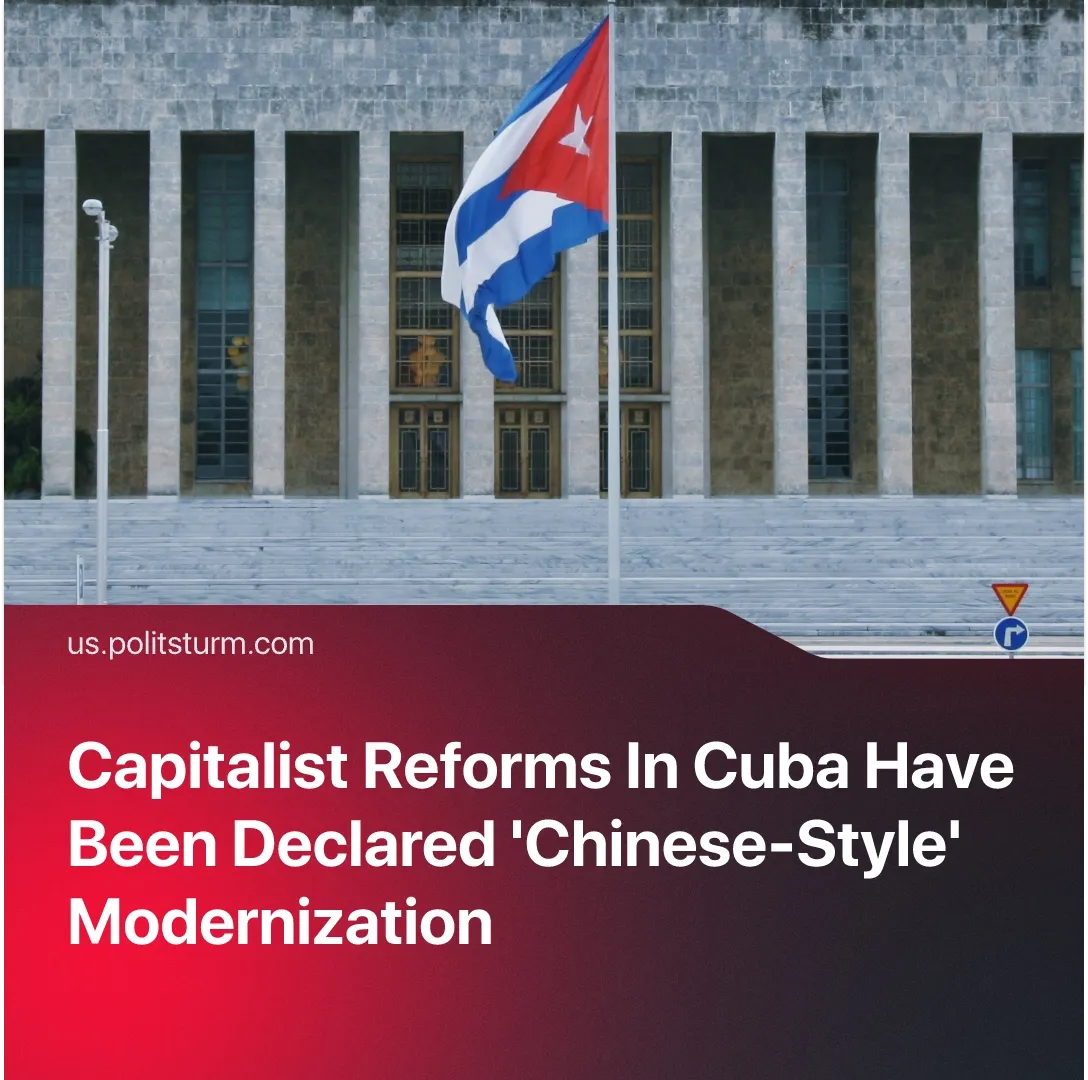
The restoration of capitalism in Cuba was portrayed as an opportunity to replicate “China's success” by social-chauvinists. Chinese opportunism led to increased exploitation of Chinese workers, enormous inequality and profits for Western corporations.
Details. The narrative of Cuba repeating the "Chinese path to socialism" emerged from the very beginning of the "reforms" that are transforming the Cuban economy into a capitalist one. The connection of the “reforms” with the Chinese experience was declared by the Cuban president Díaz-Canel: "A study has also been carried out on the experiences of socialist construction in other countries such as China and Vietnam...".
► This narrative was then picked up by social-chauvinists. Opportunist "Friends of Socialist China" media portrayed the “reforms” as a good and logical decision: "They are best understood as a defence of socialism under siege, following the strategic logic China has pursued since 1978... “a strategic effort to preserve and deepen the social gains of the Revolution”.
► The official Russian media outlet “RIA Novosti” released an analytical piece that assessed the reforms as a successful and winning move that would make Cuba practically equal to China in power: “Cuban leaders openly say they intend to follow the Chinese and Vietnamese path... If Cuba succeeds in doing the same, in 15-20 years the island will become the richest and most successful country in the entire Caribbean, leaving most of Latin America behind”.
Context. The Cuban parliament passed a sweeping package of laws that completed the transition of the Cuban economy to a capitalist model on June 18. The adoption of these laws consolidates processes that have been unfolding in Cuba for decades.
Important to Know. Opportunists defending Chinese imperialism emphasize the growth of the economy and gloss over the negative consequences of the opportunist policies of Chinese revisionism for the workers of the PRC.
► Historically, the "opening of the country" to foreign capital led to the active import of Western capital. China's leadership artificially kept the cost of Chinese labour low, allowing the Western bourgeoisie to reap super-profits by exploiting the Chinese proletariat. Subsequently, cheap goods produced in Western-owned Chinese factories were used to stifle production of consumer goods in the former Soviet Union.
► Over time, the Chinese bourgeoisie grew stronger and began to exercise greater independence. Using its position as the "factory of the world", China formed its own imperialist bloc and began economic expansion across the globe. The contradictions between the Chinese and Western imperialist blocs constitute the main confrontation on the modern global stage.
► The imposition of capitalism and the associated commodity-money relations, exploitation, social inequality and other disasters done with communist rhetoric and symbols, as it’s performed in the PRC, Vietnam, DPRK and Cuba is a direct deception of the workers.