

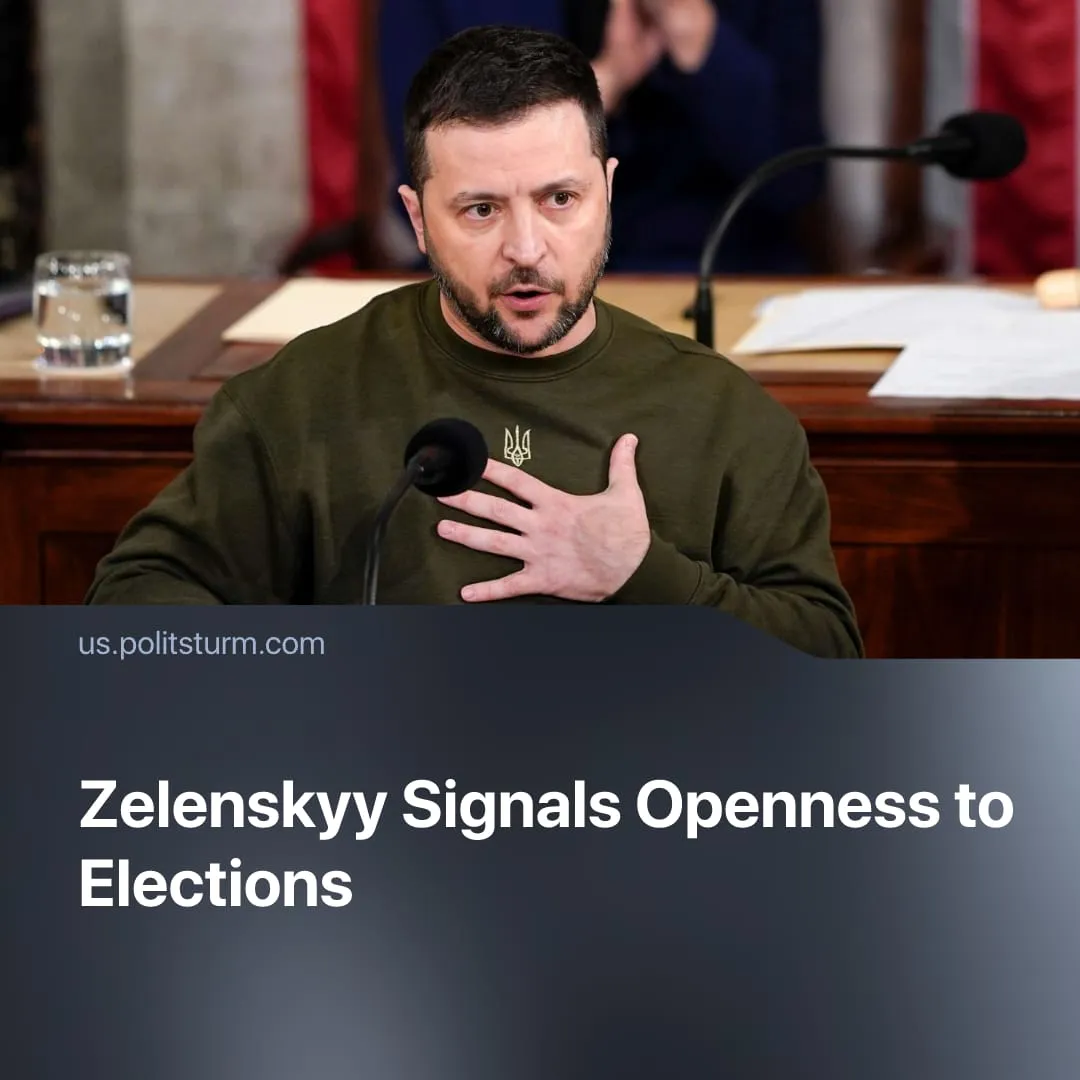
Zelenskyy is now open to holding elections after Russia previously stated this was a necessity for ending the Special Military Operation.
Details. Following renewed US pressure, Zelenskyy has signalled readiness to hold elections despite martial law, with the issue now tied to ceasefire discussions and accompanied by technical preparations, including restarting the voter register and seeking Western security guarantees to enable voting during the SMO.
► Public support for elections under wartime conditions remains low. Recent polling shows only 25 per cent of Ukrainians support holding elections as part of a ceasefire, while 57 per cent say elections should take place only after the SMO ends, down from 63 per cent in September.
► Despite declining popularity, Zelenskyy remains the leading candidate, with around 20.3% support, narrowly ahead of Valerii Zaluzhnyi, the former commander of Ukraine’s armed forces and current ambassador to the UK; both figures represent pro-Western continuity and are closely aligned with ongoing cooperation with NATO states.
► Russian media previously promoted Viktor Medvedchuk as a potential replacement figure; Ukrainian security services have since opened an investigation alleging links to Russian intelligence and involvement in coordinating Kremlin political and information campaigns aimed at legitimising the SMO.
► Zelenskyy claims Moscow is preparing to pre-emptively label any Ukrainian election “rigged,” by demanding voting rights for Ukrainians in occupied territories and in Russia, to undermine the legitimacy and international recognition of the vote.
Context. Calls for Ukrainian elections have been a recurring demand from Moscow, with Vladimir Putin arguing that Zelenskyy lacks democratic legitimacy under extended martial law.
► In early 2025, Donald Trump echoed this narrative by publicly labelling Zelenskyy a “dictator” over delayed elections, drawing criticism from Western allies while adding pressure on Kyiv to accept proposed rare-earth and peace agreements.
► As negotiations with Russia stalled, Trump temporarily softened his rhetoric toward Ukraine, easing pressure on Kyiv. Renewed ceasefire efforts have since revived demands for political concessions, reflecting Washington’s push to reduce overseas commitments and refocus on its own hemisphere and main imperialist rival, China.
► Several European governments have expressed concern that current ceasefire proposals are overly favourable to Russia, raising fears of a settlement that freezes the SMO on Moscow’s terms.
► Zelenskyy’s bargaining position has weakened both domestically and internationally following revelations that close associates were implicated in a major corruption scandal. The fallout has eroded public trust at home and drawn criticism from Western partners, reducing his political leverage and increasing pressure on Kyiv to accept negotiations and concessions that were previously resisted.