

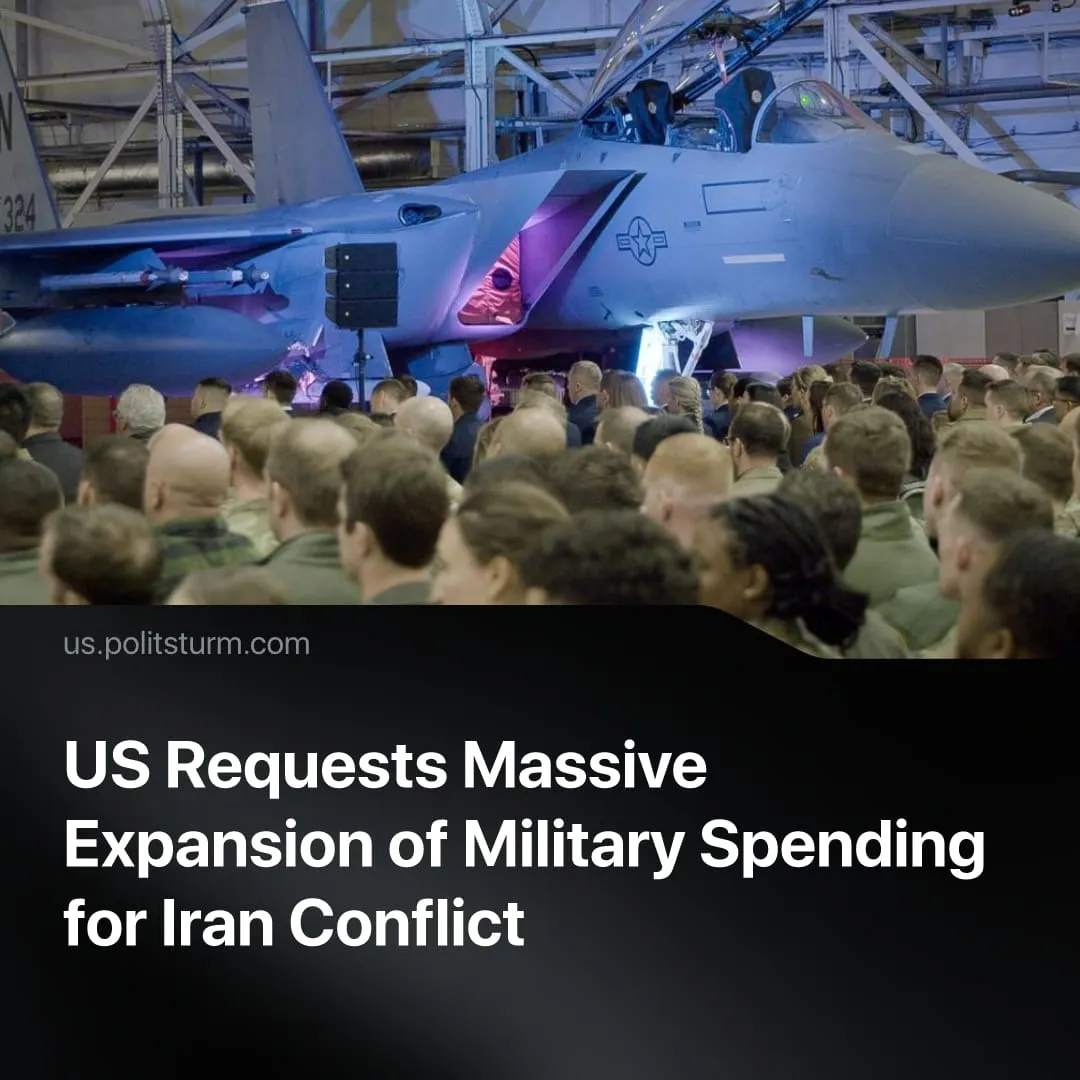
Trump administration to request $200 billion in additional military funding for Iran conflict, ensuring maximum profits for monopolies while considering healthcare cuts.
Details. The Pentagon has shifted to a “wartime footing,” proposing a record-breaking $1.5 trillion military budget for 2027, alongside an immediate $200 billion request for the Iran offensive (on top of the annual military budget of roughly $1 trillion), with Republicans considering healthcare cuts to fund this. By April 1, the offensive is estimated to have cost the US $16.2-23.4 billion.
► The US military currently depends on small quantities of extremely expensive systems that can now be countered cheaply: The F-35 program cost around $2 trillion to develop, yet Iran has reportedly shot down or damaged advanced US aircraft. $4 million Patriot interceptor missiles are being used to destroy drones costing as little as $20,000. Iran has also destroyed a US command aircraft – costing roughly $700 million to replace – using one such low-cost drone.
► These pressures are already forcing adjustments. Washington has ordered the military-industrial complex to quadruple production and build new factories, warning that existing high-tech stockpiles are insufficient for a prolonged conflict.
Context. Iran’s cheap drones force the US to deploy costly countermeasures. In response, the US is attempting to replicate such designs while introducing cheaper alternatives, such as the AGR-20 rocket, to replace far more expensive missile systems.
► These pressures were already driving a broader restructuring of the US military. Globally, reliance on small numbers of highly specialised, expensive systems is giving way to mass production of cheaper, more flexible weapons, necessary for sustaining long-term conflict. This trend is already evident in the widespread use of low-cost drones in Russia’s “Special Military Operation.”
► Alongside this shift, the US federal government is deepening direct integration with defence monopolies, streamlining production and ensuring continuous investment into the military-industrial complex, with firms such as Lockheed Martin, Raytheon Technologies, and Northrop Grumman securing maximum profits from continued rapid militarisation and conflict.
► Military budgets have steadily risen under both the Trump and Biden administrations, reflecting a broader international trend toward rearmament and preparation for large-scale imperialist conflict, financed at the expense of social spending.