

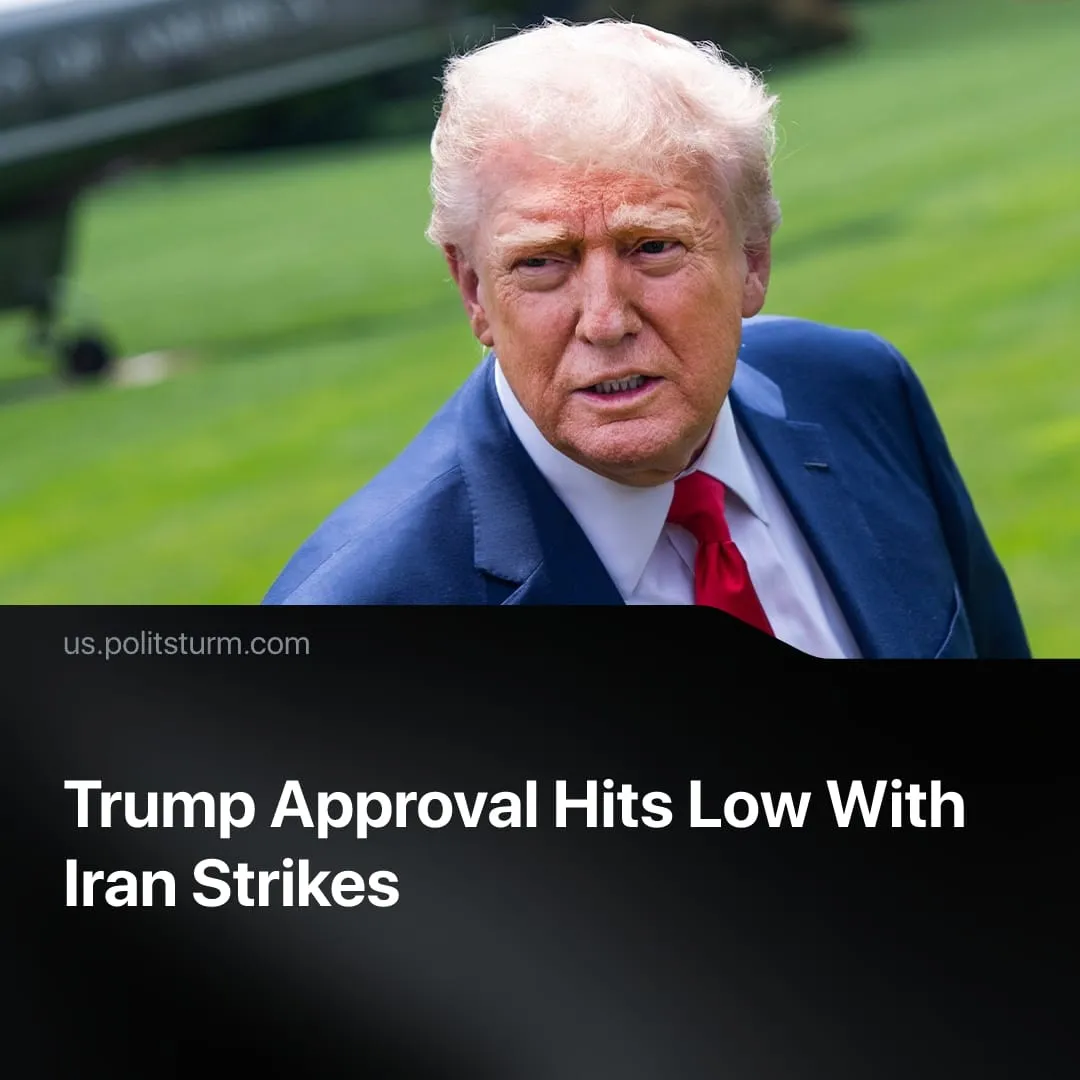
Trump’s approval collapsed to 36% amid Iran strikes and conflicting statements, opening the door for opportunistic Democratic Party gains in the midterms.
Details. Support for the strikes remains low, at roughly 41% average across polls, with a clear majority (~50–60%) opposed. Republican backing is high, around 69%. However, 42% of Republicans said they would be less likely to support the campaign if US troops were killed or injured.
► Confidence in the administration’s handling of the war is weak. Around 60% of Americans say Trump lacks a clear plan, while 65% expect the conflict to develop into a prolonged war, with only 7% support for this. Rising oil prices are also fueling economic discomfort.
► Since summer 2025, Trump’s approval rating has remained around 40%. Following the strikes, it fell to 36% in just one week.
► The administration’s messaging has been openly contradictory. Trump claims the war is “winding down,” while the Pentagon acknowledges that there is no timetable for its end. At the same time, escalation continues, thousands of additional troops have been deployed, and the Pentagon is seeking $200 billion in additional funding.
Context. Trump entered 2025 promising peace, stating, “I’m not going to start a war. I’m going to stop wars.” However, he rapidly escalated militarism, beginning the year with a direct military intervention in Venezuela, removing Maduro and installing a US-friendly regime.
► Trump also promised an economic boom, but working Americans, this has not materialised. Rising fuel prices linked to the war have increased living costs, while wages remain under pressure, contributing to declining approval of the administration.
► The unpopularity of Trump’s policies has allowed Democrats to regain some ground in polls. They have tried to capitalise on opposition to the war in Iran, but with limited effect due to their lack of direction and contradictory statements. Left-wing opportunist figures like AOC, Bernie Sanders, and Mamdani had already been pushed to the foreground before the war, and Trump’s declining popularity has further reinforced their visibility in an effort to energise voters ahead of the midterms.
► Trump’s declining popularity has increased pressure within his circle. Leaked proposals suggest using emergency powers to centralise control over elections in the executive branch. If dominant capitalist interests continue to support his strategy, such measures could be deployed to restrict Democratic Party gains in the midterms.
For a deeper analysis of the US-Iran conflict, see the Marxist position on this subject: The Middle East: Architecture of War.