

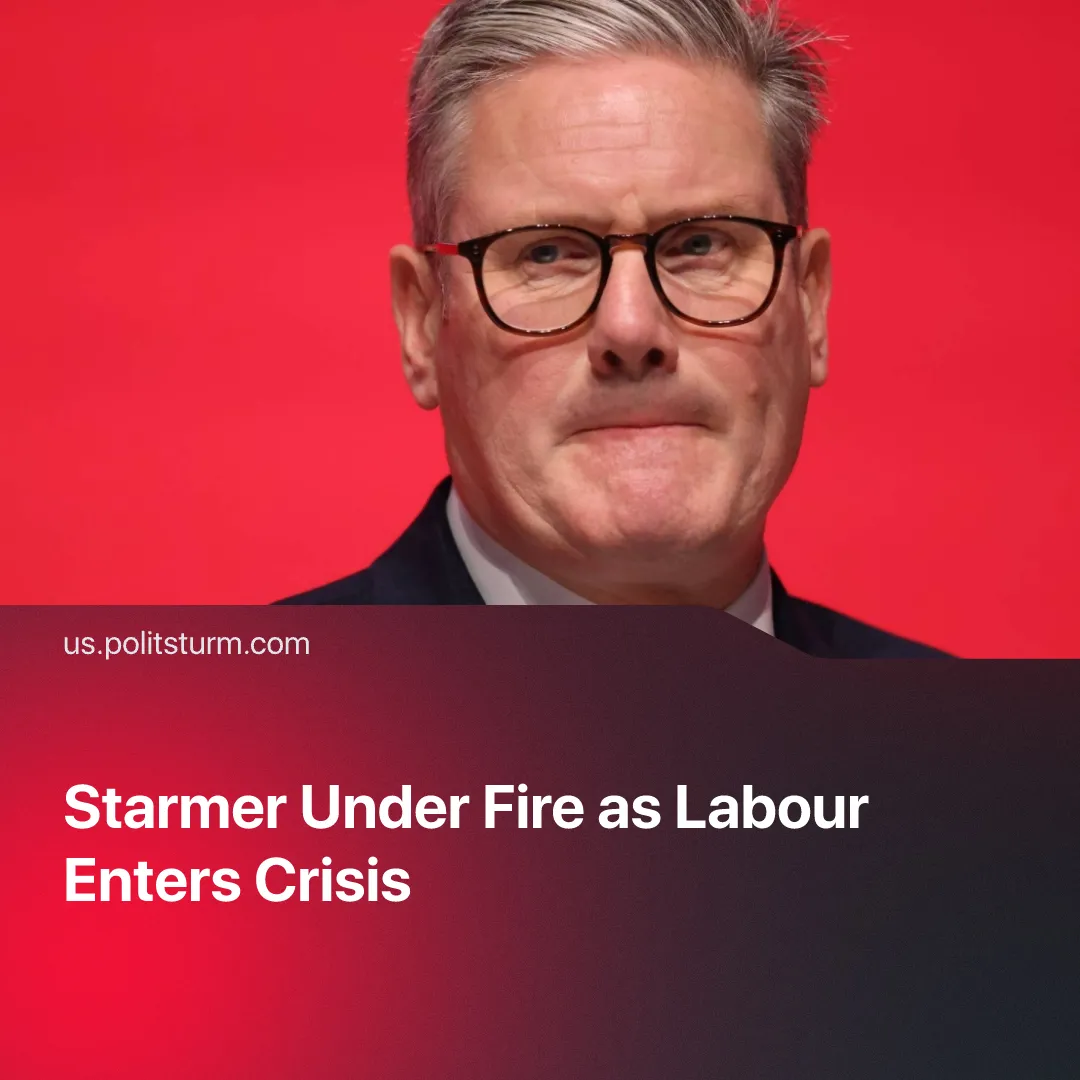
Resignation calls are growing for the British Prime Minister, as Labour enters the same political crisis that shattered the Tories.
Details. New polls show that only around 34 percent of voters want Starmer to stay as Labour leader, while nearly half of Labour supporters believe he should step down before the next election.
► Internal controversies have intensified speculation about a leadership challenge, but Starmer has publicly dismissed the rumours. Recently, he warned that anyone briefing against Cabinet ministers “will be fired” and stated in Parliament that “any attack on any member of my Cabinet is completely unacceptable,” insisting his team is united.
► Labour’s support among young people has fallen sharply. Polling shows a significant decline in overall support for the Labour Party among 18–25-year-olds dropping from 43 % in March 2025 to 25 % in November 2025. Rising youth unemployment and worsening living costs have turned younger voters away from the party.
Context. Britain is experiencing a broader political and economic crisis, marked by falling living standards, deep public distrust and weakening legitimacy of the traditional parties.
► This situation has created openings for forces presenting themselves as anti-establishment. Reform UK has consolidated support on the right, while the Greens are drawing disillusioned left-leaning voters amid Labour’s rightward shift and public infighting amongst Corbyn’s new party.
► Under Keir Starmer the Labour Party has accelerated a rightward shift, reversing earlier policy positions and repositioning Labour as explicitly pro‑business, while simultaneously purging or sidelining moderate‑left and left‑wing MPs and activists in order to suppress internal dissent and enforce a business‑friendly, centrist orientation.
► Labour has attempted to adopt policies echoing the previous Conservative austerity agenda – including restrictions on disability support, caps on child benefits, and expansion of the private sector in the National Health Service. These proposals faced backlash from both the public and Labour MPs, forcing the party to withdraw them for the time being.
► As part of its rightward shift, Labour has introduced stricter immigration and asylum measures. These have been welcomed by far-right figures. Far-right activist Tommy Robinson publicly praised Labour’s tougher approach, while Reform UK circulated a mock image presenting the Home Secretary as if she were secretly their supporter.
Important to Know. As the crisis of capitalism deepens, liberal democracy proves ever more ineffective and hollow. The capitalist state enforces policies at odds with workers’ interests, cutting social services, capping benefits, restraining wages, and facilitating private accumulation to stabilise the system.
► The Conservative Party’s collapse showed how austerity is used by capitalist governments to stabilise economic crises by shifting the burden onto workers. This approach produced deep social deterioration and eventually rebounded as a political crisis, the Conservatives became one of the least popular forces in the country and cycled through five prime ministers in their last term.
► Labour is now forced to reproduce the same logic because the conditions of capitalist accumulation compel these measures. Parties such as Reform, the Greens, or Corbyn’s new party would follow the same path, as none challenge private property or the power of the capitalist class.
► Even at its most “left-wing” period in recent history under Corbyn, Labour was openly endorsed by major business interests and claimed to be the “party of business”. In 2024, more than 120 major UK CEOs publicly praised Labour and Starmer for offering economic stability and pro-market policies.