

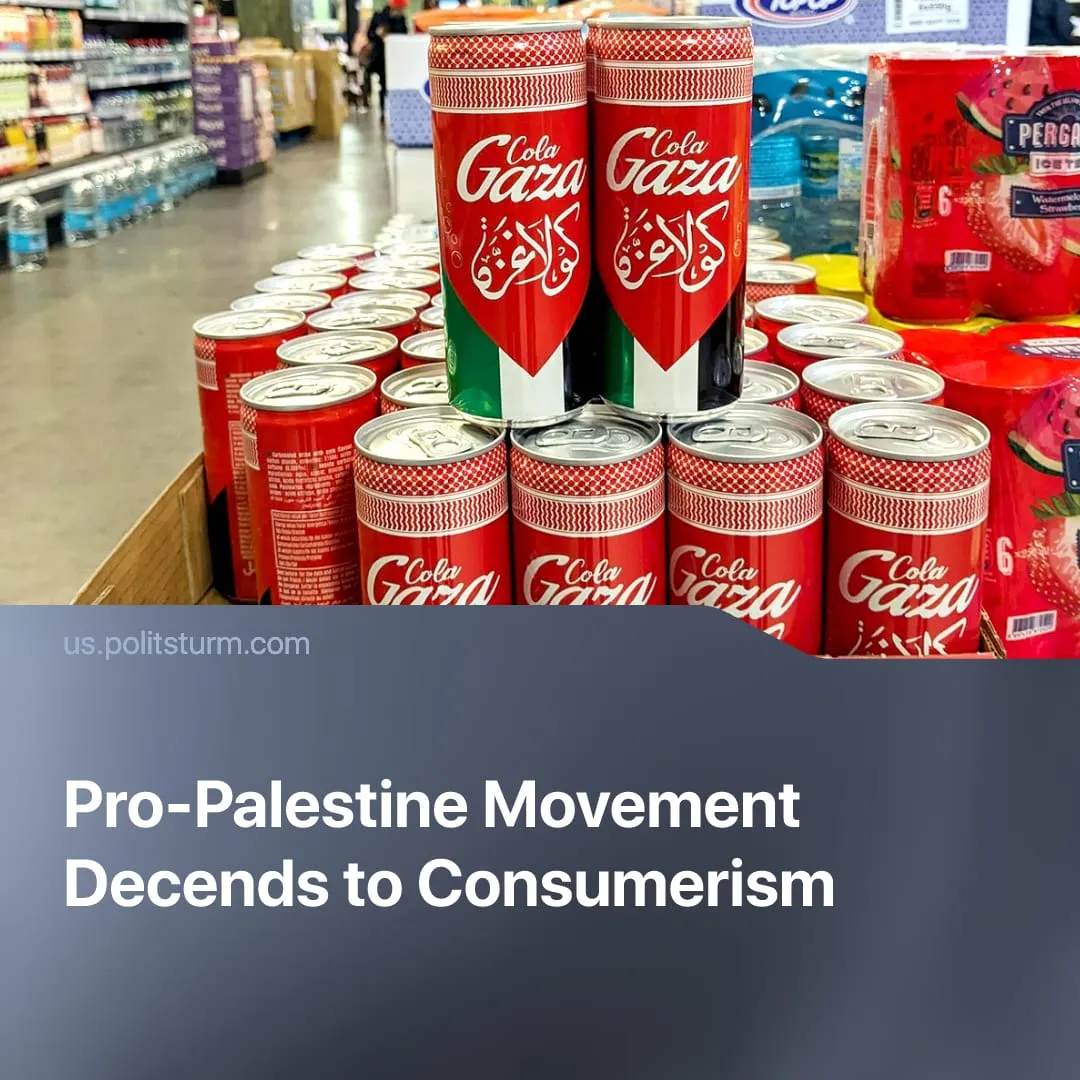
Three years after October 7, “solidarity” with Palestine sells soft drinks and pays CEO salaries. Under petty-bourgeois leadership, the movement was heavily commodified.
Details. Following October 7, 2023, businesses increasingly began selling Palestine-themed merchandise, including stickers, badges, T-shirts, Keffiyeh scarves, and other goods through platforms such as Amazon and eBay.
► Boycotts of corporations associated with Israel, including Coca-Cola and Starbucks, created opportunities for competing brands. Gaza Cola and Safad Food's Palestine Cola marketed themselves as alternatives supporting Palestine. Like many Palestine profiteers, the Safad Food company claims its sales revenue goes directly to humanitarian aid in Gaza – the “donations” never arrived.
► Small capitalists, such as independent bookshops and Palestinian merchandise retailers, have sought to attract customers away from monopolies like Amazon by presenting themselves as ethical alternatives. In doing so, they have used popular opposition to monopoly capital to promote their own businesses and increase sales.
► Palestinian restaurants have also expanded, while opportunist politicians such as New York Mayor Zohran Mamdani have publicly visited them to demonstrate solidarity with Palestine and expand their voter base.
► Debates over musicians' positions on Palestine also translated into concert sales. After being dropped from Ed Sheeran's tour over his pro-Palestinian statements, Macklemore announced a Free Palestine tour, with all three concerts selling out immediately. Meanwhile, two Palestinian rappers publicly feuded over who was more authentically patriotic.
► Donations became a form of consumerist solidarity. Organisations such as Jewish Voice for Peace (JVP) saw annual donations rise from $3.2 million in 2023 to $10.5 million in 2025, while its Executive Director's salary increased from $107,000 to $178,000.
Context. The Palestine-Israel conflict forms part of the wider struggle between imperialist powers for influence in the Middle East. Israel is a key US ally, while Iran supports regional proxy forces, including Hamas, Hezbollah and the Houthis, to advance its own interests.
► On October 7, 2023, Hamas launched a major raid on Israeli military and civilian targets, in what was meant to be a demonstration of the strength of the Iranian bourgeoisie. Israel responded with a military campaign in Gaza that killed tens of thousands of Palestinians, displaced most of the population, and was subsequently recognised as genocide by a UN commission.
► Israel's genocide provoked widespread spontaneous protests, massively expanding the pro-Palestine movement. Led largely by students, liberal NGOs and petty-bourgeois organisations, the movement pursued mass demonstrations, boycotts, sabotage and adventurist actions, but failed to halt or even slow down Israeli military operations.
Important to Know. Under petty-bourgeois leadership, the pro-Palestine movement failed to develop into an independent working-class struggle. Where workers did take anti-war action, the lack of genuine socialist leadership left these efforts isolated and unable to develop into a sustained struggle.
► As Politsturm has previously explained, consumerism is rooted in capitalist commodity production, where the purchase and ownership of goods become expressions of personal identity and social values.
► In the pro-Palestine movement, buying particular products and making donations became substitutes for organised political action, allowing capitalists, both large and small, to profit from expressions of solidarity. A similar tendency emerged during the Black Lives Matter movement, when support for Black-owned businesses was promoted as a response to racial oppression.