

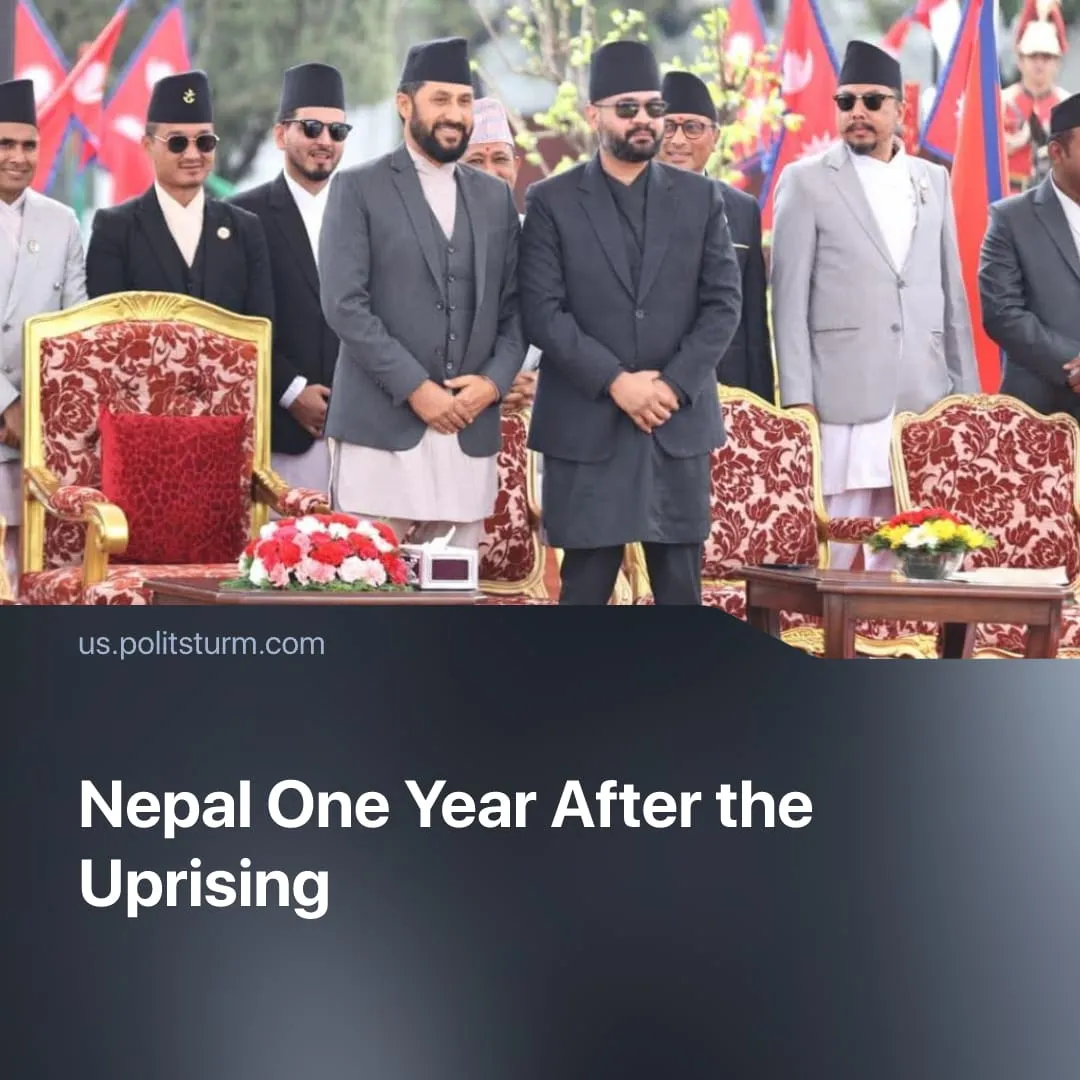
One year ago, Nepal's Gen Z toppled a government through Discord servers, with power ultimately passing to an “anti-establishment” liberal party. The disgraced "communist" party that was ousted attended the recent Solidnet meeting in Havana.
Details. Following the uprising, elections were held. The National Independent Party (RSP) won a landslide majority with a liberal "anti-corruption" programme in March, the first single-party majority since 1999. Of its 165 directly elected MPs, 35 come directly from business or industry backgrounds, while its Vice Chairman is a former World Bank employee.
► In its first 100 days, the RSP fully delivered only a third of its planned actions – focusing on anti-corruption probes, administrative restructuring, and barring trade unions from political affiliations, while aiming to make Nepal more attractive to private investment.
► The RSP's most visible action was the forced clearance of riverbank settlements. 2,686 structures were demolished, and 15,316 people were relocated to temporary sites with no permanent arrangement. This was justified as flood protection for the residents but, in reality, cleared land for investment.
► Meanwhile, the cost of living has continued to rise. By mid-July, consumer inflation hit 5.14% year-on-year – more than double the 2.20% recorded a year earlier – with food and beverage prices up 5.25% and ghee and cooking oil up 10.05%. Miscellaneous goods and services surged 17.61%. The rising costs of essentials are inevitably hitting workers the hardest.
► Gen Z activist Majid Ansari, who helped organise the uprising, asked "What is the difference between KP Oli and Balendra Shah?" Liberal columnist Deepak Thapa wrote there is "little to choose between" the two, citing their shared "authoritarian style, complete lack of self-awareness, and absence of any humility." Shah attended only 5 of the first 39 House sittings, prompting the Speaker to formally order his attendance.
Context. On September 8, 2025, Nepal's Gen Z sparked a mass uprising after the government banned 26 social media platforms. Parliament, government buildings and political offices were set alight, ultimately forcing Prime Minister Oli to resign. In total, the state killed 77 people.
► The uprising's organisers used the youth NGO Hami Nepal's Discord server – with 160,000 members – to select a new interim Prime Minister through an online poll, with the Army Chief formally appointing the winner. Despite promises to fight corruption, improve living standards, and create jobs, the interim government limited itself to scheduling elections.
► Some bourgeois outlets celebrated this as a democratic breakthrough. The BBC described it as "democracy in the digital age" whilst Foreign Policy called it the “future of protests”, whilst referencing past protest movements that relied on social media such as BLM.
Important to Know. Without a genuine communist vanguard party, the uprising's energy was captured by a liberal "anti-establishment" bourgeois party. Power was stabilised by the Army Chief, who enabled a straightforward transfer of power from one group of bourgeois to another.
► The CPN (UML) bears direct responsibility for this outcome. Representing a pro-Chinese section of the Nepali bourgeoisie, it implemented no socialist transformations, presided over 10% unemployment and rising inequality, and signed Belt and Road agreements with Chinese capital. As Politsturm warned, pro-Chinese pseudo-communists discredited Marxism in the eyes of workers, driving support to right-wing forces.
► The weakening of pro-Chinese imperialist influence has only strengthened pro-Western influence in its place. The RSP is actively courting US economic investment, with the first state visit since 2002 planned for next year.
► Despite this record, the CPN (UML) was invited to and attended the 2026 Solidnet gathering in Havana. Politsturm repeatedly criticised Solidnet for platforming bourgeois "communist" parties, most recently with its declared “solidarity” with the Cuban state.