

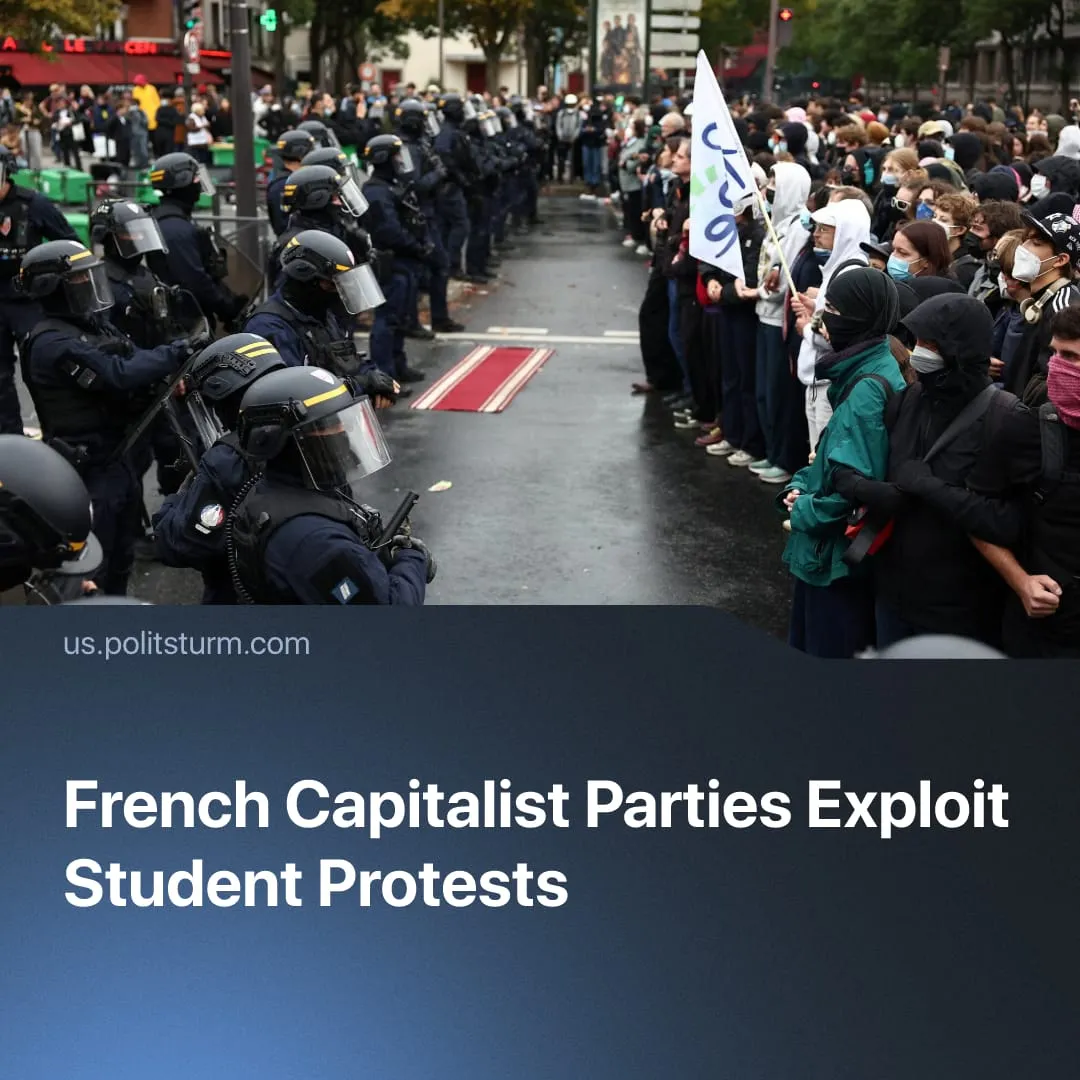
Violent protests erupt in France over precarious school education, with hundreds injured and thousands arrested. Both the capitalist far-right and the far-left aim to exploit unrest for political gain.
Details. Massive protests led by high schoolers have erupted across France, beginning at underfunded schools in impoverished areas and spreading nationwide. Grievances centre on teacher shortages, poor school buildings, and an unequal university admissions system. Teachers, university students, and unions have joined the protests.
► Hundreds of thousands are participating. By October 7, 764 police, 215 students, and 89 teachers had been injured. In a single day, police made 1,949 arrests, surpassing the peak of the Yellow Vest protests.
► The government has attempted to quell the protests by assigning 3,024 substitute teachers, debating an education funding increase, and announcing five initiatives to improve schools. However, protests have continued despite these concessions and violent police repression.
► The far-right has blamed the unrest on migrants – a claim backed by Trump – and accused La France Insoumise (LFI) of encouraging violence for electoral gain. The Rassemblement National (RN) has reinforced these accusations, using a statement by an LFI mayor to attack the party, while exploiting the unrest to advance its own electoral interests.
► LFI leader Jean-Luc Mélenchon has opportunistically joined the demonstrations and urged protesters to remain peaceful. Although LFI has limited influence over the largely spontaneous movement, Mélenchon has sought to channel the mobilisation towards the 2027 presidential election.
Context. The protests are happening against the backdrop of the presidential elections in 6 months. If no candidate wins an absolute majority here, a runoff election will be held with the top two candidates. This will likely pit Le Pen of RN against Mélenchon of LFI.
► RN is a far-right party which blames immigration and the EU for France's economic and social problems. Its programme advocates restricting immigration, tougher policing and cuts to many public agencies. Its founder, Jean-Marie Le Pen, was repeatedly convicted for inciting racial violence.
► LFI presents itself as a radical alternative seeking to “return power to the people”. However, its proposals, including raising the minimum wage, lowering the retirement age to 60 and taxing the wealthy, remain mild reforms within capitalism. LFI also joined Macron and RN representatives at a military briefing on France's preparations for imperialist conflict.
► Anger at social spending cuts and rising costs of living is widely shared across France, leading to public servants joining the protests to denounce the government’s planned cuts. Furthermore, in 2025, at least a third of French households had difficulty paying their electricity and gas bills, while French hospitals report being insufficiently funded. Contrastingly, the French defence budget increased by 13.5% for 2026.