

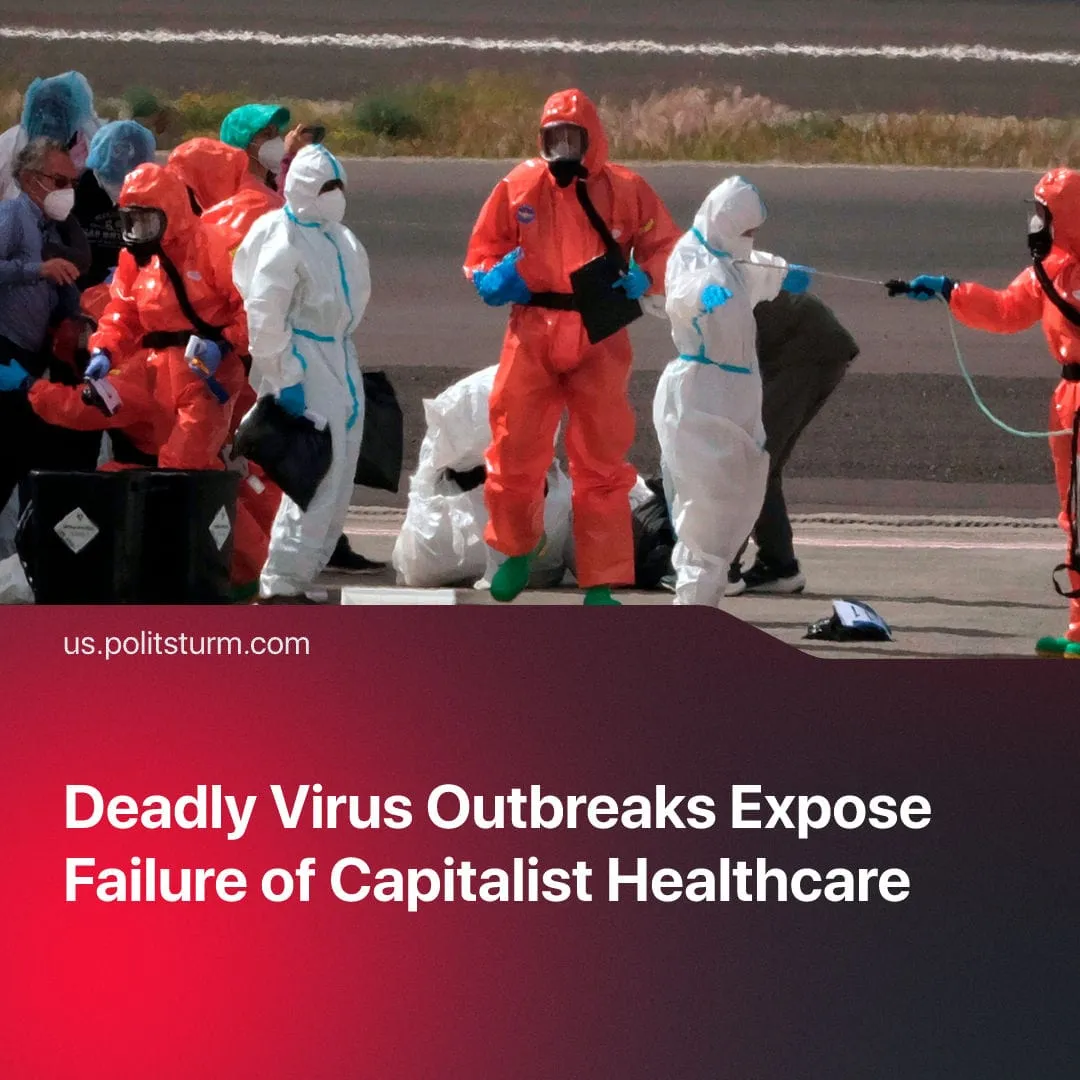
Two deadly outbreaks spread simultaneously. For one of them, a vaccine was shelved a decade ago when funding ran out, now pharmaceutical stocks surge 20% in a week.
Details. Hantavirus, carrying a 38% fatality rate, erupted aboard the cruise ship. Corporate authorities on the vessel implemented zero safety measures. Officials actively concealed the initial infections to protect revenue, declaring an emergency only when a mass outbreak became undeniable.
► Authorities dispersed exposed passengers on international repatriation flights instead of maintaining a strict quarantine on the ship. In the Netherlands, 12 hospital workers at Radboudumc were forced into a six week quarantine after procedural failures. Meanwhile, United States officials delayed public warnings for weeks to shield the domestic travel market.
► Simultaneously, a rapidly accelerating Ebola outbreak is devastating the Democratic Republic of Congo and spreading to neighbouring countries. Ebola is a severe viral hemorrhagic fever, and while official reports confirm 514 suspected cases with 136 deaths, the true scale of the disaster remains unknown. Experts say undocumented infections likely push the real case count well over 1000.
► Because there is no viable vaccine for this specific Sundanese strain, communities lack critical information and local health systems are completely overwhelmed. Furthermore, the broader regional response remains structurally paralyzed by ongoing armed conflict, extreme systemic poverty, and a complete lack of functional medical infrastructure.
Context. Preceding both outbreaks, the United States withdrew from the World Health Organization and eliminated the Center for Disease Control cruise ship inspection program to deregulate the travel industry. The administration also slashed CDC and National Institute of Health budgets by over 20%, specifically dismantling preemptive vaccine research. Trump’s administration has also frequently attacked science and contradicted health experts.
► In 2016, scientists nearly finalized a Hantavirus vaccine but abandoned the project when funding ran out, delaying a cure by a decade. Now, pharmaceutical corporations are securing massive windfalls. Moderna stocks surged by 20% in a single week as investors speculated on outbreak profits.
Important to Know. During the 2020 pandemic, the United States government delayed public health mandates until the virus had deeply penetrated working communities. Pharmaceutical monopolies secured record profits from patented vaccines, while millions of essential workers faced a choice between viral exposure or unemployment.
► In direct contrast, the Soviet Union removed the profit motive from the health system. The People's Commissariat for Health implemented the centralized Semashko system, creating the first universal and completely free healthcare network in history.
► Before the October Revolution, Russia occupied first place for mortality due to infectious diseases among European countries, with life expectancy at just 33 years. The Tsarist state made attempts at epidemic control but repeatedly failed. For example, the single malaria station established in 1913 was closed six months later due to a lack of funding, and malaria treatment was withheld from non-Russian populations entirely.
► The socialist system rapidly changed this. The Bolsheviks built a nationwide network of sanitary, anti-plague and anti-malaria stations covering every region of the country, staffing each with epidemiologists, microbiologists and parasitologists. Research laboratories were relocated from the capital directly to endemic areas, enabling rapid response.
► Diseases that were once common and deadly were rapidly combatted and deaths greatly reduced. Through compulsory mass vaccination, smallpox cases fell to zero by 1936. Malaria cases fell from 9 million in 1935 to 3 million by 1940, and were fully eradicated by 1960. Life expectancy rose from 32 years in 1897 to 68 years by the early 1970s.