

Capitalists bet over $100 million on the climate crisis for huge profits by looking for “easy solutions.”
Details. New “solar geoengineering” startups founded in the 2020s claim to have technology for curbing the effects of the climate crisis. Investments across nine primary startups, including companies such as Stardust Solutions, Make Sunsets and Gama Space, have reached $115.8 million.
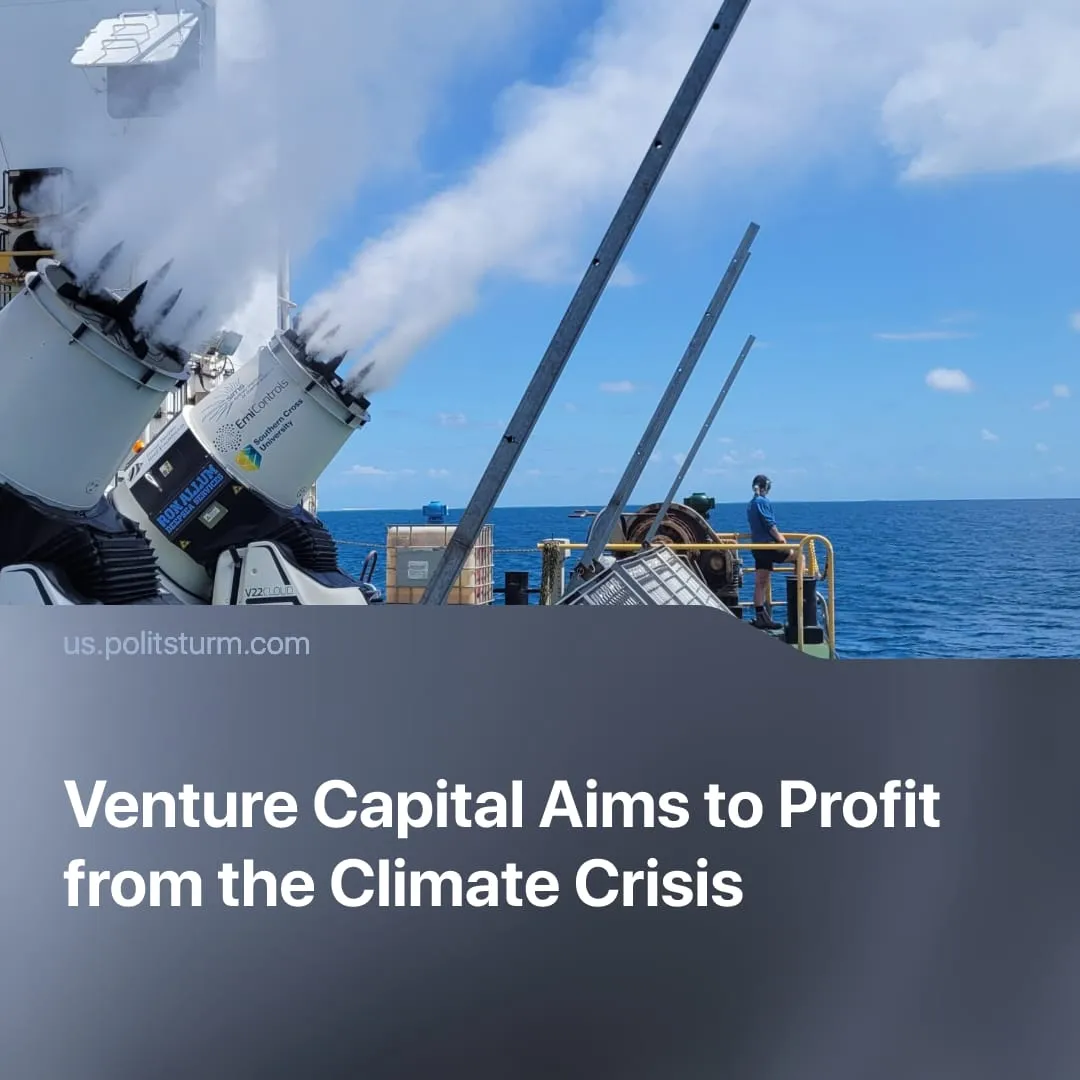
► Proposed methods include “stratospheric aerosol injection” (SAI) using aircraft deployment, “marine cloud brightening” via sea-salt particles, and techniques to slow Arctic ice melt. All aim to cool the planet by reflecting sunlight away from the Earth rather than reducing emissions.
► Experiments are already underway. In 2025, after Make Sunsets released weather balloons with 109kg of sulfur dioxide over Baja California without authorisation. Separate cloud-brightening tests propose a 3,900-square-mile experiment off the coasts of North America and Africa. Stardust Solutions plans its own trials by April 2026.
► Large-scale chemical interventions carry serious risks. Stratospheric sulfur can damage the ozone layer, increase UV exposure, and worsen respiratory conditions at lower altitudes. Even with “safer” particles, deployment risks “termination shock” – a rapid temperature spike if cooling programs halt while emissions remain high. Gama Space dismisses these dangers by branding itself “relentlessly optimistic.”
► Despite claims that they would prefer to “lose all [their] money,” investors are effectively betting on the failure of collective climate action. Firms are not only developing technology but lobbying for regulation and constructing new markets for geoengineering, anticipating long-term government contracts and guaranteed profits.
Context. Millions already suffer the effects of the climate crisis. In 2024, climate-driven disasters caused 45.8 million internal displacements – the highest figure recorded since 2008. nearly double the annual average of the past decade. Disasters triggered nearly twice as many movements in 2024 as the annual average over the past decade.
► At the same time, key capitalist states are retreating from their already weak commitments. Trump’s latest administration carried out mass layoffs at the Environmental Protection Agency and delayed industrial pollution standards, undermining enforcement and public health protections.
► Media focus on startups also serves as a strategic distraction for the broader fossil fuel industry. In 2023, US power plants alone released 650,000 tons of SO₂ – the equivalent of 343,900,000 Make Sunsets’ balloons. This argument tries to downplay the dangers of the startups, but reality depends on what altitude of the atmosphere the gases are released.
► Media focus on geoengineering startups functions as a diversion from the fossil fuel industry. In 2023 alone, US power plants emitted 650,000 tons of SO₂ – equivalent to roughly 343 million Make Sunsets balloons. While this is used to minimise geoengineering risks, particles released higher in the atmosphere have a stronger climate effect and unique risks compared with ground-level emissions.
► Capitalism cannot resolve the climate crisis because it is structured around competing private interests driven by profit, while effective climate action requires coordinated, collective planning. This contradiction was again demonstrated at the COP30 climate summit, marked by the absence of key heads of state such as Xi Jinping and Donald Trump, the entrenched presence of petrol lobbyists – a recurring feature of COP negotiations – and the failure to produce any binding roadmap for phasing out fossil fuels.