

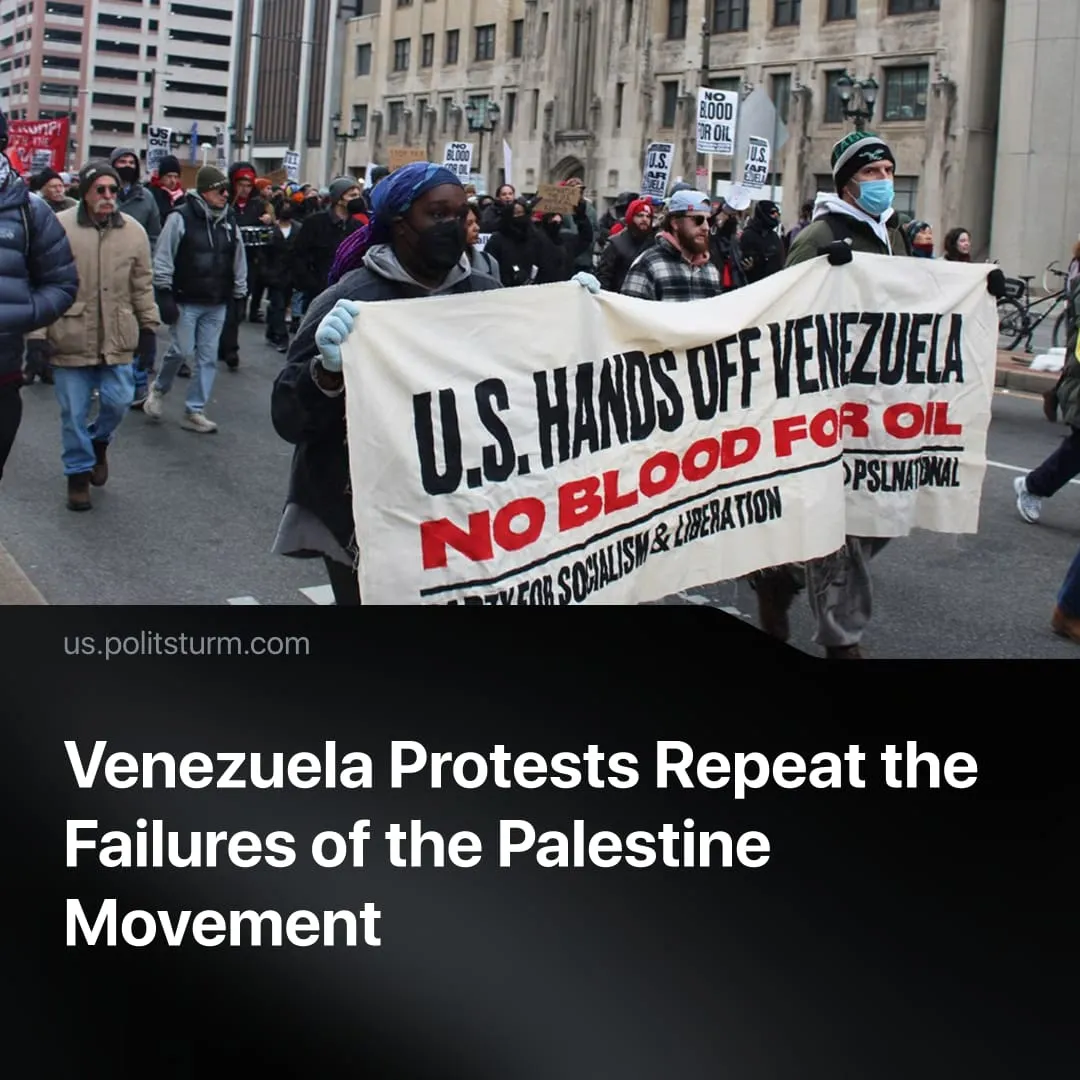
Protests against Trump's invasion of Venezuela have not led to a change in US policies. This repeats the case of protests against Israel's invasion of Gaza.
Details. The US operation triggered immediate domestic protests in over 100 cities, including major US hubs (NYC, DC, LA). Dominant slogans and demands focused on immediate US military restraint, diplomatic de-escalation, and adherence to international legal norms.
► In the United States, planned anti-war demonstrations have largely been sidelined following the fatal shooting of a US citizen by ICE in Minneapolis on January 7. This shifted focus toward federal immigration enforcement and domestic state violence.
► For Washington, the protests passed virtually unnoticed. Much more attention was focused on ICE's actions, the acquisition of Greenland, and protests in Iran. The Trump administration's response is similar to the initial Biden administration's response to the Israeli invasion in Gaza.
Context. The US launched air and special-forces strikes on January 3, 2026, seizing Venezuelan president Nicolás Maduro. This escalation is a direct consequence of the imperialist system and of heightening tensions between the US and China. Washington is reasserting regional hegemony to secure strategic resources and spheres of influence.
► The representatives of the Chinese bloc, including the PRC itself, Russia, and Iran formally condemned the strikes as hegemonic acts and violations of the UN Charter. Despite declaring “sharp diplomatic protests” at the UN Security Council, these powers have provided no concrete countermeasures or material support. This effectively accepts the new regional status quo while utilizing the intervention as rhetorical evidence of US lawlessness.
► Despite utilizing socialist rhetoric, the Maduro administration functioned as a representative of the bourgeoisie. Maduro was responsible for repression of communists, the banning of trade unions, and support for Trotsky. Read more in our organization's position.