

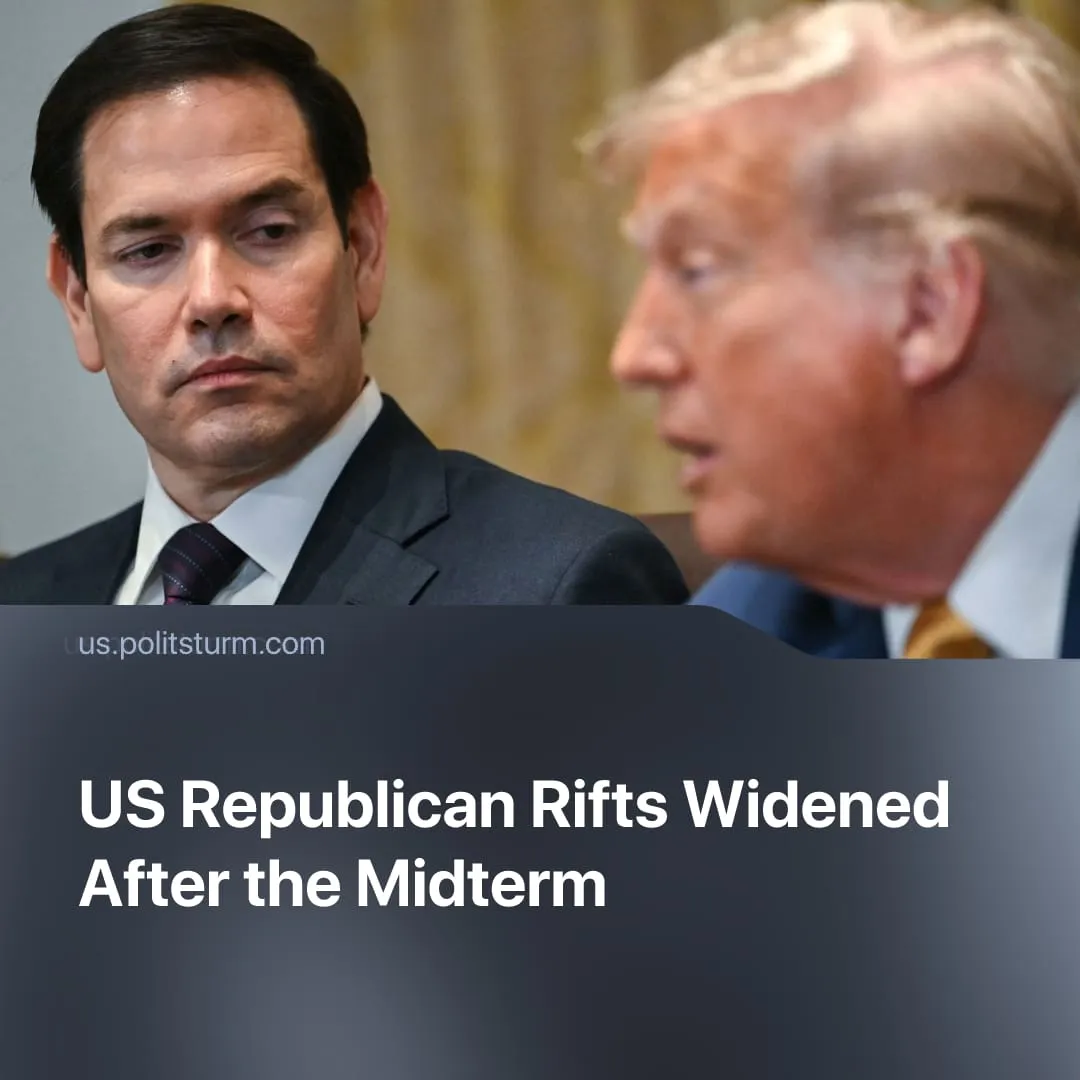
US Republican rifts widened after the Midterm defeat, as prominent figures begin distancing themselves from MAGA and considering electoral alternatives for 2028. Trump hopes to reinforce his position and agenda before Democrats assume Congress in January.
Details. Republicans lost control of both the US House and Senate in the 2026 Midterms. President Trump claimed they would have won “IN A LANDSLIDE” if he had been on the ballot, but other Republicans disagreed. Florida governor Ron DeSantis called the result an “extinction-level event”, while Senator Ted Cruz described it as a “Watergate-level repudiation”.
► Vice President JD Vance, distancing himself from Trump’s most unpopular policies, attributed the Republican defeat to four factors: the conflict with Iran, rising living costs and inflation, abandoning the “America First” agenda, and US ties with Israel.
► Ron DeSantis criticised the party’s strategy in Washington, arguing that Republicans focused on cultural issues instead of economic concerns, costing them the election. “They really were fighting yesterday’s battle”, he said. He also blamed congressional Republicans’ insider trading and corruption for eroding voters’ trust in the GOP, opportunistically calling for a ban on stock trading by lawmakers.
► US Secretary of State Marco Rubio is increasingly discussed as a potential Republican presidential candidate in 2028, while Ted Cruz is also positioning to challenge JD Vance, Trump’s preferred successor. Both Rubio and Cruz opposed Trump in the 2016 Republican primaries and retained some distance from the MAGA movement. Rubio has for now denied plans to leave the administration to run, saying that serving Trump until the end of his term “has always been my plan”.
► Amid these growing challenges to his influence within the Republican Party, Trump is consolidating his position by appointing loyalists and reshaping his administration. He appointed hardliner Stephen Miller as White House Chief of Staff, replacing Susie Wiles, while continuing to defend Defense Secretary Pete Hegseth against calls for his removal.
► Republicans retain control of both chambers until January 3, 2027, when the new Congress takes office. Trump can use the remaining weeks to advance legislation and secure his priorities before Democrats take control.
Context. President Trump entered the midterms deeply unpopular. Polls found his approval at just 37%, with voters particularly dissatisfied with his handling of the economy, cost of living, and war with Iran. Popular opposition to aggressive immigration enforcement and rising fuel prices further damaged Republican support.
► Despite Trump’s claim that his presence on the ballot would have changed the result, the Republican campaign was already centred on him and urged voters to treat their congressional vote as a vote for Trump. This strategy nevertheless ended in defeat.
► The GOP’s divisions also predate the election. Disagreements over the conflict with Iran, foreign policy and isolationism had already exposed growing tensions within the Republican Party. Vance’s post-Midterms criticism of US relations with Israel reflects this, as he aligned himself with the “America First” wing of MAGA, appearing to distance himself from Trump’s wing.